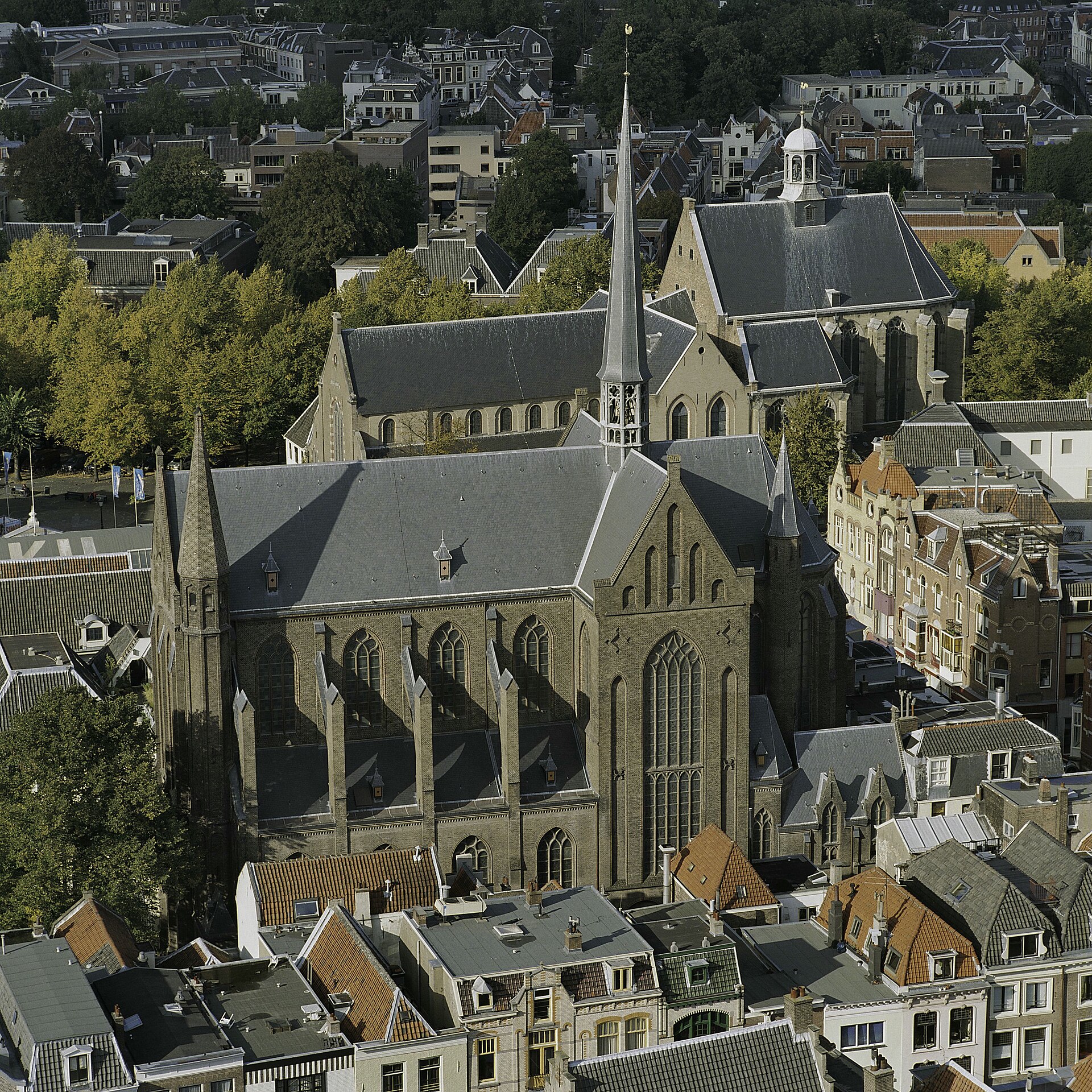
The Sint-Willibrordkerk is a prominent Neo-Gothic church located in the historic center of Utrecht. Constructed between 1875 and 1877, it was designed by the architect Alfred Tepe, a leading figure of the St. Bernulphusgilde, an organization dedicated to the revival of medieval craftsmanship in Dutch Catholic architecture.
The interior is renowned for its remarkably intact and lavish decorative program, which includes extensive wall paintings, intricate wood carvings, and stained glass. Unlike many other churches of the period that were stripped of their ornamentation during later liturgical reforms, the Sint-Willibrordkerk retains its original nineteenth-century aesthetic, serving as a comprehensive example of the Dutch Neo-Gothic movement.
Key Facts
- Materials
- Brick, Sandstone, Wood, Stained glass
- Civilization
- Dutch
- Accessibility
- Ground floor accessible
- Date(s)
- 1875-1877
- Condition
- Well-preserved, active place of worship
- Original Function
- Catholic Parish Church
- Key Figures
- Alfred Tepe, St. Bernulphusgilde
Design and Construction
1875-1877The church was commissioned to serve the growing Catholic community in Utrecht. Alfred Tepe was selected as the architect, and he implemented the principles of the St. Bernulphusgilde, which emphasized a return to the architectural styles of the 13th and 14th centuries.
Artistic Completion
Late 19th CenturyFollowing the structural completion, the interior was adorned with a cohesive program of paintings and furnishings. The decorative work was executed by members of the guild, ensuring a unified Neo-Gothic style throughout the nave and sanctuary.
Modern Preservation
20th Century - PresentWhile many churches in the Netherlands underwent modernization in the mid-20th century, the Sint-Willibrordkerk remained largely untouched. It is now recognized as a national monument and continues to serve as a site for both religious services and cultural appreciation.
Cultural Significance
The Sint-Willibrordkerk is a cornerstone of the Dutch Neo-Gothic revival. It represents the ideological and aesthetic goals of the St. Bernulphusgilde, which sought to restore a distinct Catholic identity to Dutch architecture through the emulation of medieval forms.
Today, the church is highly regarded by art historians for its 'Gesamtkunstwerk' (total work of art) quality. It provides a rare, immersive experience of nineteenth-century religious life, preserved against the trends of later architectural simplification.
Interpretive Notes
Scholarly debates and areas of uncertainty
There is ongoing academic discussion regarding the extent to which the church's interior reflects authentic medieval techniques versus the idealized, romanticized interpretations of the 19th-century guild members.
Visiting Information
Entry Rules
Open to the public for visits and prayer. Please respect ongoing religious services and maintain a quiet demeanor.
Best Times to Visit
Weekday afternoons are generally quietest for viewing the interior details.
Photography
Personal photography is permitted without flash. Tripods and commercial equipment require prior authorization.
Preservation Notes
The interior decorations are fragile; do not touch the wall paintings or carved wooden elements.
Nearby POIs
11 shownSources & Further Reading
- [1]De Sint-Willibrordkerk te Utrecht — H.W.M. van der Wyck. Bulletin van de K.N.O.B. (1978)
- [2]Alfred Tepe en de neogotiek in Nederland — A.J.C. van Leeuwen. Waanders Uitgevers (1991)
Key Facts
- Materials
- Brick, Sandstone, Wood, Stained glass
- Civilization
- Dutch
- Accessibility
- Ground floor accessible
- Date(s)
- 1875-1877
- Condition
- Well-preserved, active place of worship
- Original Function
- Catholic Parish Church
- Key Figures
- Alfred Tepe, St. Bernulphusgilde