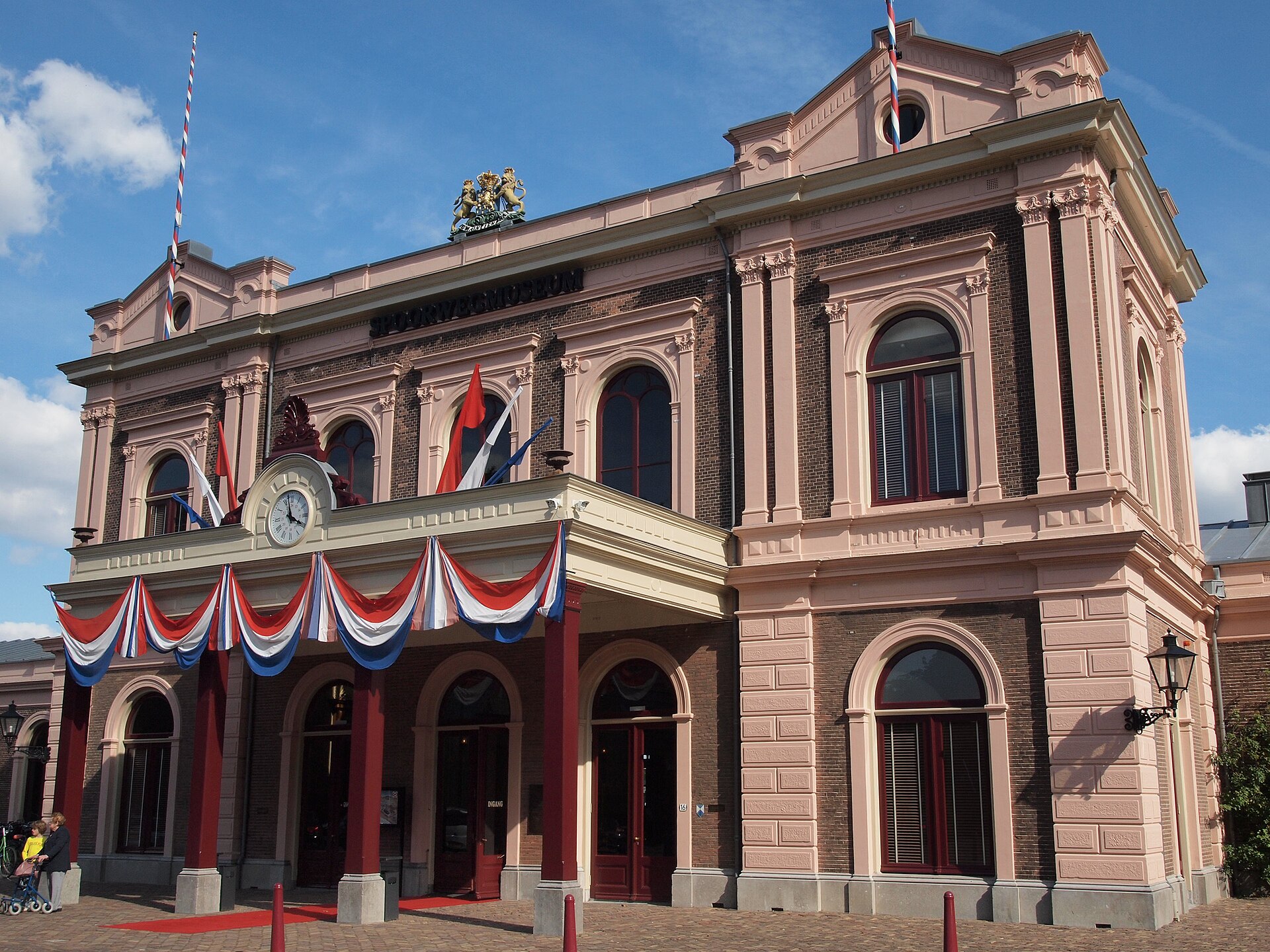
Het Spoorwegmuseum, located in Utrecht, is the national railway museum of the Netherlands. It is housed in the former Maliebaan station, a nineteenth-century building that serves as the centerpiece of a collection documenting the technological and social evolution of Dutch rail transport.
The museum features an extensive collection of over 120 historic locomotives, carriages, and trams. Beyond static displays, the site incorporates interactive exhibits, historical recreations, and technical workshops that illustrate the development of railway infrastructure and its impact on Dutch society from the 19th century to the present day.
Key Facts
- Materials
- Brick, Iron, Glass
- Civilization
- Dutch
- Accessibility
- Fully wheelchair accessible
- Date(s)
- 1874 (Station building)
- Condition
- Active museum
- Original Function
- Railway Station
- Key Figures
- King William III
Origins of Maliebaan Station
1874The Maliebaan station was constructed as part of the railway line connecting Utrecht to Hilversum. It served as a passenger station until 1921, after which it was repurposed for freight transport.
Establishment of the Museum
1927The Dutch Railway Museum was founded in 1927 to preserve the heritage of the national rail network. The collection was initially housed in various locations before finding a permanent home at the decommissioned Maliebaan station in 1954.
Modern Expansion
2003-2005The museum underwent a major renovation and expansion, reopening in 2005. This project integrated the historic station building with new exhibition halls, modernizing the visitor experience while preserving the site's industrial architecture.
Cultural Significance
The museum serves as a primary repository for Dutch industrial heritage. It plays a significant role in public education regarding the history of mobility and the engineering feats that connected the Netherlands during the industrial age. It is a focal point for railway enthusiasts and families alike, maintaining a link between historical technology and contemporary transport culture.
Interpretive Notes
Scholarly debates and areas of uncertainty
Discussions within the museum community often center on the balance between preserving original industrial artifacts in their 'as-found' state versus restoring them to operational condition for public demonstrations.
Visiting Information
Entry Rules
Open Tuesday through Sunday. Tickets can be purchased online or at the entrance. The museum is closed on Mondays, except during school holidays.
Best Times to Visit
Weekdays outside of school holidays offer the quietest experience. The museum is particularly popular during the winter holiday season.
Photography
Personal photography is permitted throughout the museum. Professional or commercial photography requires prior authorization from the museum management.
Preservation Notes
Visitors are requested not to climb on the historic locomotives or touch the delicate surfaces of the exhibits. Please follow all marked paths to ensure the safety of the collection.
Nearby POIs
11 shownSources & Further Reading
- [1]Het Spoorwegmuseum: Een eeuw spoorweghistorie — G.A. Russer. Spoorwegmuseum Publications (2005)
- [2]The History of Dutch Railways — J.J. Oerlemans. Railway Heritage Press (2012)
Key Facts
- Materials
- Brick, Iron, Glass
- Civilization
- Dutch
- Accessibility
- Fully wheelchair accessible
- Date(s)
- 1874 (Station building)
- Condition
- Active museum
- Original Function
- Railway Station
- Key Figures
- King William III