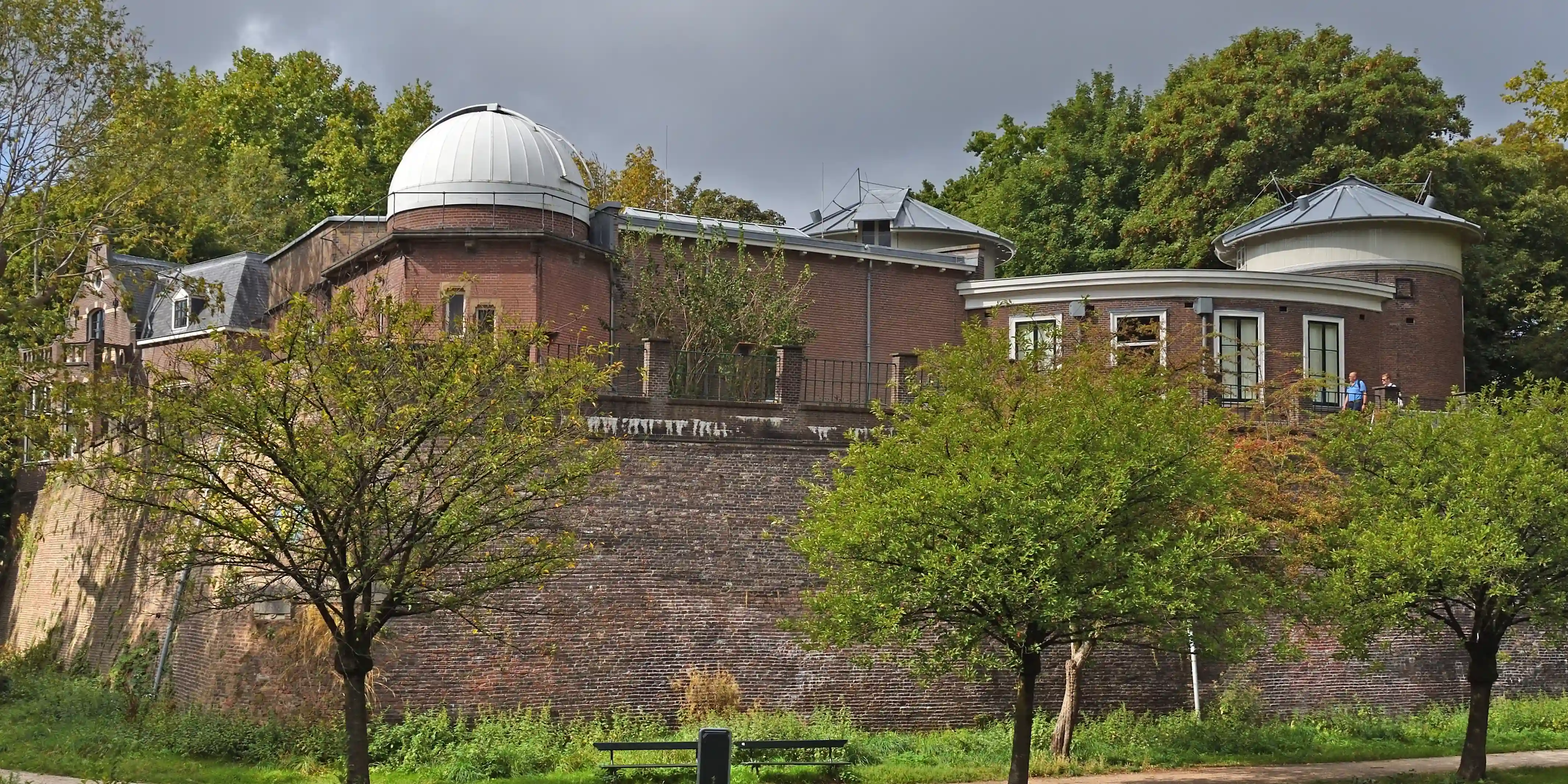
Sonnenborgh Observatory is located within the Zonnenburg bastion, a 16th-century fortification originally designed by architect Willem van Noort as part of Utrecht's defensive walls. In 1853, the site was repurposed into an astronomical observatory by Professor Christoph Buys Ballot, who founded the Royal Netherlands Meteorological Institute (KNMI) within its walls.
The facility served as the primary center for Dutch meteorology and astronomy for decades. Today, it operates as a museum and public observatory, housing historical instruments such as the Merz telescope and the meridian circle, while continuing to provide public access to astronomical observation and the history of scientific research in the Netherlands.
Key Facts
- Materials
- Brick, Stone, Iron
- Civilization
- Dutch
- Accessibility
- Partially accessible; historic building constraints apply
- Date(s)
- 1552 (bastion), 1853 (observatory)
- Condition
- Restored and active as a museum and observatory
- Original Function
- Military fortification
- Key Figures
- Willem van Noort, Christoph Buys Ballot
Military Origins
1552The Zonnenburg bastion was constructed as a defensive fortification to protect the city of Utrecht, featuring thick brick walls and a strategic position overlooking the city's canal system.
Foundation of the Observatory
1853Christoph Buys Ballot established the observatory and the Royal Netherlands Meteorological Institute (KNMI) at the site. It became the birthplace of modern Dutch weather forecasting and a hub for astronomical study.
Scientific Evolution
19th-20th CenturyThroughout the late 19th and early 20th centuries, the observatory was equipped with advanced instruments, including the Merz telescope, which allowed for significant contributions to solar and stellar observation.
Museum Transformation
1980s-PresentFollowing the relocation of the KNMI, the site was preserved as a museum. It now focuses on public education, offering tours of the historic bastion and opportunities for stargazing through its original telescopes.
Cultural Significance
Sonnenborgh represents the intersection of military history and the birth of modern science in the Netherlands. It is culturally significant as the cradle of Dutch meteorology, marking the transition from early defensive architecture to the institutionalization of scientific research in the 19th century.
Interpretive Notes
Scholarly debates and areas of uncertainty
There is ongoing discussion regarding the preservation of the site's dual identity as both a 16th-century military monument and a 19th-century scientific facility, particularly concerning how to maintain the structural integrity of the bastion while accommodating modern museum requirements.
Visiting Information
Entry Rules
Open to the public with ticketed admission. Check the official website for specific opening hours, as they vary between daytime museum visits and evening stargazing events.
Best Times to Visit
Clear evenings for stargazing sessions or weekend afternoons for museum tours.
Photography
Personal photography is permitted. Commercial photography requires prior arrangement with the museum administration.
Preservation Notes
The site is a protected monument. Visitors are requested to respect the historic fabric of the bastion and refrain from touching delicate astronomical instruments.
Nearby POIs
11 shownKey Facts
- Materials
- Brick, Stone, Iron
- Civilization
- Dutch
- Accessibility
- Partially accessible; historic building constraints apply
- Date(s)
- 1552 (bastion), 1853 (observatory)
- Condition
- Restored and active as a museum and observatory
- Original Function
- Military fortification
- Key Figures
- Willem van Noort, Christoph Buys Ballot