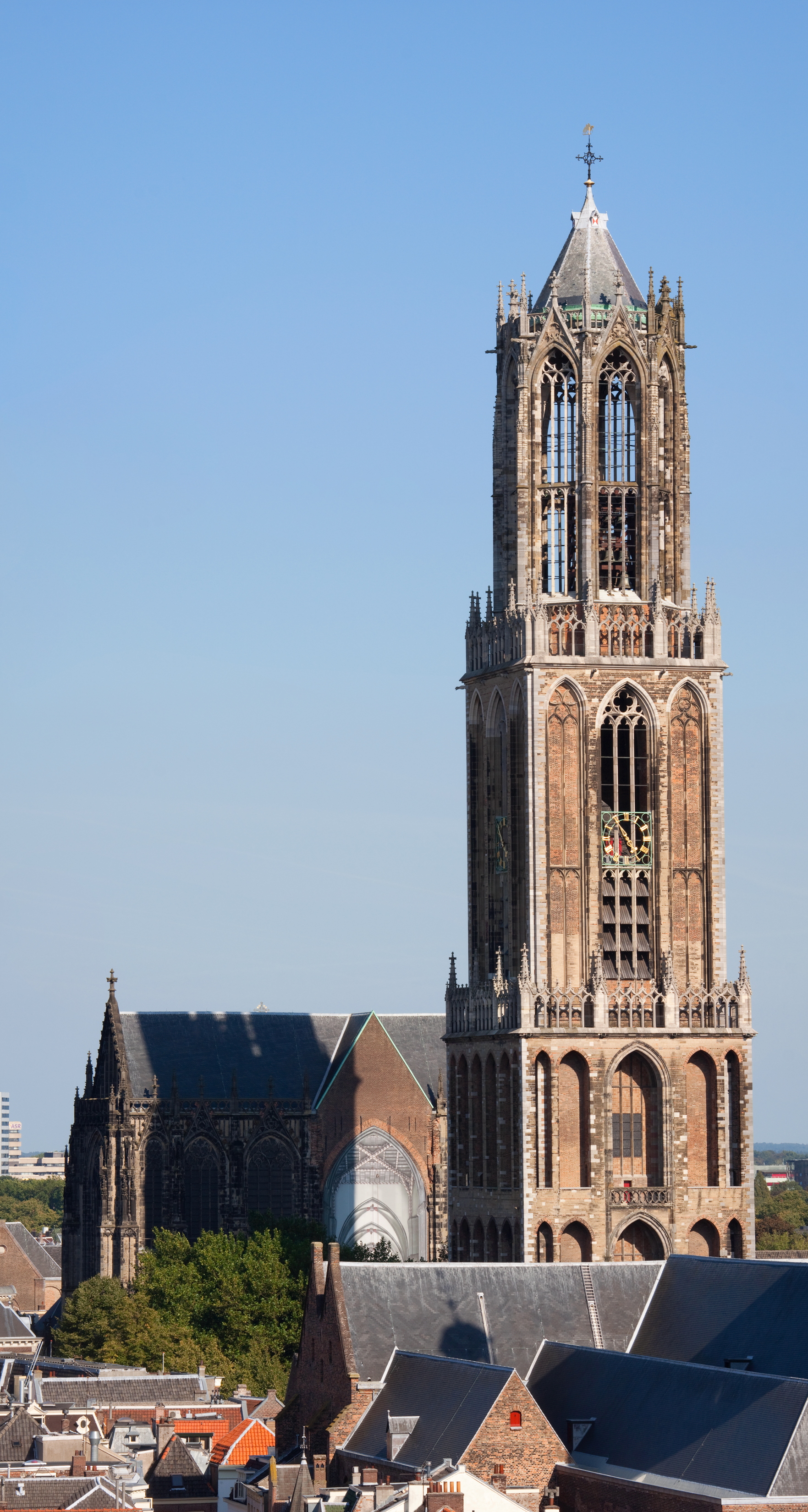
The Dom Tower of Utrecht is a free-standing Gothic bell tower reaching a height of 112.5 meters, serving as the primary architectural symbol of the city. Construction began in 1321 as part of the St. Martin's Cathedral complex, intended to demonstrate the power of the Bishop of Utrecht. The tower was separated from the main cathedral nave following the collapse of the church's central transept during a severe storm in 1674.
The structure consists of two square sections topped by an open lantern stage. It houses a historic collection of fourteen medieval bells, cast in the 15th and 16th centuries, which remain among the most significant in Europe. Today, the tower functions as a cultural landmark and observation point, offering views across the historic city center and the surrounding province.
Key Facts
- Materials
- Brick, Tuff, Sandstone
- Civilization
- Dutch
- Accessibility
- Staircase access only; not wheelchair accessible
- Date(s)
- 1321-1382
- Condition
- Well-preserved, active monument
- Original Function
- Bell tower for St. Martin's Cathedral
- Key Figures
- Jan van Henegouwen
Construction and Design
1321-1382The tower was commissioned by Bishop Frederick of Utrecht. Designed by Jan van Henegouwen, it was built to be the tallest tower in the Netherlands, utilizing a massive brick core faced with stone.
The Great Storm
1674A catastrophic tornado struck Utrecht in 1674, causing the nave of the St. Martin's Cathedral to collapse. The tower remained standing, effectively becoming a detached structure from the rest of the church.
Modern Preservation
20th century - presentExtensive restoration work was conducted between 1901 and 1931 to repair structural damage and weathering. The tower underwent a major multi-year renovation ending in 2024 to preserve its masonry and historical integrity.
Cultural Significance
The Dom Tower is the defining silhouette of Utrecht. Historically, it represented the ecclesiastical authority of the Prince-Bishopric of Utrecht. Its survival through the 1674 storm and its subsequent separation from the cathedral nave have made it a symbol of resilience for the city.
Local regulations have historically prohibited the construction of any building in the city center that exceeds the height of the Dom Tower, ensuring its dominance over the urban skyline and maintaining its status as a protected cultural landmark.
Interpretive Notes
Scholarly debates and areas of uncertainty
There is ongoing discussion regarding the original intended height of the tower and whether the 1674 collapse was purely a result of the storm or if structural weaknesses in the cathedral's design contributed to the failure of the transept.
Visiting Information
Entry Rules
Access is restricted to guided tours only. Tickets must be booked in advance online. Visitors must be physically capable of climbing 465 steps.
Best Times to Visit
Early morning or late afternoon for the best light for photography from the observation deck. Weekdays are generally less crowded than weekends.
Photography
Personal photography is permitted. Tripods and commercial equipment require prior authorization from the site management.
Preservation Notes
The tower is a fragile historic structure. Visitors must stay with their guide at all times and avoid touching the masonry or the historic bell mechanisms.
Nearby POIs
11 shownSources & Further Reading
- [1]De Domtoren van Utrecht — R.E. de Bruin. Matrijs (2005)
- [2]Utrecht: The Cathedral and the Tower — K. van Vliet. Stichting Domtoren (2018)
Key Facts
- Materials
- Brick, Tuff, Sandstone
- Civilization
- Dutch
- Accessibility
- Staircase access only; not wheelchair accessible
- Date(s)
- 1321-1382
- Condition
- Well-preserved, active monument
- Original Function
- Bell tower for St. Martin's Cathedral
- Key Figures
- Jan van Henegouwen