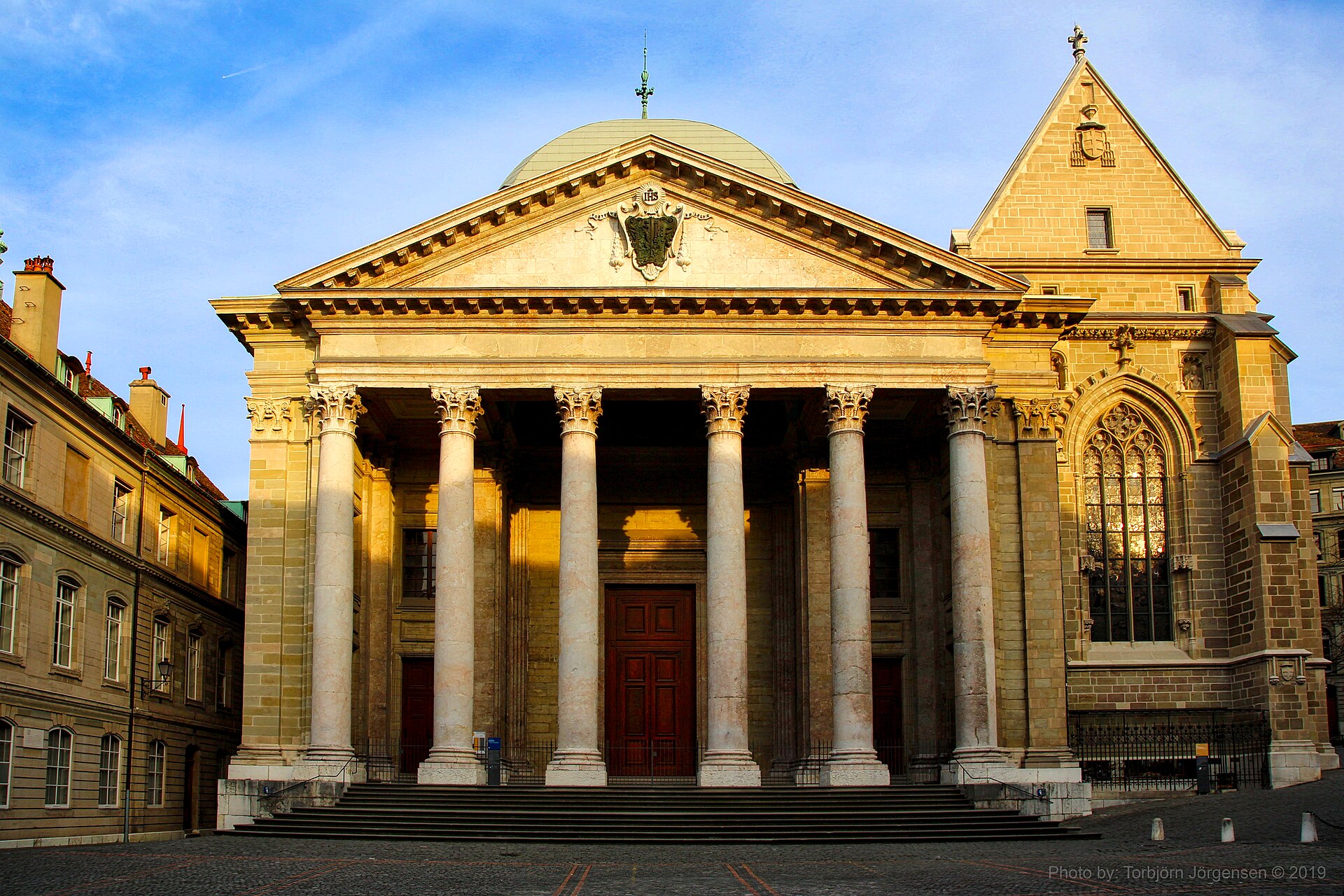
St. Pierre Cathedral, located in the heart of Geneva's Old Town, is a historic religious structure that serves as a significant architectural and spiritual landmark. Originally constructed as a Roman Catholic cathedral in the 12th century, the building underwent several transformations, most notably during the 16th-century Protestant Reformation when it became the home church of John Calvin.
The cathedral's architecture is a complex layering of styles, featuring a Romanesque core, Gothic elements, and a prominent 18th-century neoclassical facade. Its interior reflects the austerity typical of Reformed traditions, while the archaeological site beneath the cathedral reveals layers of history dating back to the late Roman period.
Key Facts
- Materials
- Sandstone, Limestone
- Civilization
- Swiss
- Accessibility
- Ground floor accessible, towers require stair climbing
- Date(s)
- 1160 - 1250 CE
- Condition
- Well-preserved, active Reformed church
- Original Function
- Catholic Cathedral
- Key Figures
- John Calvin, Arducius of Faucigny
Origins and Romanesque Foundation
12th centuryConstruction of the current cathedral began around 1160 under the direction of Bishop Arducius of Faucigny. It was built on the site of earlier religious structures, incorporating Romanesque architectural features.
Gothic Expansion
13th - 15th centuryDuring the 13th and 14th centuries, the cathedral was expanded with Gothic elements, including the choir and the nave, reflecting the evolving architectural trends of the period.
The Reformation
16th centuryIn 1535, the cathedral became a Protestant church during the Reformation. The interior was stripped of its Catholic iconography, and it became the primary pulpit for John Calvin, who preached there for many years.
Neoclassical Facade
18th centuryIn the mid-18th century, the original Gothic facade was replaced by a neoclassical portico designed by Benedetto Alfieri, giving the cathedral its distinctive appearance from the Place du Bourg-de-Four.
Cultural Significance
St. Pierre Cathedral is central to the history of the Protestant Reformation, serving as the spiritual headquarters for John Calvin's ministry. It remains a symbol of Geneva's identity as the 'Protestant Rome' and continues to function as a place of worship and a cultural heritage site.
The site is also highly significant for its archaeological value, as the excavations beneath the cathedral provide a continuous record of Geneva's history from the Roman era to the Middle Ages.
Interpretive Notes
Scholarly debates and areas of uncertainty
There is ongoing academic discussion regarding the extent of the original Romanesque versus Gothic structural integrity, as well as the precise layout of the early Christian basilicas that preceded the current cathedral.
Visiting Information
Entry Rules
Open daily to the public. Entry to the cathedral is free, though there is a fee for accessing the archaeological site and the cathedral towers. Modest dress is requested.
Best Times to Visit
Early morning or late afternoon to avoid peak tourist crowds. The towers offer the best views of the city during clear weather.
Photography
Photography is permitted for personal use without flash. Tripods and commercial photography require prior authorization.
Preservation Notes
The site is actively maintained. Visitors are asked to remain on marked paths, especially within the archaeological excavation area.
Nearby POIs
10 shownKey Facts
- Materials
- Sandstone, Limestone
- Civilization
- Swiss
- Accessibility
- Ground floor accessible, towers require stair climbing
- Date(s)
- 1160 - 1250 CE
- Condition
- Well-preserved, active Reformed church
- Original Function
- Catholic Cathedral
- Key Figures
- John Calvin, Arducius of Faucigny