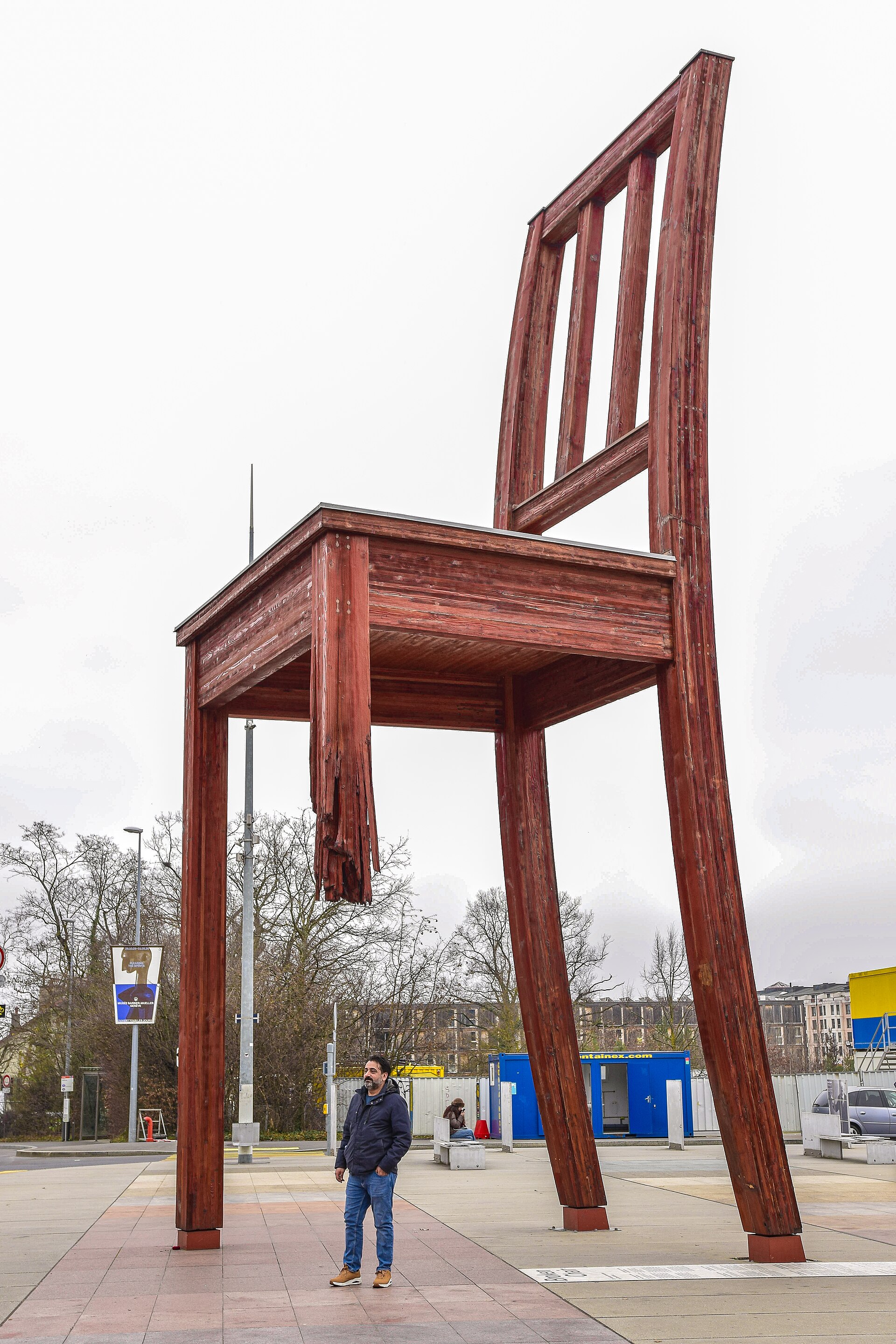
The Broken Chair is a monumental sculpture located in the Place des Nations in Geneva, Switzerland. Standing 12 meters tall and constructed from 5.5 tons of wood, the sculpture depicts a giant chair with one of its four legs snapped near the seat. It was commissioned by Handicap International to serve as a powerful symbol of the human cost of landmines and cluster munitions.
Created by Swiss artist Daniel Berset and constructed by carpenter Louis Genève, the monument was originally intended to stand for only three months during the 1997 negotiations of the Ottawa Treaty. Due to its profound impact and public support, it has remained a permanent fixture in front of the United Nations Office at Geneva, serving as a focal point for humanitarian advocacy and international protest.
Key Facts
- Materials
- Wood, Steel reinforcement
- Civilization
- Contemporary Swiss
- Accessibility
- Fully accessible in a public plaza
- Date(s)
- 1997
- Condition
- Well-maintained, permanent installation
- Original Function
- Protest monument against landmines
- Key Figures
- Daniel Berset, Paul Vermeulen
Conception and Creation
1997The sculpture was commissioned by Handicap International (now Humanity & Inclusion) to pressure governments during the drafting of the Ottawa Treaty, which sought to ban anti-personnel landmines. It was unveiled on August 18, 1997.
Temporary to Permanent
1997-2005Originally slated for removal after the signing of the treaty, the sculpture became a symbol of Geneva's humanitarian identity. It was dismantled in 2005 for the renovation of the Place des Nations but was reinstalled in 2007 following significant public demand.
Modern Advocacy
2007-PresentThe Broken Chair continues to serve as a site for demonstrations and vigils regarding human rights, disarmament, and international humanitarian law. It remains one of the most recognizable landmarks in the international district of Geneva.
Cultural Significance
The Broken Chair has transcended its original purpose as a protest against landmines to become a broader symbol of human vulnerability and the fight for justice. It represents the intersection of art and humanitarian diplomacy, acting as a silent witness to the deliberations occurring within the nearby United Nations headquarters.
For the local population and international visitors, the chair serves as a reminder of the physical and social fragmentation caused by war. Its presence in the Place des Nations reinforces Geneva's status as a global hub for peace-building and humanitarian action.
Interpretive Notes
Scholarly debates and areas of uncertainty
There is ongoing discussion regarding the efficacy of 'protest art' in influencing international policy. While some scholars argue that the sculpture successfully humanized the abstract legal debates of the Ottawa Treaty, others debate whether such monuments risk becoming aestheticized symbols that lose their political urgency over time.
Visiting Information
Entry Rules
The monument is located in a public square and is accessible 24 hours a day. No entry fees or tickets are required.
Best Times to Visit
Weekdays during business hours to witness the active diplomatic atmosphere of the Place des Nations. Early mornings offer the best opportunity for photography without crowds.
Photography
Public photography is permitted. Commercial filming or large-scale organized events at the site may require authorization from the City of Geneva.
Preservation Notes
The sculpture is maintained by the City of Geneva and Handicap International. Visitors are asked not to climb on the structure to ensure its preservation.
Nearby POIs
10 shown- Musee Ariana0.3 km
- Palace of Nations0.4 km
- International Red Cross and Red Crescent Museum0.5 km
- Monument Brunswick1.8 km
- International Museum of the Reformation2.5 km
- St. Pierre Cathedral2.5 km
- Reformation Wall2.6 km
- Musee d'Art et d'Histoire2.8 km
- Natural History Museum of Geneva3 km
- CERN Science Gateway6.5 km
Key Facts
- Materials
- Wood, Steel reinforcement
- Civilization
- Contemporary Swiss
- Accessibility
- Fully accessible in a public plaza
- Date(s)
- 1997
- Condition
- Well-maintained, permanent installation
- Original Function
- Protest monument against landmines
- Key Figures
- Daniel Berset, Paul Vermeulen
Nearby POIs
10 shown- Musee Ariana0.3 km
- Palace of Nations0.4 km
- International Red Cross and Red Crescent Museum0.5 km
- Monument Brunswick1.8 km
- International Museum of the Reformation2.5 km
- St. Pierre Cathedral2.5 km
- Reformation Wall2.6 km
- Musee d'Art et d'Histoire2.8 km
- Natural History Museum of Geneva3 km
- CERN Science Gateway6.5 km