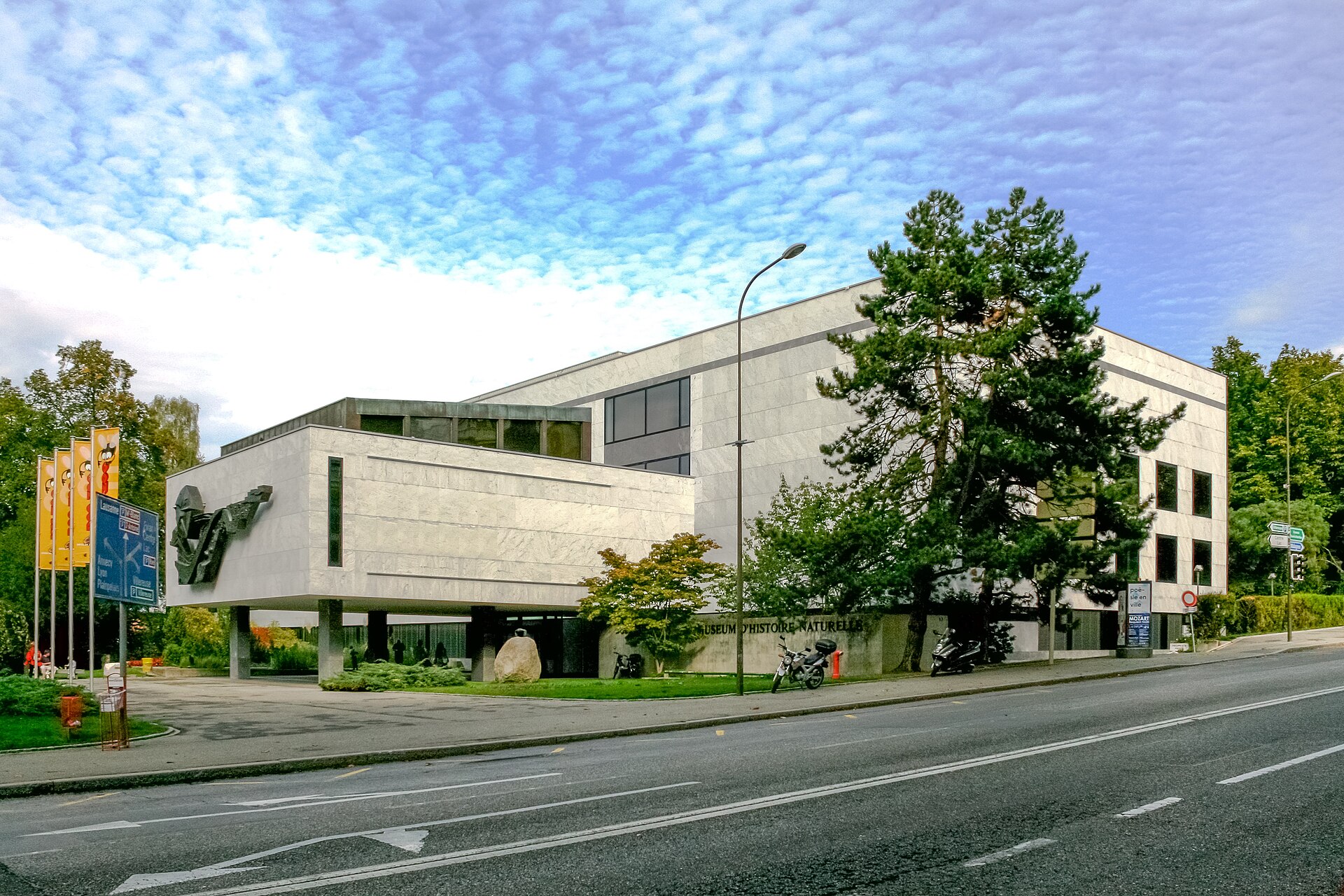
The Natural History Museum of Geneva (Muséum d'histoire naturelle de Genève) is a prominent scientific institution located in the Malagnou district. Founded in the 19th century, the museum serves as a repository for extensive collections in zoology, geology, and paleontology, with a particular focus on the biodiversity of the Alpine region and global evolutionary history.
The museum is widely recognized for its expansive dioramas, which provide detailed reconstructions of regional fauna and habitats. Beyond its public exhibitions, the institution functions as a significant research center, housing millions of specimens that support ongoing studies in taxonomy, ecology, and environmental conservation.
Key Facts
- Materials
- Concrete, Glass, Steel
- Civilization
- Swiss
- Accessibility
- Fully wheelchair accessible
- Date(s)
- 1966 (current building)
- Condition
- Active, well-maintained
- Original Function
- Scientific research and public education
- Key Figures
- François-Jules Pictet de la Rive
Foundations
1820The museum's origins trace back to the early 19th century when the city of Geneva began consolidating private collections, notably those of François-Jules Pictet de la Rive, into a public institution.
Expansion and Relocation
1966To accommodate the rapidly growing collection, the museum moved to its current purpose-built facility in the Malagnou park, designed to integrate modern exhibition spaces with research laboratories.
Modern Development
21st CenturyThe museum continues to modernize its displays and digital archives, focusing on climate change education and the preservation of endangered species, while maintaining its status as a key cultural landmark in Geneva.
Cultural Significance
The museum serves as a vital educational hub for the Canton of Geneva, bridging the gap between academic research and public scientific literacy. It plays a crucial role in regional identity by documenting the natural heritage of the Swiss Alps and fostering a deeper understanding of environmental stewardship.
Interpretive Notes
Scholarly debates and areas of uncertainty
Discussions within the institution often center on the ethics of displaying historical taxidermy versus modern digital conservation methods, as well as the ongoing debate regarding the repatriation of colonial-era specimens held in European natural history collections.
Visiting Information
Entry Rules
Open Tuesday to Sunday. Entry to permanent exhibitions is free of charge. Visitors are expected to maintain a quiet environment suitable for study and observation.
Best Times to Visit
Weekday mornings are generally quieter, allowing for better access to the dioramas and interactive displays.
Photography
Personal photography is permitted without flash. Tripods and professional equipment require prior authorization from the museum administration.
Preservation Notes
Do not touch the display cases or specimens. Flash photography is strictly prohibited to prevent light damage to sensitive biological materials.
Nearby POIs
10 shownSources & Further Reading
- [1]Muséum d'histoire naturelle de Genève: Official History — Institution Staff. Ville de Genève (2023)View
- [2]The Natural History Museums of Switzerland — Various Contributors. Swiss Academy of Sciences (2018)
Key Facts
- Materials
- Concrete, Glass, Steel
- Civilization
- Swiss
- Accessibility
- Fully wheelchair accessible
- Date(s)
- 1966 (current building)
- Condition
- Active, well-maintained
- Original Function
- Scientific research and public education
- Key Figures
- François-Jules Pictet de la Rive