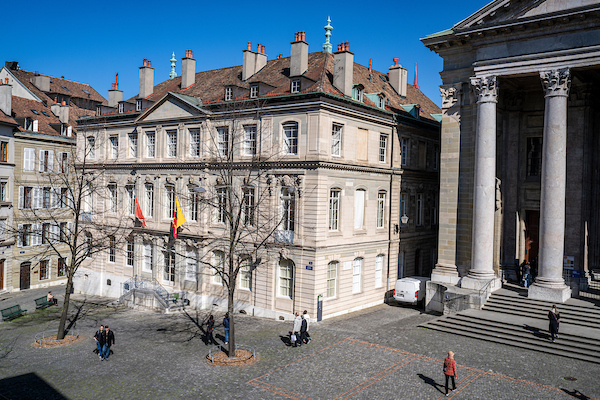
The International Museum of the Reformation (MIR) is located in the Maison Mallet, a 16th-century townhouse built on the site of the former cloister of Saint-Pierre Cathedral in Geneva. The museum documents the history of the Protestant Reformation, tracing its origins from the theological challenges posed by Martin Luther and Huldrych Zwingli to the specific influence of John Calvin in Geneva.
The collection features a diverse array of artifacts, including rare manuscripts, historical Bibles, paintings, and engravings that illustrate the movement's theological, social, and cultural impact. By utilizing multimedia displays and original architectural features, the museum provides a comprehensive overview of how the Reformation transformed European society and its lasting legacy in the contemporary era.
Key Facts
- Materials
- Stone, Wood, Glass
- Civilization
- Swiss/European
- Accessibility
- Wheelchair accessible
- Date(s)
- 1723 (Maison Mallet)
- Condition
- Well-preserved, active museum
- Original Function
- Private residence
- Key Figures
- John Calvin, William Farel, Theodore Beza
The Site's Origins
16th centuryThe museum is situated on the grounds of the former Saint-Pierre Cathedral cloister, the very location where the General Council of Geneva voted to adopt the Reformation in 1536.
Construction of Maison Mallet
1723The current building, known as the Maison Mallet, was constructed in 1723 by the banker Jacques Mallet on the foundations of the medieval cloister, preserving the historical significance of the location.
Establishment of the Museum
2005The International Museum of the Reformation was inaugurated in 2005, aiming to provide a scholarly and accessible space to explore the history of the Protestant movement and its global influence.
Cultural Significance
The museum serves as a primary site for understanding Geneva's identity as the 'Protestant Rome.' It highlights the city's historical role as a refuge for persecuted Protestants and a center for theological education that influenced political and social structures across Europe and the Americas.
Interpretive Notes
Scholarly debates and areas of uncertainty
Debates often center on the interpretation of the Reformation's impact on the rise of modern capitalism and the extent to which Calvinist theology directly influenced the development of democratic governance in the West.
Visiting Information
Entry Rules
Open Tuesday through Sunday. Tickets can be purchased on-site or online. Photography is permitted for personal use without flash.
Best Times to Visit
Weekday mornings are generally quieter. The museum is well-suited for visits throughout the year as it is entirely indoors.
Photography
Personal photography is allowed without flash or tripods. Professional photography requires prior authorization.
Preservation Notes
Visitors are requested to refrain from touching the artifacts and to maintain a quiet demeanor in the exhibition halls.
Nearby POIs
10 shownSources & Further Reading
- [1]The Reformation: A History — Diarmaid MacCulloch. Viking (2003)
- [2]John Calvin: A Pilgrim's Life — Herman J. Selderhuis. InterVarsity Press (2009)
Key Facts
- Materials
- Stone, Wood, Glass
- Civilization
- Swiss/European
- Accessibility
- Wheelchair accessible
- Date(s)
- 1723 (Maison Mallet)
- Condition
- Well-preserved, active museum
- Original Function
- Private residence
- Key Figures
- John Calvin, William Farel, Theodore Beza