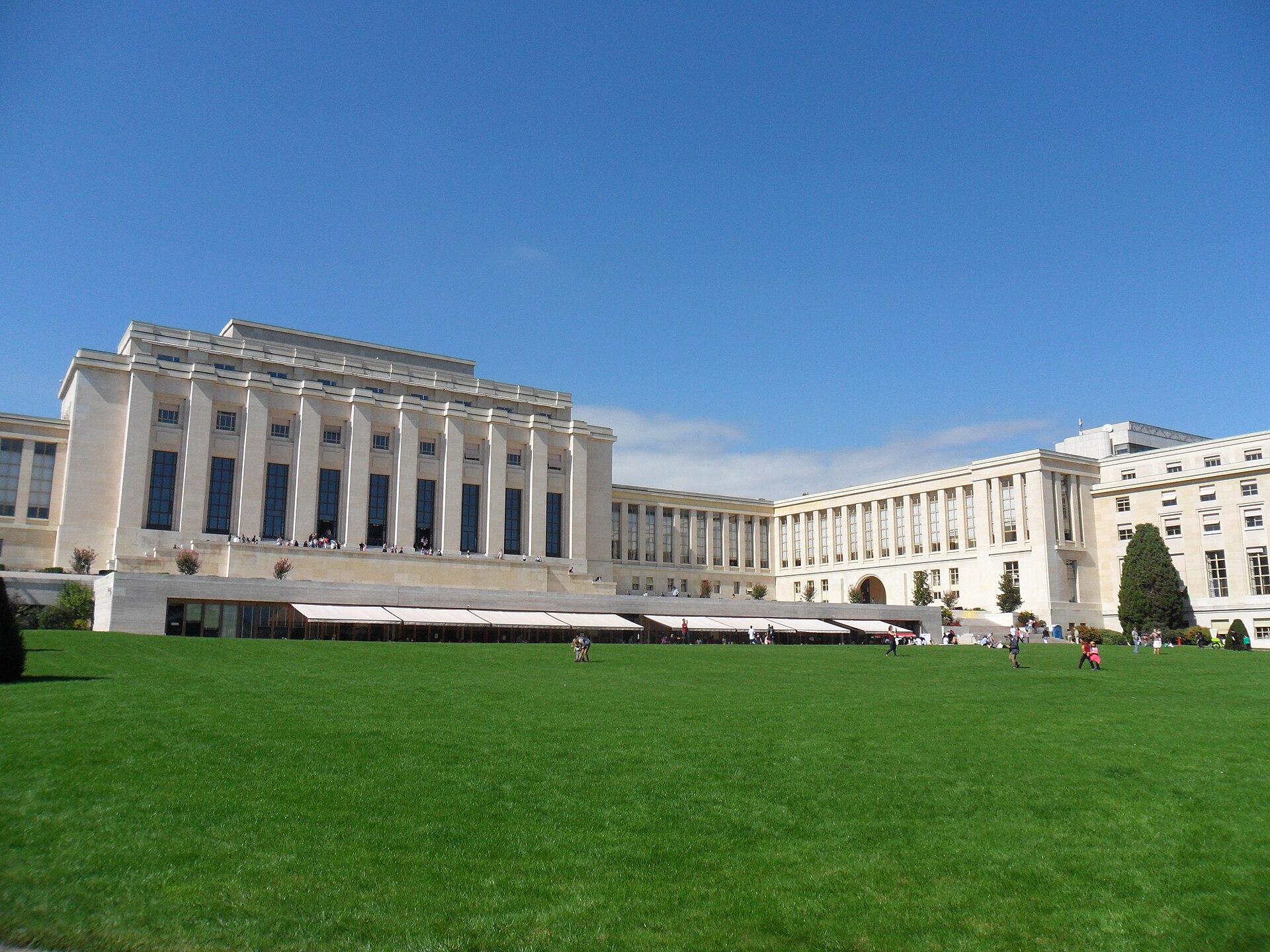
The Palace of Nations (Palais des Nations) serves as the European headquarters of the United Nations and is one of the most active centers of multilateral diplomacy in the world. Located within the Ariana Park in Geneva, the complex was originally constructed between 1929 and 1938 to serve as the headquarters for the League of Nations.
The architectural design is a blend of Neoclassical and Art Deco styles, characterized by its monumental scale and functional layout designed to accommodate international assemblies. Following the dissolution of the League of Nations, the site was transferred to the United Nations in 1946, continuing its legacy as a hub for international peace, human rights, and humanitarian cooperation.
Key Facts
- Materials
- Reinforced concrete, Limestone, Marble
- Civilization
- Modern International
- Accessibility
- Wheelchair accessible with guided tour routes
- Date(s)
- 1929-1938
- Condition
- Active, well-maintained international diplomatic center
- Original Function
- Headquarters of the League of Nations
- Key Figures
- Carlo Broggi, Camille Lefèvre, Henri-Paul Nénot
Design and Competition
1920sFollowing the establishment of the League of Nations, an international architectural competition was held in 1927 to design a new headquarters. Over 370 entries were submitted, leading to a collaborative design by five architects: Carlo Broggi, Camille Lefèvre, Henri-Paul Nénot, Julien Flegenheimer, and Joseph Vago.
League of Nations Era
1938-1946The building was inaugurated in 1938. It served as the primary administrative and assembly space for the League of Nations until the organization's decline and eventual dissolution following the outbreak of World War II.
United Nations Transition
1946-PresentIn 1946, the site was transferred to the newly formed United Nations. Since then, the Palace has undergone several expansions, including the construction of the New Building (Building E) in the 1970s to accommodate the growing number of international agencies and diplomatic missions.
Cultural Significance
The Palace of Nations is a global symbol of international cooperation and the pursuit of peace. Its status as international territory within Switzerland underscores its neutrality and its role as a neutral ground for nations to resolve conflicts through dialogue rather than force.
Beyond its political function, the site houses significant art collections donated by member states, reflecting a diverse range of cultural expressions and the collective aspiration for a unified global community.
Interpretive Notes
Scholarly debates and areas of uncertainty
Debates often center on the architectural legacy of the building, specifically the tension between its rigid, monumental Neoclassical aesthetic and the evolving needs of modern international bureaucracy. Additionally, there is ongoing discussion regarding the environmental sustainability of maintaining such a massive, aging complex while meeting modern energy efficiency standards.
Visiting Information
Entry Rules
Access is restricted to guided tours, official delegates, and accredited media. Visitors must present valid government-issued photo identification and pass through security screening. Tours are available in multiple languages and must be booked in advance.
Best Times to Visit
Weekdays during the spring and autumn months are ideal to avoid the peak summer tourist crowds and to ensure the facility is fully operational for diplomatic sessions.
Photography
Photography is permitted in public areas and during guided tours, but is strictly prohibited in restricted diplomatic zones and security-sensitive areas. Tripods and professional equipment require prior authorization.
Preservation Notes
The site is subject to the Strategic Heritage Plan, a long-term renovation project aimed at modernizing infrastructure while preserving the historical integrity of the original 1930s architecture.
Nearby POIs
10 shownSources & Further Reading
- [1]The Palais des Nations: A History of the League of Nations Headquarters — United Nations Office at Geneva. UNOG Publishing (2015)View
- [2]Architecture of the League of Nations — George B. K. S. M.. Journal of International Architectural History (2019)
Key Facts
- Materials
- Reinforced concrete, Limestone, Marble
- Civilization
- Modern International
- Accessibility
- Wheelchair accessible with guided tour routes
- Date(s)
- 1929-1938
- Condition
- Active, well-maintained international diplomatic center
- Original Function
- Headquarters of the League of Nations
- Key Figures
- Carlo Broggi, Camille Lefèvre, Henri-Paul Nénot