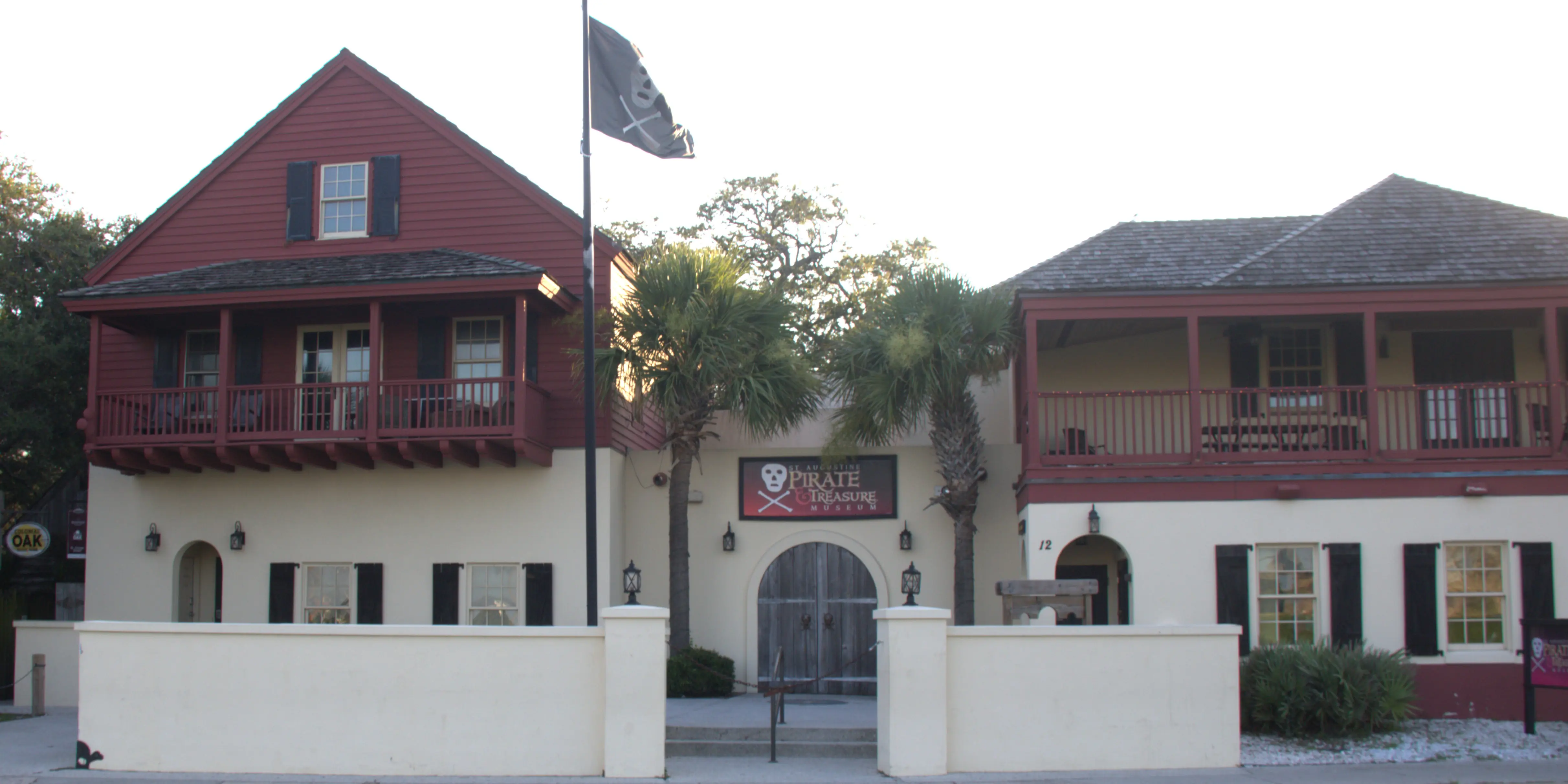
The St. Augustine Pirate & Treasure Museum is a private institution dedicated to the history of piracy and maritime exploration in the Caribbean and Florida. Located in the historic district of St. Augustine, the museum houses an extensive collection of artifacts, including authentic pirate weaponry, navigational instruments, and gold bullion recovered from shipwrecks.
The facility is designed to provide an immersive educational experience, focusing on the lives of historical figures such as Sir Francis Drake and Captain William Kidd. It serves as a repository for rare maritime items, including one of the world's oldest known pirate treasure chests and a genuine Jolly Roger flag, while contextualizing the role of privateers in the colonial history of the Americas.
Key Facts
- Materials
- Brick, Wood, Glass
- Civilization
- Modern American
- Accessibility
- Fully wheelchair accessible
- Date(s)
- 2005
- Condition
- Active
- Original Function
- Museum
- Key Figures
- Pat Croce
Founding and Collection
2005The museum was established by entrepreneur and former NBA executive Pat Croce to house his extensive private collection of pirate-related artifacts. It was originally located in Key West before relocating to its current site in St. Augustine in 2010.
Relocation to St. Augustine
2010The museum moved to the historic district of St. Augustine to better align with the city's deep maritime history and its connection to the Spanish colonial era. The new facility was designed to accommodate larger exhibits and interactive displays.
Modern Curation
2010-PresentThe museum continues to acquire rare maritime artifacts and expand its educational programming. It remains a focal point for historical research regarding the Golden Age of Piracy and its impact on Atlantic trade routes.
Cultural Significance
The museum plays a significant role in the cultural landscape of St. Augustine, reinforcing the city's identity as a hub of colonial maritime history. By focusing on the intersection of piracy and international trade, it provides a unique perspective on the geopolitical tensions that defined the 17th and 18th centuries in the Atlantic world.
Interpretive Notes
Scholarly debates and areas of uncertainty
There is ongoing academic discussion regarding the romanticization of piracy in popular culture versus the historical reality of maritime violence. The museum attempts to balance these perspectives by presenting documented artifacts alongside historical narratives.
Visiting Information
Entry Rules
Open daily. Tickets can be purchased at the entrance or online. No specific dress code required.
Best Times to Visit
Weekdays during the off-season (September-November) offer the most quiet experience for viewing the collection.
Photography
Personal photography is permitted for non-commercial use. Flash photography is discouraged to protect sensitive artifacts.
Preservation Notes
Do not touch the artifacts or display cases. Maintain a respectful distance from all exhibits to ensure the longevity of the collection.
Nearby POIs
9 shownKey Facts
- Materials
- Brick, Wood, Glass
- Civilization
- Modern American
- Accessibility
- Fully wheelchair accessible
- Date(s)
- 2005
- Condition
- Active
- Original Function
- Museum
- Key Figures
- Pat Croce