Saint Augustine,United States of America
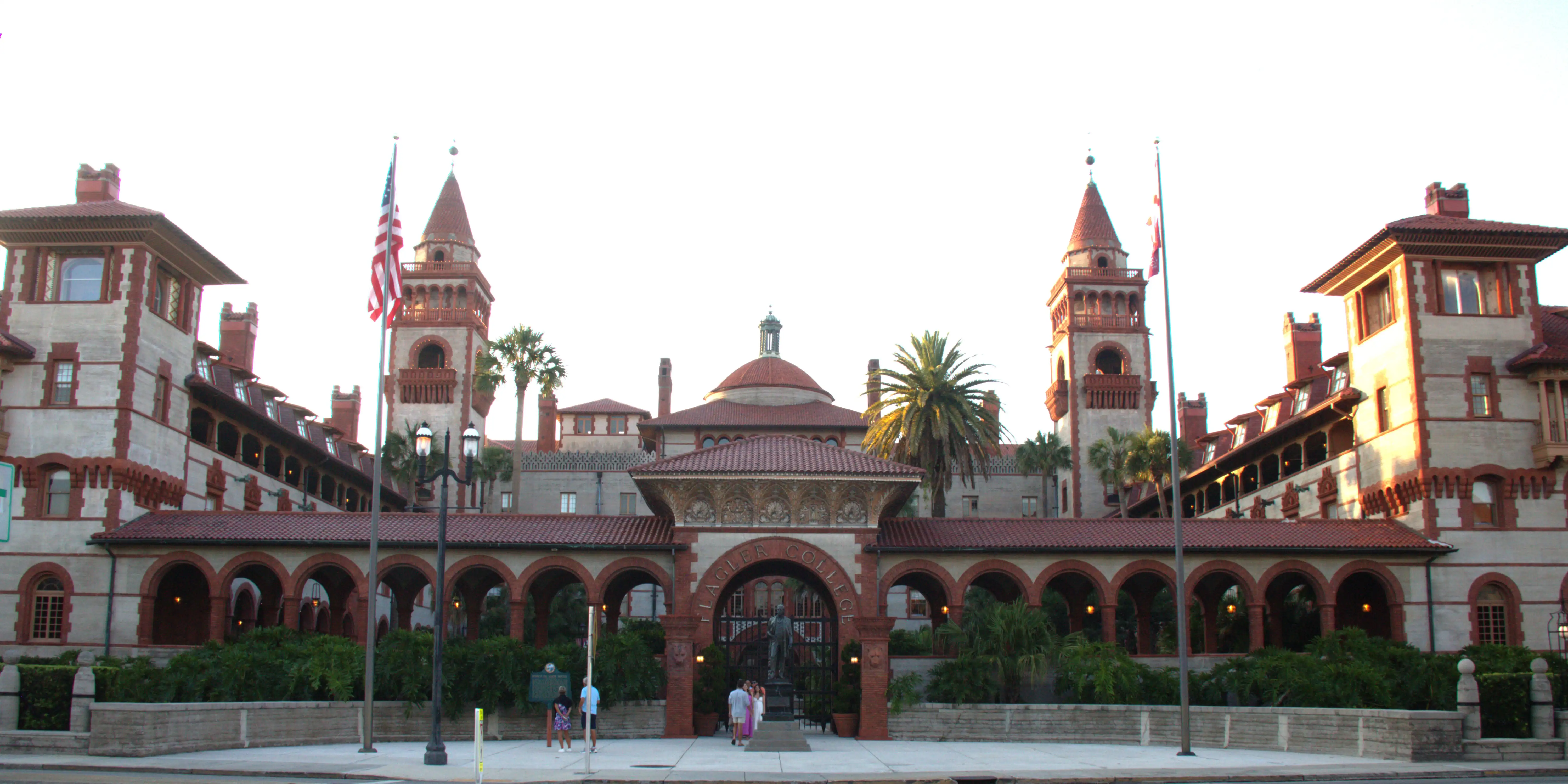
Ponce de Leon Hotel
The Ponce de Leon Hotel, commissioned by railroad magnate Henry Flagler, opened in 1888 in St. Augustine, Florida. Designed by the architectural firm Carrère and Hastings, the structure is a premier example of Spanish Renaissance Revival architecture. It was one of the first major buildings in the United States to be constructed using poured concrete, incorporating local coquina aggregate into the mix.
The hotel served as a luxury winter resort for the wealthy elite during the Gilded Age, playing a pivotal role in the development of Florida's tourism industry. Following its closure as a hotel in 1967, the building was repurposed as the centerpiece of Flagler College, housing administrative offices and student facilities while maintaining much of its original opulent interior design.
Key Facts
- Materials
- Poured concrete, Coquina, Terra cotta
- Civilization
- United States
- Accessibility
- Limited to public tours and campus access
- Date(s)
- 1885-1888
- Condition
- Well-preserved, currently used as a college campus
- Original Function
- Luxury Resort Hotel
- Key Figures
- Henry Flagler, John Carrère, Thomas Hastings, Louis Comfort Tiffany
Conception and Construction
1885-1888Henry Flagler, co-founder of Standard Oil, envisioned the hotel as a catalyst for transforming St. Augustine into a premier winter destination. The project utilized innovative construction techniques, including the use of poured concrete, which was a pioneering application for a building of this scale at the time.
The Gilded Age Resort
1888-1967For decades, the hotel hosted the nation's wealthiest families, featuring lavish amenities and interiors decorated by Louis Comfort Tiffany. It became a symbol of Florida's emergence as a luxury travel destination, though its popularity eventually waned with the rise of modern transportation and changing vacation trends.
Transition to Flagler College
1968-PresentAfter ceasing operations as a hotel, the property was acquired by Flagler College. The institution has undertaken extensive preservation efforts to maintain the historic integrity of the building, which now serves as the primary administrative and residential hub for the campus.
Cultural Significance
The Ponce de Leon Hotel is a landmark of American architectural history, representing the intersection of Gilded Age wealth and the birth of Florida's tourism economy. Its preservation as an active educational institution highlights the successful adaptive reuse of historic structures in the United States.
Interpretive Notes
Scholarly debates and areas of uncertainty
Discussions among architectural historians often focus on the extent of the influence of Spanish colonial motifs versus the Beaux-Arts training of its architects, Carrère and Hastings. Additionally, the long-term structural impact of the early experimental concrete mix remains a subject of ongoing monitoring by preservationists.
Visiting Information
Entry Rules
The building is part of the Flagler College campus. Public access is generally restricted to guided historical tours offered by the college. Visitors should check the official college website for tour schedules and campus visitor policies.
Best Times to Visit
Spring and autumn offer the most comfortable weather for walking tours of the historic district. Tours are available throughout the academic year, though availability may be limited during college holidays.
Photography
Personal photography is generally permitted in public areas of the campus, but commercial photography and the use of tripods require prior authorization from the college administration.
Preservation Notes
The building is a National Historic Landmark. Visitors are expected to respect the academic environment, refrain from touching historic finishes, and remain within designated tour areas.
Nearby POIs
9 shownSources & Further Reading
- [1]Henry Flagler: The Astonishing Life and Times of the Visionary Robber Baron — David Leon Chandler. Macmillan (1986)
- [2]The Ponce de Leon Hotel: A History — Thomas Graham. Flagler College Press (2005)
Key Facts
- Materials
- Poured concrete, Coquina, Terra cotta
- Civilization
- United States
- Accessibility
- Limited to public tours and campus access
- Date(s)
- 1885-1888
- Condition
- Well-preserved, currently used as a college campus
- Original Function
- Luxury Resort Hotel
- Key Figures
- Henry Flagler, John Carrère, Thomas Hastings, Louis Comfort Tiffany