Saint Augustine,United States of America
Old St. Johns County Jail
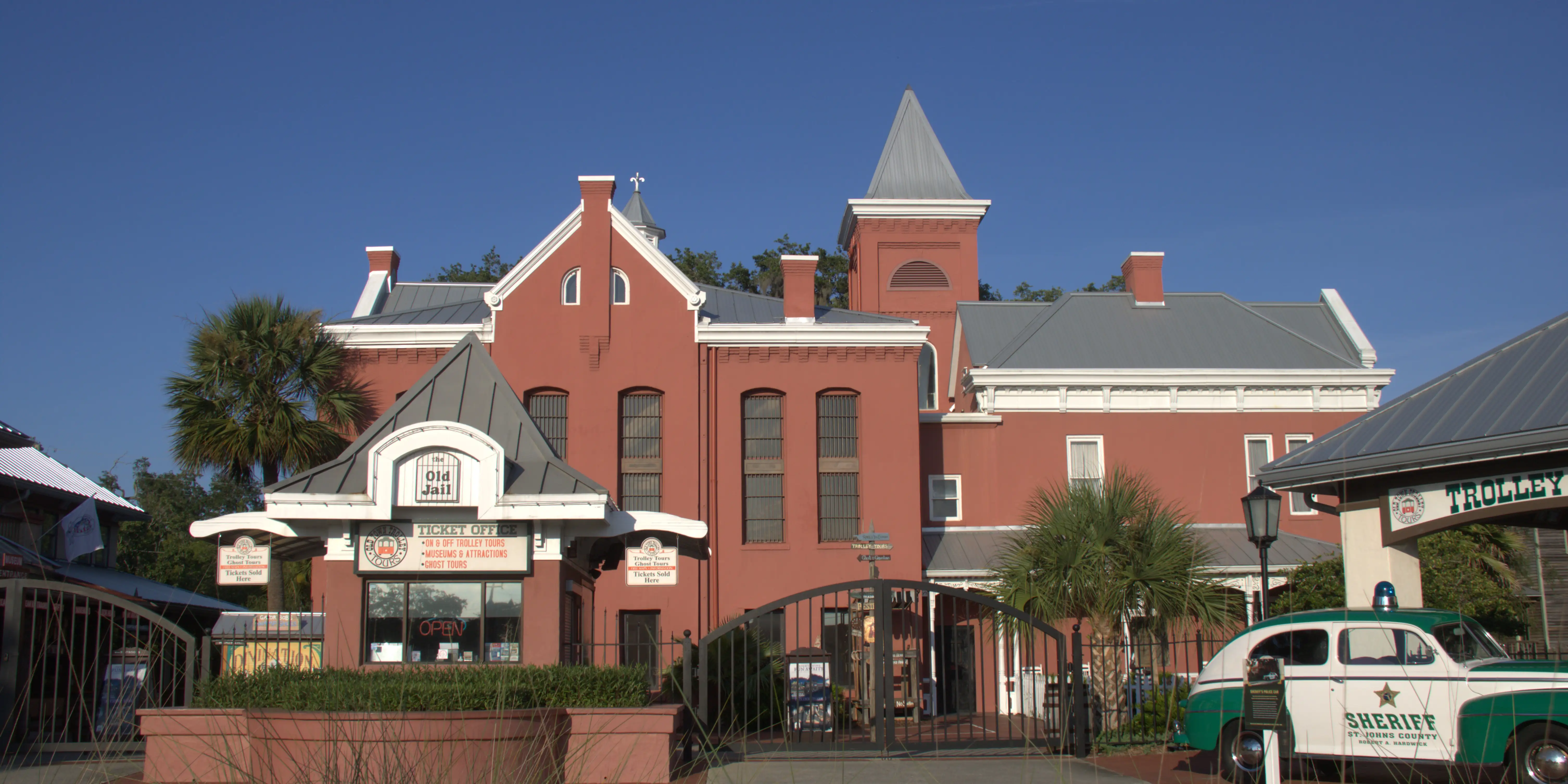
The Old St. Johns County Jail was constructed in 1891 in St. Augustine, Florida, to serve as the primary detention facility for the county. Designed by the architectural firm McDonald Brothers, the structure was built to resemble a residence to minimize its visual impact on the surrounding neighborhood, a common architectural practice of the era. It remained in continuous operation as a jail until 1953.
Following its closure, the building was repurposed as a tourist attraction, highlighting the history of the American penal system and the conditions experienced by inmates during the late Victorian and early Edwardian periods. The site is currently managed as a historical museum, featuring guided tours that focus on the architectural design and the daily lives of prisoners and staff during its sixty-two years of operation.
Key Facts
- Materials
- Brick, Steel, Iron
- Civilization
- United States
- Accessibility
- Ground floor accessible
- Date(s)
- 1891
- Condition
- Restored and preserved as a museum
- Original Function
- County Jail
- Key Figures
- Henry Flagler
Construction and Design
1891The jail was commissioned to replace an aging facility. The architects utilized a design that masked the prison's true function behind a facade that mimicked a sheriff's home, allowing it to blend into the residential character of St. Augustine.
Operational Years
1891-1953For over six decades, the facility housed inmates ranging from local petty offenders to those awaiting trial for more serious crimes. The jail utilized a system of iron cells and strict supervision, reflecting the penal philosophies of the late 19th century.
Transition to Tourism
1953-PresentAfter the facility was decommissioned in 1953, it was acquired by private interests and opened to the public. It has since become one of the city's longest-running tourist attractions, focusing on historical education and the preservation of the original structure.
Cultural Significance
The Old St. Johns County Jail serves as a significant example of 19th-century civic architecture and the evolution of the American justice system. It represents the intersection of local history and the rise of Florida's tourism industry in the mid-20th century, providing insight into how historical sites are repurposed for public education and entertainment.
Interpretive Notes
Scholarly debates and areas of uncertainty
There is ongoing discussion regarding the balance between historical accuracy and the 'haunted' narrative often emphasized in commercial tourism. Scholars debate the extent to which the focus on paranormal folklore obscures the genuine social and legal history of the inmates who were incarcerated there.
Visiting Information
Entry Rules
Open daily for guided tours. Tickets can be purchased on-site or through the official museum website. No specific dress code is required.
Best Times to Visit
Weekday mornings are recommended to avoid peak tourist crowds. The site is open year-round, though indoor areas can become warm during summer months.
Photography
Personal photography is permitted throughout the museum. Commercial photography requires prior authorization from the management.
Preservation Notes
Visitors are requested to stay within designated tour areas and refrain from touching the original ironwork and historical artifacts to ensure their long-term preservation.
Nearby POIs
9 shownSources & Further Reading
- [1]St. Augustine: A History of the Oldest City — Jean Parker Waterbury. St. Augustine Historical Society (1983)
- [2]The Architecture of Florida's Historic Jails — Robert J. MacLeod. Florida Heritage Press (2005)
Key Facts
- Materials
- Brick, Steel, Iron
- Civilization
- United States
- Accessibility
- Ground floor accessible
- Date(s)
- 1891
- Condition
- Restored and preserved as a museum
- Original Function
- County Jail
- Key Figures
- Henry Flagler