Saint Augustine,United States of America
Lightner Museum
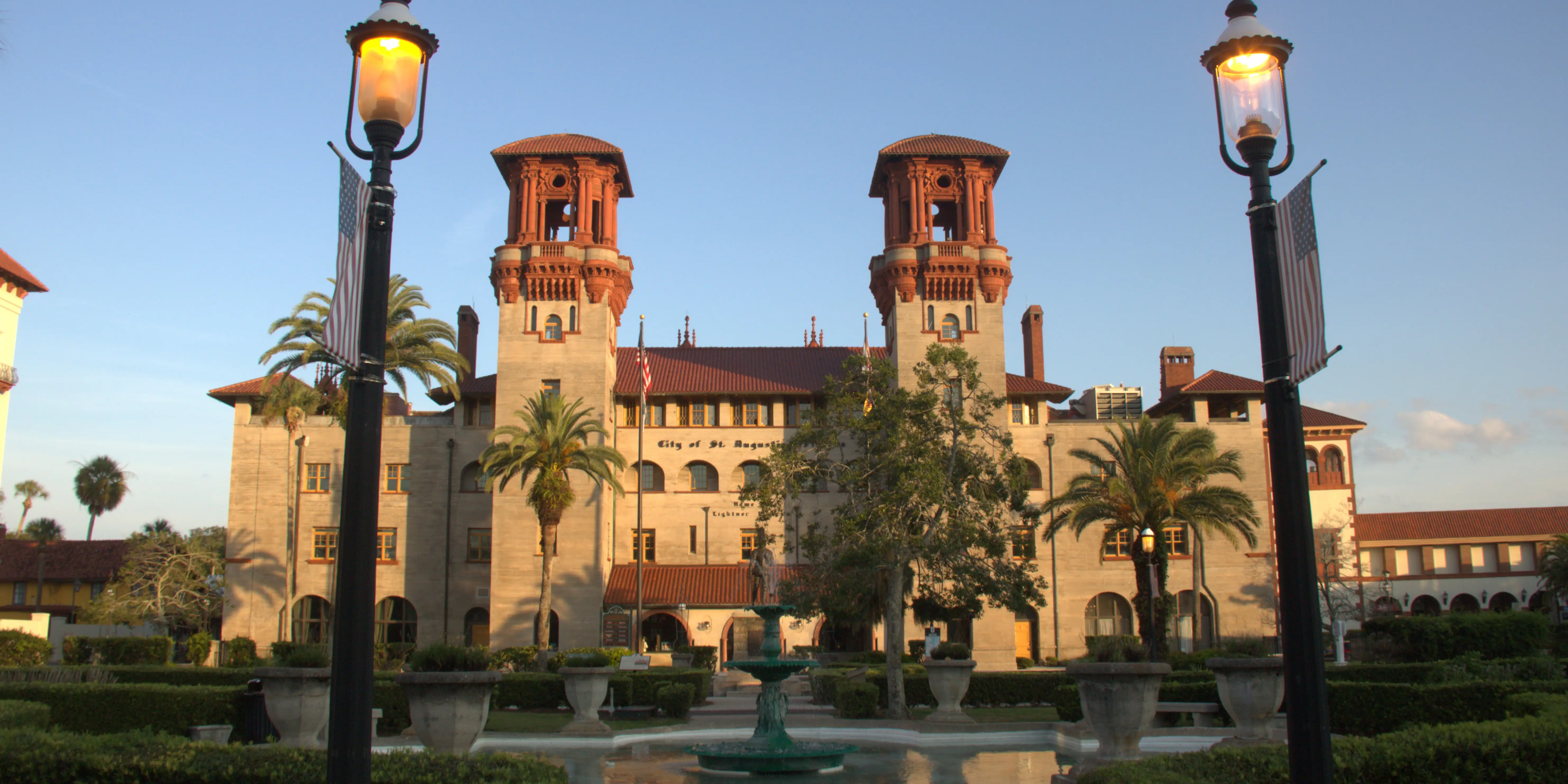
The Lightner Museum is housed in the former Hotel Alcazar, a Gilded Age resort hotel commissioned by Henry Flagler and designed by architects Carrère and Hastings. Completed in 1888, the building is a prominent example of Spanish Renaissance Revival architecture, featuring a grand courtyard, arched loggias, and intricate terracotta ornamentation. It served as a luxury destination for wealthy northern tourists until its closure during the Great Depression.
In 1948, the building was purchased by Chicago publisher Otto C. Lightner to house his extensive collection of 19th-century fine and decorative arts. Today, the museum showcases a diverse array of Gilded Age artifacts, including mechanical musical instruments, stained glass, Victorian-era furniture, and natural history specimens, preserved within the historic hotel's original architectural framework.
Key Facts
- Materials
- Poured concrete, Terracotta, Stucco
- Civilization
- American
- Accessibility
- Wheelchair accessible with elevator access to upper floors
- Date(s)
- 1887-1888
- Condition
- Well-preserved, operating as a museum
- Original Function
- Hotel Alcazar
- Key Figures
- Henry Flagler, Otto C. Lightner, John Carrère, Thomas Hastings
The Hotel Alcazar Era
1888-1931Commissioned by railroad magnate Henry Flagler, the Hotel Alcazar was built to accommodate the overflow of guests from the nearby Ponce de Leon Hotel. It featured state-of-the-art amenities for the time, including a massive indoor swimming pool, a steam room, and a gymnasium.
Closure and Acquisition
1931-1948The hotel struggled during the economic downturn of the 1930s and eventually closed its doors in 1931. The building remained vacant until 1948, when Otto C. Lightner purchased the structure to transform it into a museum for his private collection.
Establishment as a Museum
1948-PresentFollowing the donation of the building and collection to the City of St. Augustine, the museum opened to the public. It has since undergone several restoration projects to preserve both the historic hotel architecture and the integrity of the extensive decorative arts collection.
Cultural Significance
The Lightner Museum serves as a vital link to the Gilded Age in Florida, illustrating the rapid development of St. Augustine as a premier winter resort for the American elite. It preserves not only the material culture of the late 19th century but also the architectural legacy of the Florida land boom.
Beyond its historical role, the museum acts as a cultural anchor for the city, hosting community events and educational programs. It remains one of the most significant repositories of Victorian-era decorative arts in the southeastern United States.
Interpretive Notes
Scholarly debates and areas of uncertainty
There is ongoing discussion regarding the balance between preserving the building as a historic hotel site versus its current function as a museum. Some architectural historians argue for more emphasis on the original hotel layout, while others prioritize the display of the Lightner collection.
Visiting Information
Entry Rules
Open daily. Tickets are required for entry. Visitors are encouraged to check the official website for current operating hours and potential holiday closures.
Best Times to Visit
Weekday mornings are generally quieter. The museum is particularly popular during the winter holiday season when the historic building is decorated in period-appropriate style.
Photography
Personal photography is permitted for non-commercial use. Flash photography and tripods are prohibited inside the galleries to protect sensitive artifacts.
Preservation Notes
Maintain a respectful distance from all displays. Do not touch the artifacts or the historic architectural elements. Food and drink are strictly prohibited within the museum galleries.
Nearby POIs
9 shownSources & Further Reading
- [1]The Hotel Alcazar: A Gilded Age Resort — Thomas Graham. University Press of Florida (2003)
- [2]Lightner Museum: A Guide to the Collection — Lightner Museum Staff. Lightner Museum Publications (2018)View
Key Facts
- Materials
- Poured concrete, Terracotta, Stucco
- Civilization
- American
- Accessibility
- Wheelchair accessible with elevator access to upper floors
- Date(s)
- 1887-1888
- Condition
- Well-preserved, operating as a museum
- Original Function
- Hotel Alcazar
- Key Figures
- Henry Flagler, Otto C. Lightner, John Carrère, Thomas Hastings