Saint Augustine,United States of America
Cathedral Basilica of St. Augustine
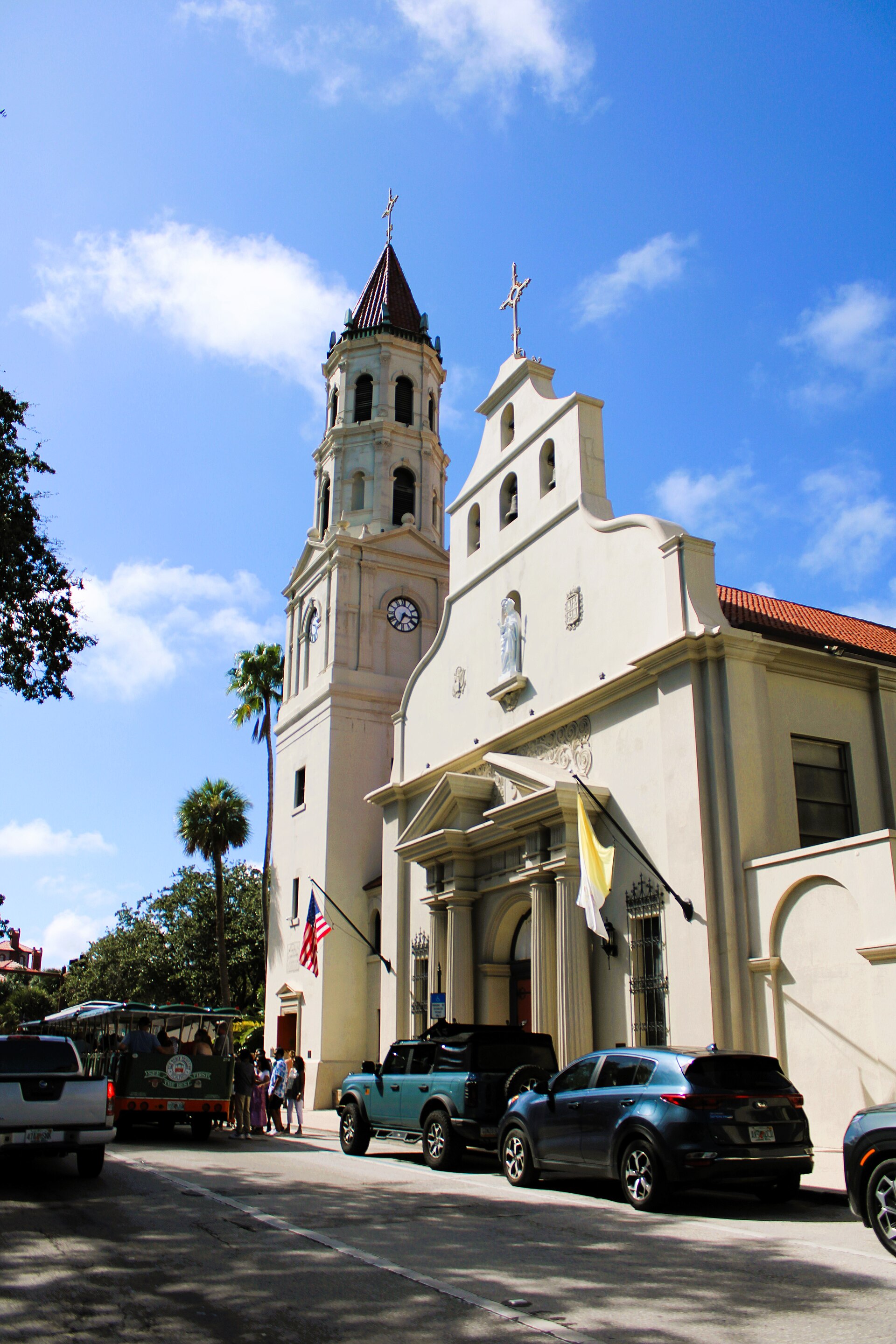
The Cathedral Basilica of St. Augustine serves as the seat of the Catholic Bishop of St. Augustine and stands as the oldest Christian congregation in the contiguous United States. The parish was established in 1565 by Spanish settlers, marking the beginning of continuous Catholic worship in the region.
The current structure, completed in 1797, features a distinctive Spanish Mission-style facade and a bell tower added during a major renovation in the early 20th century. Following a devastating fire in 1887, the cathedral was meticulously restored and expanded, incorporating elements that reflect both its colonial heritage and its status as a minor basilica.
Key Facts
- Materials
- Coquina stone, Brick, Stucco
- Civilization
- Spanish Colonial
- Accessibility
- Wheelchair accessible
- Date(s)
- 1793-1797
- Condition
- Active cathedral and minor basilica
- Original Function
- Parish Church
- Key Figures
- Father Francisco López de Mendoza Grajales, Bishop John Moore
Founding of the Parish
1565The parish was founded by Pedro Menéndez de Avilés upon his arrival in Florida. It represents the oldest continuously occupied European settlement and the oldest parish in the United States.
Construction of the Current Cathedral
1793-1797After previous wooden structures were destroyed by fire or decay, the current stone cathedral was commissioned under Spanish rule. It was constructed using coquina, a sedimentary rock composed of shell fragments common to the Florida coast.
Fire and Restoration
1887A major fire gutted the interior of the cathedral. The subsequent restoration included the addition of the transept and the iconic bell tower, which houses bells salvaged from the original Spanish structure.
Elevation to Basilica
1976In recognition of its historical and religious significance, the cathedral was designated a minor basilica by Pope Paul VI, cementing its status as a site of pilgrimage and national importance.
Cultural Significance
The Cathedral Basilica is a cornerstone of St. Augustine's identity, symbolizing the Spanish influence on Florida's history. It serves as a living link to the earliest period of European exploration and colonization in North America, maintaining a continuous record of baptisms, marriages, and deaths dating back to the 16th century.
Interpretive Notes
Scholarly debates and areas of uncertainty
There is ongoing discussion regarding the extent of the original 18th-century coquina masonry that remains versus the 19th-century reconstructions, particularly concerning the structural integrity of the facade following the 1887 fire.
Visiting Information
Entry Rules
Open to the public daily. Visitors are asked to maintain a respectful demeanor as it is an active place of worship. Modest dress is requested.
Best Times to Visit
Weekday mornings are generally quieter. The cathedral is often crowded during major liturgical holidays and the annual Spanish Landing reenactment.
Photography
Photography is permitted for personal use. Flash and tripods are prohibited during services.
Preservation Notes
The coquina stone is porous and sensitive to environmental pollutants; visitors should avoid touching the exterior walls to prevent oil transfer and erosion.
Nearby POIs
9 shownSources & Further Reading
- [1]The Cathedral Parish of St. Augustine: A History — Michael Gannon. University Press of Florida (1965)
- [2]St. Augustine: The Nation's Oldest City — Jean Parker Waterbury. St. Augustine Historical Society (1983)
Key Facts
- Materials
- Coquina stone, Brick, Stucco
- Civilization
- Spanish Colonial
- Accessibility
- Wheelchair accessible
- Date(s)
- 1793-1797
- Condition
- Active cathedral and minor basilica
- Original Function
- Parish Church
- Key Figures
- Father Francisco López de Mendoza Grajales, Bishop John Moore