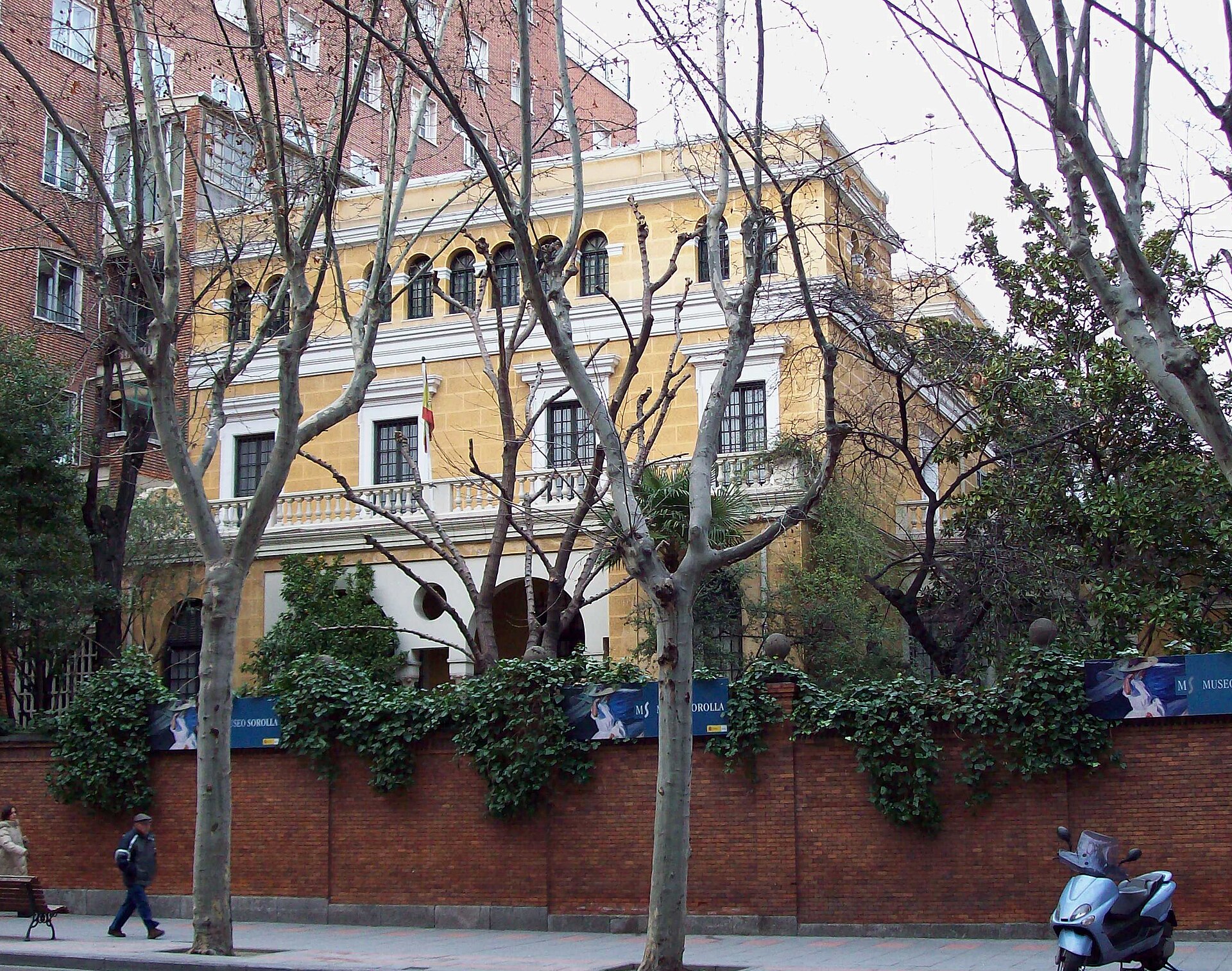
The Sorolla Museum is housed in the former residence and studio of the Spanish painter Joaquín Sorolla y Bastida. Located in the Chamberí district of Madrid, the building was designed by architect Enrique María Repullés and constructed between 1910 and 1911. Following the death of the artist's widow, Clotilde García del Castillo, the property was bequeathed to the Spanish state to serve as a museum dedicated to his life and work.
The museum preserves the original atmosphere of the artist's home, featuring his studio, living quarters, and a collection of his paintings, drawings, and personal artifacts. The site is particularly noted for its Andalusian-style garden, which was designed by Sorolla himself and serves as a central element of the property's aesthetic and historical integrity.
Key Facts
- Materials
- Brick, Stone, Ceramic tiles
- Civilization
- Spanish
- Accessibility
- Ground floor accessible
- Date(s)
- 1910-1911
- Condition
- Well-preserved, active museum
- Original Function
- Private residence and artist studio
- Key Figures
- Joaquín Sorolla, Clotilde García del Castillo, Enrique María Repullés
Construction and Residence
1910-1911Joaquín Sorolla commissioned the architect Enrique María Repullés to build a house that would serve as both a family home and a functional studio. The design incorporated elements of traditional Spanish architecture, reflecting the artist's interest in regional styles.
Establishment of the Museum
1925-1932After Sorolla's death in 1923, his widow Clotilde García del Castillo donated the house and its contents to the Spanish state in her will. The museum was officially inaugurated in 1932, preserving the interior layout and the extensive art collection as it existed during the artist's lifetime.
Modern Preservation
20th Century - PresentThe museum has undergone several restoration projects to maintain the structural integrity of the house and the health of the historic gardens. It remains one of the most significant house-museums in Madrid, offering insight into the domestic and professional life of one of Spain's most prominent painters.
Cultural Significance
The Sorolla Museum is a vital site for understanding the 'Luminist' movement in Spanish art. It provides a unique perspective on the intersection of private life and artistic production in the early 20th century. The preservation of the garden and the original studio space allows visitors to experience the environment that directly influenced Sorolla's light-filled canvases.
Beyond the art, the museum serves as a repository for the social history of Madrid's intellectual elite during the Silver Age of Spanish culture. It remains a key institution for the study of Sorolla's influence on modern Spanish painting and his role in the international art scene of his time.
Interpretive Notes
Scholarly debates and areas of uncertainty
Discussions regarding the museum often center on the balance between maintaining the site as a 'house-museum' versus the need for modern exhibition spaces. Some scholars argue that the domestic layout limits the ability to display the full breadth of Sorolla's vast catalog, while others contend that the integrity of the home is the museum's most valuable asset.
Visiting Information
Entry Rules
Open Tuesday through Sunday. Tickets can be purchased at the entrance or online. Reduced entry is available for specific groups. Visitors are requested to respect the quiet atmosphere of the historic residence.
Best Times to Visit
Weekday mornings are generally quieter. The gardens are particularly notable during the spring and early summer months when the vegetation is in full bloom.
Photography
Personal photography is permitted without flash or tripods. Professional or commercial photography requires prior authorization from the museum administration.
Preservation Notes
Visitors are asked not to touch the artworks or furniture. Due to the historic nature of the building, some areas may have limited space; please follow the marked visitor path.
Nearby POIs
11 shown- Museo Nacional de Ciencias Naturales0.6 km
- Lazaro Galdiano Museum0.6 km
- Museo del Romanticismo1.2 km
- Museo Arqueologico Nacional1.4 km
- Puerta de Alcala1.7 km
- Cybele Palace1.8 km
- Naval Museum of Madrid2 km
- Thyssen-Bornemisza Museum2.1 km
- Monument to Miguel de Cervantes2.2 km
- Cerralbo Museum2.3 km
- Museo del Prado2.4 km
Sources & Further Reading
- [1]Joaquín Sorolla: The Master of Light — Pons-Sorolla, Blanca. Ediciones El Viso (2005)
- [2]Museo Sorolla: Guía de visita — Ministerio de Cultura y Deporte. Gobierno de España (2020)
Key Facts
- Materials
- Brick, Stone, Ceramic tiles
- Civilization
- Spanish
- Accessibility
- Ground floor accessible
- Date(s)
- 1910-1911
- Condition
- Well-preserved, active museum
- Original Function
- Private residence and artist studio
- Key Figures
- Joaquín Sorolla, Clotilde García del Castillo, Enrique María Repullés
Nearby POIs
11 shown- Museo Nacional de Ciencias Naturales0.6 km
- Lazaro Galdiano Museum0.6 km
- Museo del Romanticismo1.2 km
- Museo Arqueologico Nacional1.4 km
- Puerta de Alcala1.7 km
- Cybele Palace1.8 km
- Naval Museum of Madrid2 km
- Thyssen-Bornemisza Museum2.1 km
- Monument to Miguel de Cervantes2.2 km
- Cerralbo Museum2.3 km
- Museo del Prado2.4 km