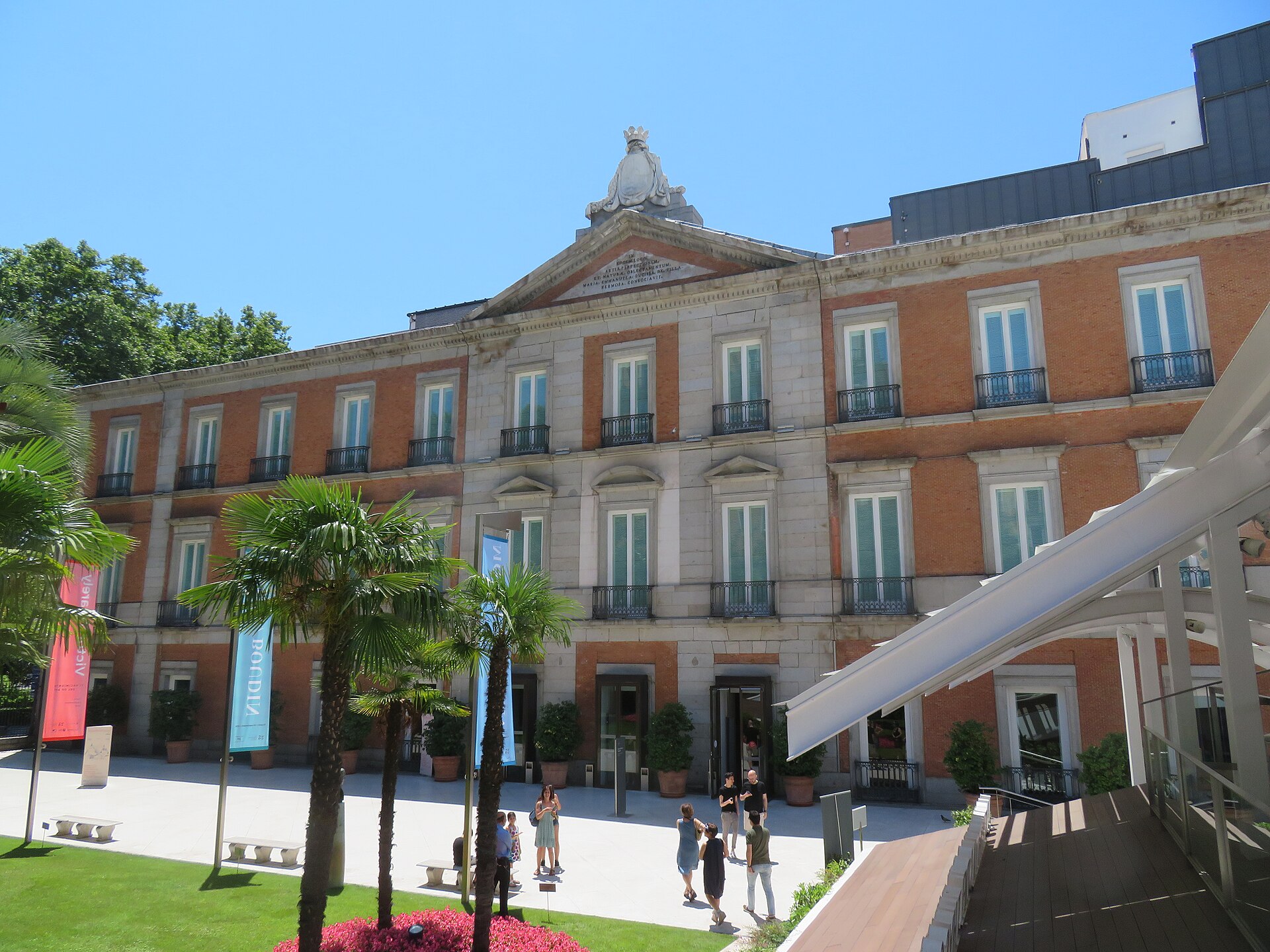
The Thyssen-Bornemisza Museum, located in the Villahermosa Palace in Madrid, houses one of the most significant private art collections in the world. Originally assembled by the Thyssen-Bornemisza family, the collection was acquired by the Spanish state in 1993 to bridge the historical gaps between the Prado Museum and the Reina Sofía, creating the 'Golden Triangle of Art'.
The museum's holdings span eight centuries of Western painting, ranging from 13th-century Italian Gothic to 20th-century Pop Art. Its collection is particularly noted for its depth in the Northern Renaissance, Impressionism, and German Expressionism, offering a comprehensive overview of European and American art history.
Key Facts
- Materials
- Stone, Brick, Glass
- Civilization
- European
- Accessibility
- Fully wheelchair accessible
- Date(s)
- 18th century (Palace), 1992 (Museum conversion)
- Condition
- Well-preserved, active museum
- Original Function
- Private residence (Villahermosa Palace)
- Key Figures
- Heinrich Thyssen, Hans Heinrich Thyssen-Bornemisza, Carmen Cervera
Formation of the Collection
1920s-1980sThe collection was initiated by Baron Heinrich Thyssen-Bornemisza in the 1920s and significantly expanded by his son, Hans Heinrich Thyssen-Bornemisza. Over decades, the Baron acquired thousands of works, focusing on filling gaps in the art market and securing masterpieces from various European schools.
Acquisition by the Spanish State
1993Following intense international competition, the Spanish government purchased the core of the collection in 1993. The Villahermosa Palace was renovated by architect Rafael Moneo to house the works, officially establishing the museum as a public institution.
Expansion and Modernization
2004-presentIn 2004, the museum expanded into the adjacent Goyeneche Palace to accommodate the Carmen Thyssen-Bornemisza collection. The museum continues to host major temporary exhibitions and has integrated digital initiatives to enhance public engagement with its vast catalog.
Cultural Significance
The museum is a cornerstone of Madrid's cultural identity, completing the 'Golden Triangle of Art' alongside the Prado and Reina Sofía. It serves as a vital educational resource, providing a narrative continuity of Western art that is rarely found in a single private collection.
Interpretive Notes
Scholarly debates and areas of uncertainty
Debates often center on the provenance of specific works acquired during the mid-20th century, particularly regarding art displaced during the Second World War. The museum maintains an active research department dedicated to provenance transparency and historical verification.
Visiting Information
Entry Rules
Open daily. Tickets can be purchased online or at the box office. Reduced rates available for students, seniors, and large families. Bags larger than a certain size must be checked in the cloakroom.
Best Times to Visit
Weekday mornings are generally quieter. The museum is less crowded during the winter months compared to the peak tourist season in summer.
Photography
Non-commercial photography is permitted without flash or tripods in the permanent collection galleries. Temporary exhibitions may have specific restrictions.
Preservation Notes
Maintain a respectful distance from all artworks. Flash photography is strictly prohibited to prevent light damage to pigments. Food and drink are not permitted in the galleries.
Nearby POIs
11 shown- Naval Museum of Madrid0.3 km
- Museo del Prado0.4 km
- Cybele Palace0.4 km
- Puerta de Alcala0.7 km
- Museo Nacional Centro de Arte Reina Sofia0.9 km
- Museo Arqueologico Nacional1 km
- Museo del Romanticismo1.1 km
- Palacio de Cristal del Retiro1.1 km
- Royal Palace of Madrid1.6 km
- Catedral de la Almudena1.7 km
- Monument to Miguel de Cervantes1.7 km
Sources & Further Reading
- [1]The Thyssen-Bornemisza Collection: The Paintings — Tomàs Llorens. Thyssen-Bornemisza Collection Foundation (1992)
- [2]The Golden Triangle of Art: Madrid's Museums — María Dolores Jiménez-Blanco. Turner Publicaciones (2011)
Key Facts
- Materials
- Stone, Brick, Glass
- Civilization
- European
- Accessibility
- Fully wheelchair accessible
- Date(s)
- 18th century (Palace), 1992 (Museum conversion)
- Condition
- Well-preserved, active museum
- Original Function
- Private residence (Villahermosa Palace)
- Key Figures
- Heinrich Thyssen, Hans Heinrich Thyssen-Bornemisza, Carmen Cervera
Nearby POIs
11 shown- Naval Museum of Madrid0.3 km
- Museo del Prado0.4 km
- Cybele Palace0.4 km
- Puerta de Alcala0.7 km
- Museo Nacional Centro de Arte Reina Sofia0.9 km
- Museo Arqueologico Nacional1 km
- Museo del Romanticismo1.1 km
- Palacio de Cristal del Retiro1.1 km
- Royal Palace of Madrid1.6 km
- Catedral de la Almudena1.7 km
- Monument to Miguel de Cervantes1.7 km