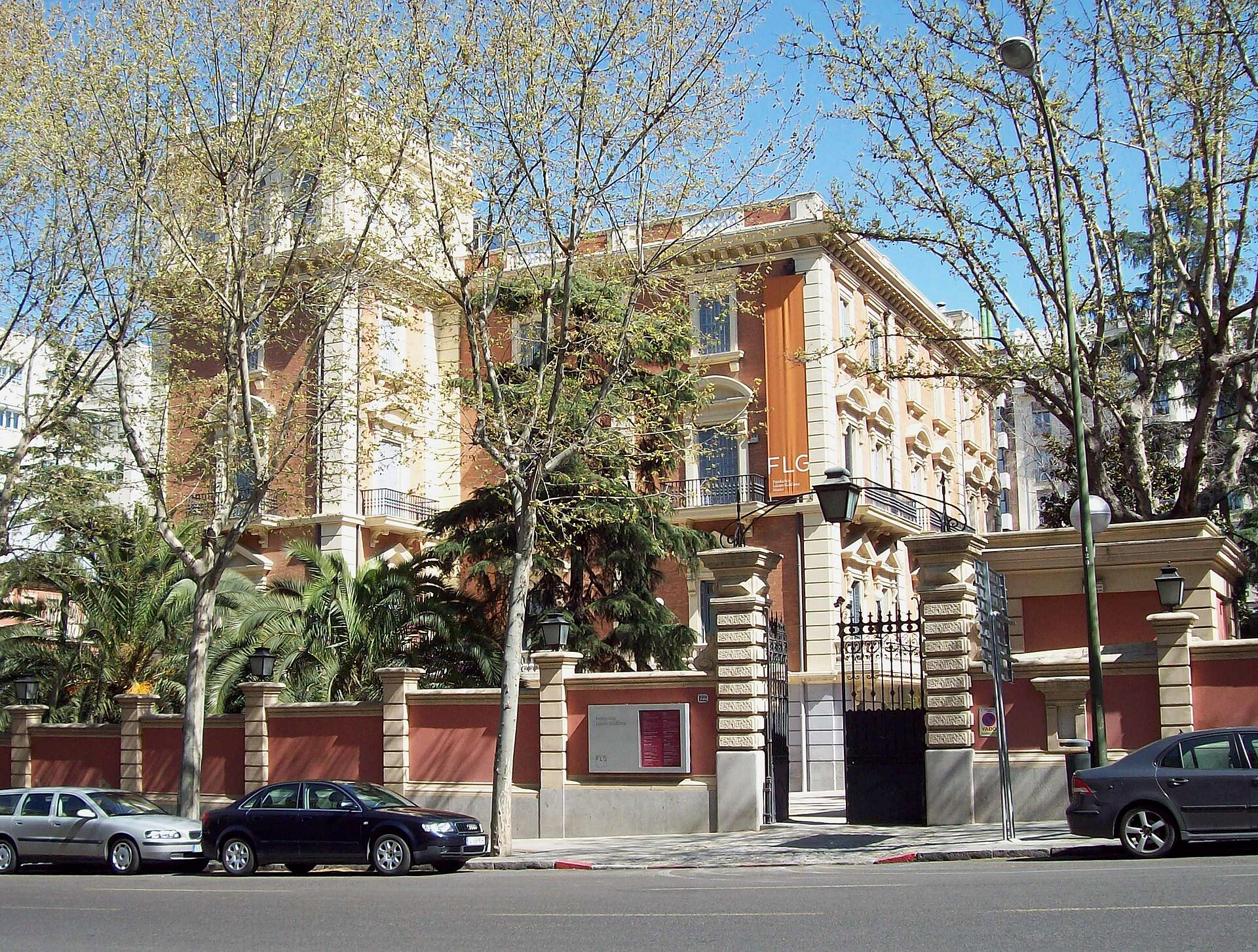
The Lázaro Galdiano Museum is located in the former residence of the financier and collector José Lázaro Galdiano in Madrid. The museum houses a vast private collection of over 12,000 artworks, including paintings, sculptures, jewelry, and decorative arts spanning from the prehistoric period to the early 20th century.
The collection is housed in the 'Parque Florido' palace, a building constructed in 1903 that retains much of its original domestic atmosphere. It is particularly noted for its significant holdings of Spanish Golden Age paintings, including works by Goya, El Greco, and Velázquez, as well as an extensive collection of European enamels and ivories.
Key Facts
- Materials
- Stone, Brick, Iron
- Civilization
- Spanish
- Accessibility
- Wheelchair accessible with elevator access to upper floors
- Date(s)
- 1903
- Condition
- Well-preserved museum
- Original Function
- Private residence and art gallery
- Key Figures
- José Lázaro Galdiano, Paula Florido
The Collector and the Palace
1903-1947The building was commissioned by José Lázaro Galdiano and his wife, Paula Florido, to serve as their home and a repository for their growing art collection. Designed by architect José Urioste y Velada, the palace was built in the Neo-Renaissance style.
Foundation and Opening
1947-1951Upon his death in 1947, Lázaro Galdiano bequeathed his entire collection and the palace to the Spanish State. The museum was officially inaugurated in 1951, managed by the Lázaro Galdiano Foundation.
Modernization and Restoration
2001-2004The museum underwent a significant renovation between 2001 and 2004 to modernize its facilities, improve climate control for the preservation of the collection, and enhance visitor accessibility while maintaining the historic character of the palace.
Cultural Significance
The museum is a testament to the tradition of the 'great collector' in early 20th-century Spain. It provides a unique insight into the aesthetic tastes of the era and preserves a diverse range of decorative arts that are often overshadowed by larger national institutions.
It serves as a vital cultural hub in Madrid, offering a more intimate experience of art history compared to the city's larger museums, and remains a key reference point for the study of Spanish art and European decorative traditions.
Interpretive Notes
Scholarly debates and areas of uncertainty
There is ongoing scholarly discussion regarding the attribution of several minor works within the collection, particularly among the Flemish and Italian paintings. Additionally, the provenance of certain items acquired during the turbulent early 20th century remains a subject of periodic research.
Visiting Information
Entry Rules
Open Tuesday to Sunday. Tickets can be purchased at the entrance or online. Concessions are available for students, seniors, and groups. No large bags allowed in the galleries; lockers are provided.
Best Times to Visit
Weekday mornings are generally quieter. The museum is less crowded than the major art triangle museums in Madrid.
Photography
Non-commercial photography is permitted without flash or tripods. Video recording requires prior authorization.
Preservation Notes
Maintain a respectful distance from all artworks. Do not touch any surfaces or display cases. Flash photography is strictly prohibited to prevent light damage to sensitive pigments and textiles.
Nearby POIs
11 shown- Museo Nacional de Ciencias Naturales0.5 km
- Sorolla Museum0.6 km
- Museo Arqueologico Nacional1.5 km
- Museo del Romanticismo1.7 km
- Puerta de Alcala1.9 km
- Cybele Palace2.1 km
- Naval Museum of Madrid2.2 km
- Thyssen-Bornemisza Museum2.4 km
- Palacio de Cristal del Retiro2.6 km
- Museo del Prado2.6 km
- Monument to Miguel de Cervantes2.7 km
Sources & Further Reading
- [1]Catálogo de la Fundación Lázaro Galdiano — José Lázaro Galdiano Foundation. Ediciones El Viso (2005)View
- [2]The Lázaro Galdiano Museum: A Guide — Elena Hernández. Ministerio de Cultura (2012)
Key Facts
- Materials
- Stone, Brick, Iron
- Civilization
- Spanish
- Accessibility
- Wheelchair accessible with elevator access to upper floors
- Date(s)
- 1903
- Condition
- Well-preserved museum
- Original Function
- Private residence and art gallery
- Key Figures
- José Lázaro Galdiano, Paula Florido
Nearby POIs
11 shown- Museo Nacional de Ciencias Naturales0.5 km
- Sorolla Museum0.6 km
- Museo Arqueologico Nacional1.5 km
- Museo del Romanticismo1.7 km
- Puerta de Alcala1.9 km
- Cybele Palace2.1 km
- Naval Museum of Madrid2.2 km
- Thyssen-Bornemisza Museum2.4 km
- Palacio de Cristal del Retiro2.6 km
- Museo del Prado2.6 km
- Monument to Miguel de Cervantes2.7 km