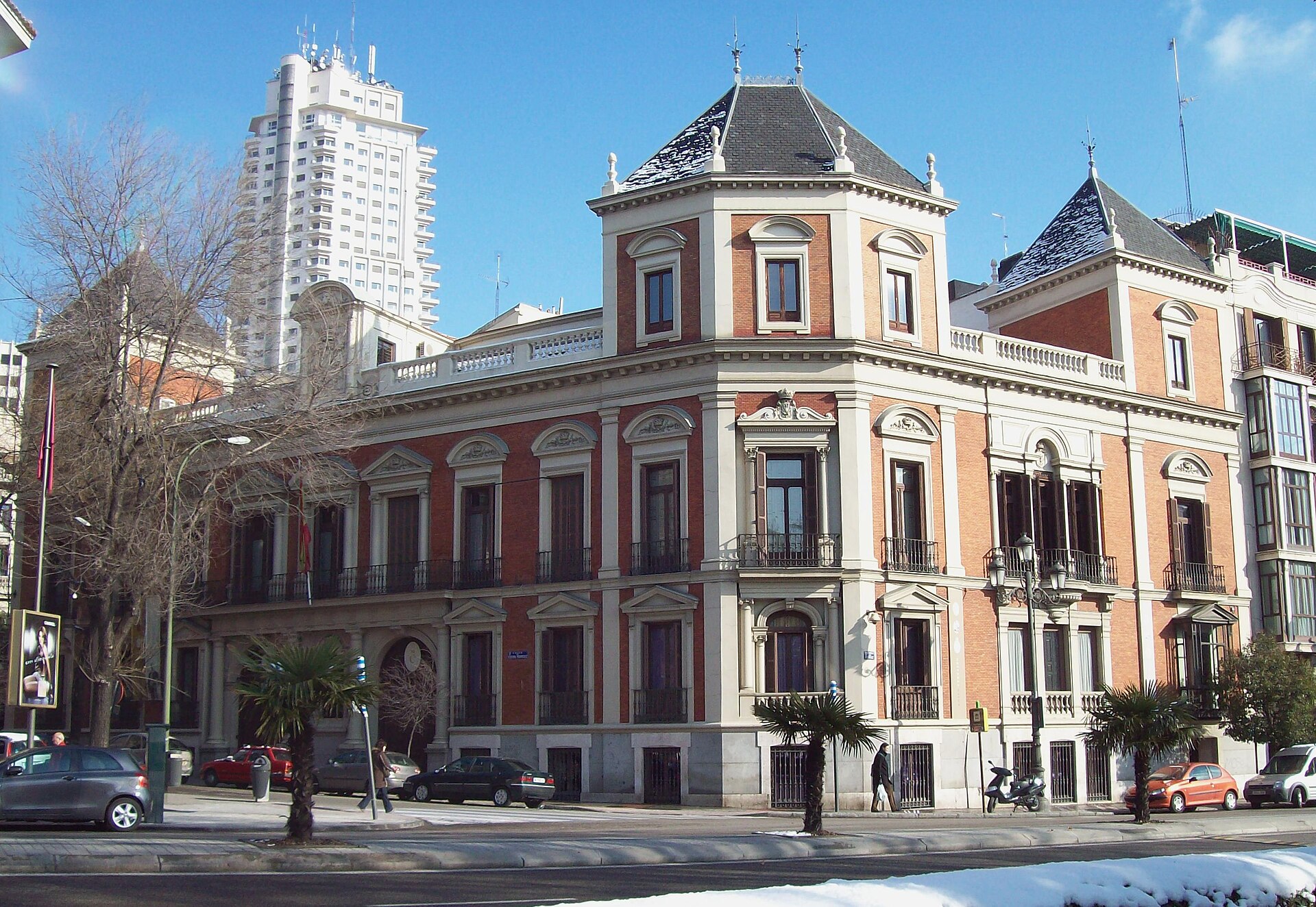
The Cerralbo Museum is a state-owned institution in Madrid that preserves the private collection of Enrique de Aguilera y Gamboa, the 17th Marquis of Cerralbo. Housed in the Marquis's former residence, the building was constructed between 1883 and 1893 to serve as both a family home and a gallery for his extensive collection of fine arts, archaeological artifacts, and decorative objects.
The museum retains the original layout and interior design of a late 19th-century aristocratic palace. It features a diverse collection of over 50,000 items, including paintings by masters such as El Greco, Zurbarán, and Tintoretto, alongside an array of weaponry, ceramics, tapestries, and numismatic specimens, offering a comprehensive view of the lifestyle of the Spanish nobility during the Restoration period.
Key Facts
- Materials
- Brick, Stone, Stucco, Marble
- Civilization
- Spanish
- Accessibility
- Partially accessible; elevator available for main floors
- Date(s)
- 1883-1893
- Condition
- Well-preserved, active museum
- Original Function
- Private residence and art gallery
- Key Figures
- Enrique de Aguilera y Gamboa, Alejandro Sureda
Construction and Design
1883-1893The palace was commissioned by the Marquis of Cerralbo and designed by architects Alejandro Sureda, Luis Cabello, and Antonio Cabello. It was built in a classicist style with eclectic influences, specifically designed to accommodate the Marquis's vast collection.
The Marquis's Collection
Late 19th CenturyEnrique de Aguilera y Gamboa was a prominent politician, historian, and archaeologist. Throughout his life, he amassed a significant collection of art and historical artifacts, which he intended to be preserved as a public legacy.
Establishment as a Museum
1922-1944Following the death of the Marquis in 1922, the palace and its contents were bequeathed to the Spanish state. The museum was officially established in 1944, maintaining the original domestic atmosphere of the residence.
Modern Restoration
2006-2010The museum underwent a comprehensive restoration project to modernize its facilities, improve climate control, and restore the original decorative elements of the palace, ensuring the long-term preservation of the collection.
Cultural Significance
The Cerralbo Museum is significant as one of the few remaining examples of a 'house-museum' in Madrid that retains its original 19th-century domestic arrangement. It provides critical insight into the collecting habits and aesthetic preferences of the Spanish aristocracy during the late 19th century.
Beyond its art collection, the museum serves as a repository for the Marquis's archaeological findings, reflecting his significant contributions to the field of Spanish archaeology and his role in the cultural life of the Restoration era.
Interpretive Notes
Scholarly debates and areas of uncertainty
Discussions among scholars often focus on the attribution of certain works within the collection, as the Marquis acquired pieces through various channels, including private sales and archaeological excavations. There is also ongoing research into the provenance of specific decorative items and their role in the social signaling of the 19th-century Spanish elite.
Visiting Information
Entry Rules
Open Tuesday through Sunday. Admission is free during specific scheduled hours. Visitors are requested to leave large bags in lockers and follow the designated route through the palace rooms.
Best Times to Visit
Weekday mornings are generally quieter. The museum is particularly pleasant during the winter months due to its indoor setting.
Photography
Non-commercial photography is permitted without flash or tripods. Professional photography requires prior authorization from the museum administration.
Preservation Notes
Do not touch the furniture, tapestries, or artworks. Maintain a respectful distance from all exhibits to protect the delicate materials and historical interiors.
Nearby POIs
11 shown- Monument to Miguel de Cervantes0.2 km
- Temple of Debod0.3 km
- Royal Palace of Madrid0.8 km
- Catedral de la Almudena0.9 km
- Museo del Romanticismo1.4 km
- Real Basilica de San Francisco el Grande1.5 km
- Thyssen-Bornemisza Museum1.9 km
- Cybele Palace2 km
- Naval Museum of Madrid2 km
- Museo Arqueologico Nacional2.2 km
- Museo del Traje2.2 km
Sources & Further Reading
- [1]Museo Cerralbo: Guía de la colección — Ministerio de Cultura y Deporte. Gobierno de España (2010)View
- [2]El Palacio del Marqués de Cerralbo — Consuelo Sanz-Pastor. Revista de Museología (1995)
Key Facts
- Materials
- Brick, Stone, Stucco, Marble
- Civilization
- Spanish
- Accessibility
- Partially accessible; elevator available for main floors
- Date(s)
- 1883-1893
- Condition
- Well-preserved, active museum
- Original Function
- Private residence and art gallery
- Key Figures
- Enrique de Aguilera y Gamboa, Alejandro Sureda
Nearby POIs
11 shown- Monument to Miguel de Cervantes0.2 km
- Temple of Debod0.3 km
- Royal Palace of Madrid0.8 km
- Catedral de la Almudena0.9 km
- Museo del Romanticismo1.4 km
- Real Basilica de San Francisco el Grande1.5 km
- Thyssen-Bornemisza Museum1.9 km
- Cybele Palace2 km
- Naval Museum of Madrid2 km
- Museo Arqueologico Nacional2.2 km
- Museo del Traje2.2 km