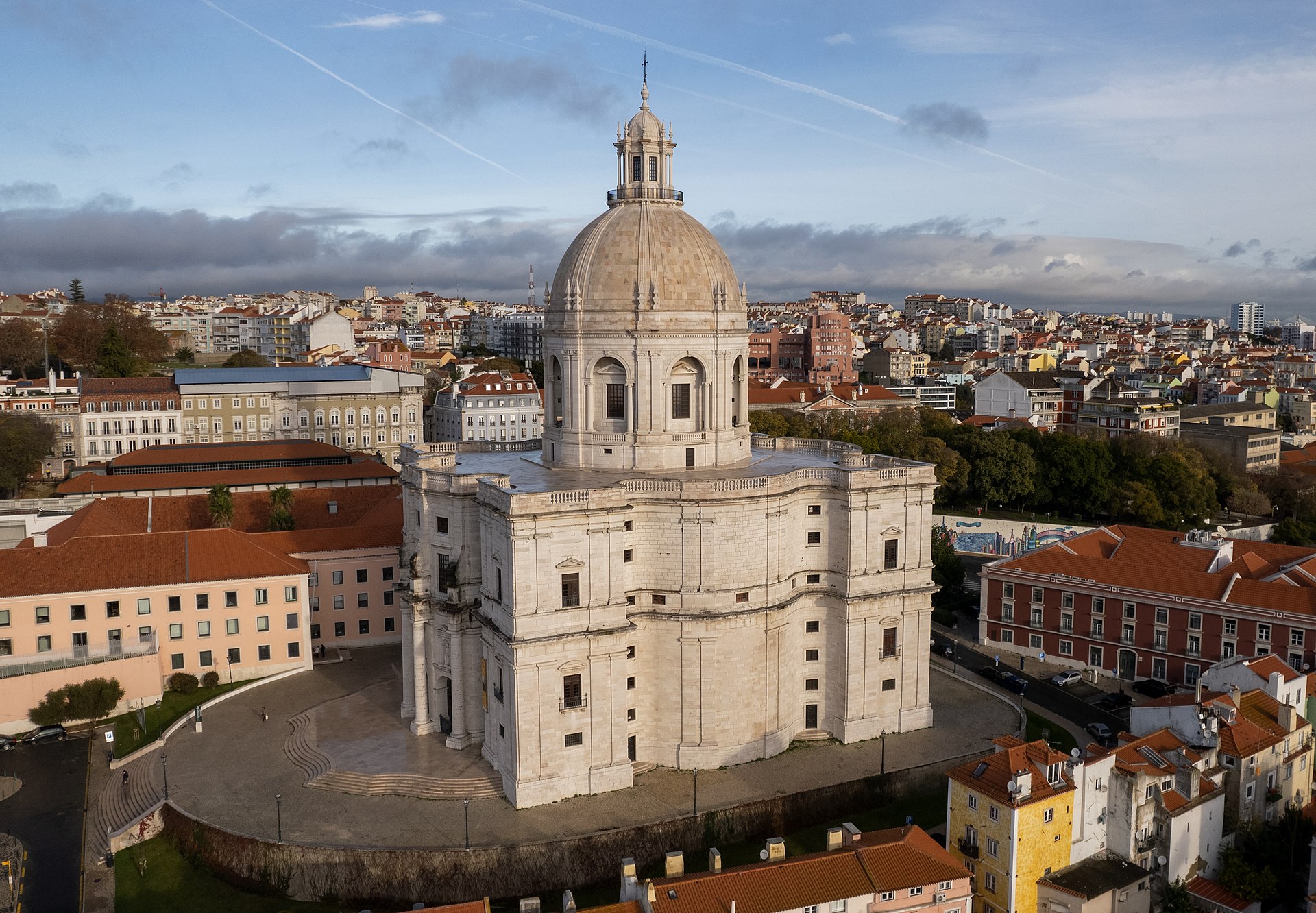
The Church of Santa Engracia is a monumental 17th-century structure located in the Alfama district of Lisbon. Originally commissioned as a church, the building is characterized by its massive central dome and Greek cross floor plan, representing one of the most significant examples of Baroque architecture in Portugal. Construction began in 1682, but the project faced numerous delays, leading to the popular Portuguese expression 'obras de Santa Engrácia' to describe any never-ending task.
In 1916, the building was officially designated as the National Pantheon. It serves as the final resting place for prominent Portuguese figures, including explorers, writers, and political leaders. The interior is noted for its intricate use of colored marble and its expansive, light-filled central nave, which provides a panoramic view of the city and the Tagus River from its rooftop terrace.
Key Facts
- Materials
- Lioz limestone, Polychrome marble
- Civilization
- Portuguese
- Accessibility
- Wheelchair accessible via elevator to the main floor and terrace
- Date(s)
- 1682 - 1966
- Condition
- Well-preserved, functioning as a National Pantheon
- Original Function
- Church
- Key Figures
- João Antunes, Amália Rodrigues, Eusébio, Vasco da Gama
Foundations and Delays
17th centuryThe current structure replaced an earlier 16th-century church that had been desecrated. Construction of the new Baroque edifice began in 1682 under the architect João Antunes. Due to funding issues and political instability, the work stalled repeatedly for centuries.
Completion
20th centuryThe building remained unfinished for nearly 300 years, lacking its dome until the mid-20th century. The project was finally completed in 1966 under the Estado Novo regime, which repurposed the site as the National Pantheon.
National Pantheon
1966 - presentSince its inauguration as the National Pantheon, the site has been used to inter the remains of Portugal's most influential citizens. It continues to function as both a historical monument and a site of national commemoration.
Cultural Significance
The Church of Santa Engracia is a symbol of Portuguese national identity, housing the cenotaphs and tombs of figures who shaped the country's history. The phrase 'obras de Santa Engrácia' remains a permanent fixture in the Portuguese language, reflecting the cultural memory of the building's centuries-long construction process.
As a Pantheon, it serves as a site for state ceremonies and honors. Its architectural prominence on the Lisbon skyline makes it a landmark of the Alfama district, bridging the gap between the city's religious heritage and its secular national history.
Interpretive Notes
Scholarly debates and areas of uncertainty
Debate exists regarding the architectural classification of the building, specifically the transition between the original Baroque design by João Antunes and the modifications made during the 20th-century completion. Some scholars argue that the final dome design deviates significantly from the intended Baroque aesthetic.
Visiting Information
Entry Rules
Open Tuesday to Sunday. Tickets are required for entry. Modest dress is recommended as it is a site of national importance.
Best Times to Visit
Weekday mornings to avoid weekend tourist crowds. The rooftop terrace is best visited during the late afternoon for sunset views over the Tagus.
Photography
Personal photography is permitted. Tripods and commercial photography require prior authorization from the administration.
Preservation Notes
The interior marble surfaces are sensitive; visitors are requested to refrain from touching the tombs and decorative elements. The structure is subject to ongoing maintenance due to its age and exposure to the riverfront climate.
Nearby POIs
11 shownSources & Further Reading
- [1]The Baroque Architecture of Portugal — George Kubler. Yale University Press (1972)
- [2]Panteão Nacional: História e Memória — Direção-Geral do Património Cultural. DGPC Portugal (2015)View
Key Facts
- Materials
- Lioz limestone, Polychrome marble
- Civilization
- Portuguese
- Accessibility
- Wheelchair accessible via elevator to the main floor and terrace
- Date(s)
- 1682 - 1966
- Condition
- Well-preserved, functioning as a National Pantheon
- Original Function
- Church
- Key Figures
- João Antunes, Amália Rodrigues, Eusébio, Vasco da Gama