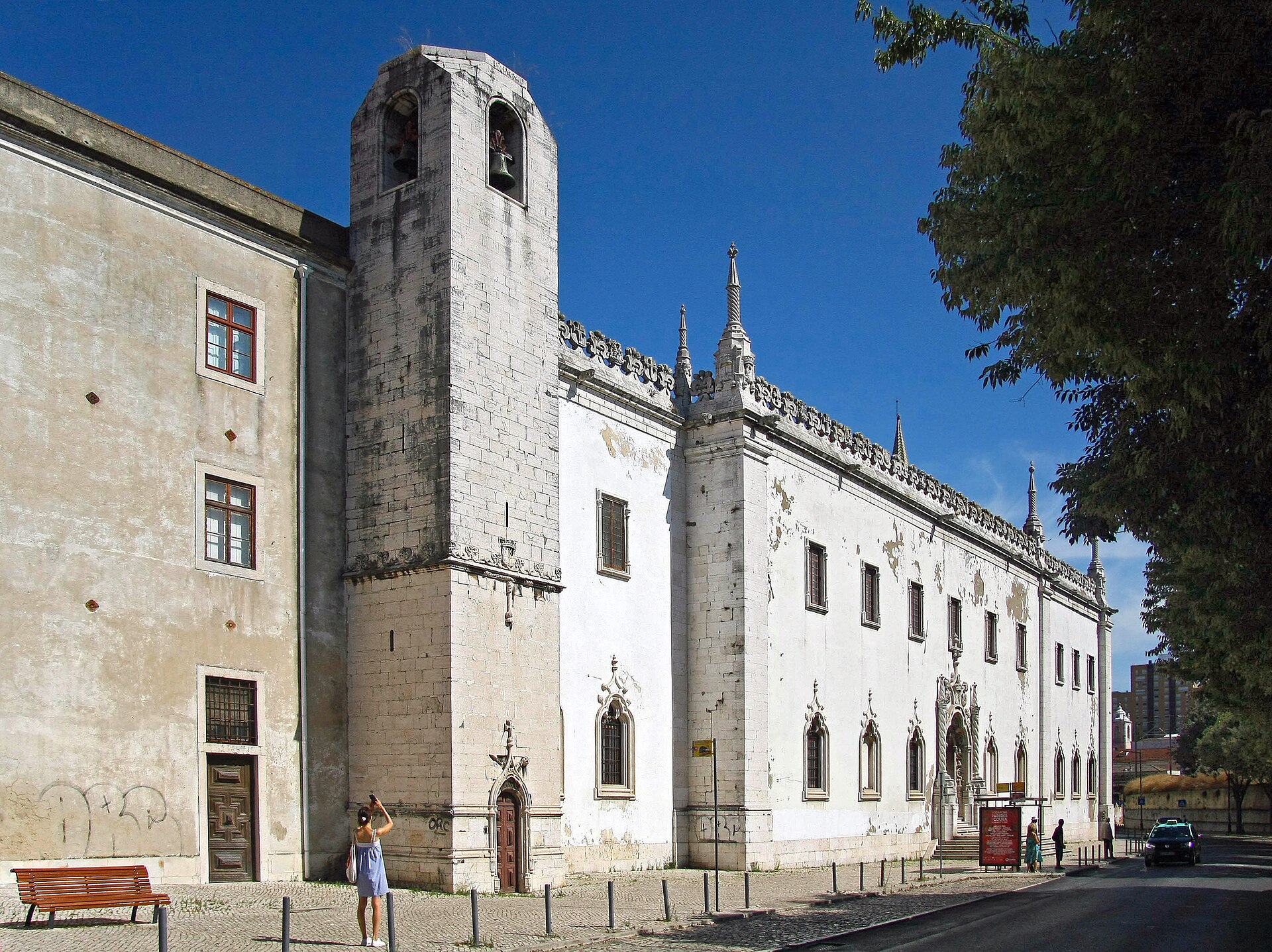
The National Tile Museum (Museu Nacional do Azulejo) is housed within the former Madre de Deus Convent, founded in 1509 by Queen Leonor. It serves as one of the most important institutions in Portugal, dedicated to the preservation and exhibition of the 'azulejo'—the traditional ceramic tilework that has defined Portuguese architectural and decorative identity since the 15th century.
The museum's collection spans from the 15th century to the present day, featuring a vast array of geometric, figurative, and narrative tiles. The highlight of the museum is the Madre de Deus Church, which remains part of the complex and features an extraordinary interior covered in gilded wood carvings and intricate blue-and-white tile panels, representing the pinnacle of Baroque decorative art in Portugal.
Key Facts
- Materials
- Ceramic, Glazed earthenware, Gilded wood, Stone
- Civilization
- Portuguese
- Accessibility
- Wheelchair accessible with elevator access to upper floors
- Date(s)
- 1509 (Convent), 1965 (Museum established)
- Condition
- Well-preserved, active museum
- Original Function
- Convent of Madre de Deus
- Key Figures
- Queen Leonor of Viseu, King John III
Founding of the Convent
1509The site was established as the Madre de Deus Convent by Queen Leonor, sister of King Manuel I. It was intended as a religious house for the Order of Saint Clare and became a significant example of Manueline architecture.
Baroque Expansion
17th-18th centuryDuring the reign of King John III and subsequent monarchs, the convent underwent significant renovations. The interior was heavily decorated with Baroque tile panels and gilded woodwork, creating the opulent aesthetic that characterizes the church today.
Establishment of the Museum
1965The National Tile Museum was officially founded in 1965 to house the growing collection of ceramic tiles that were being salvaged from demolished buildings across Lisbon, ensuring the preservation of Portugal's unique tile heritage.
Modern Era
20th century - presentThe museum has expanded its scope to include contemporary tile art and international ceramic traditions. It continues to serve as a research center for the study of ceramic conservation and the history of Portuguese decorative arts.
Cultural Significance
The museum is central to understanding the Portuguese 'azulejo' tradition, which is a defining element of the country's urban landscape. The tiles are not merely decorative; they have historically served as narrative tools, documenting religious stories, historical events, and social customs.
By preserving these works, the museum maintains a vital link to the aesthetic evolution of Portugal, from the influence of Moorish geometric patterns to the adoption of Dutch-inspired blue-and-white palettes and modern abstract designs.
Interpretive Notes
Scholarly debates and areas of uncertainty
There is ongoing academic discussion regarding the classification of certain early 16th-century tiles, specifically the extent of Hispano-Moresque influence versus the development of distinct Portuguese manufacturing techniques during the transition to the Renaissance.
Visiting Information
Entry Rules
Open Tuesday to Sunday, 10:00 to 18:00. Closed on Mondays. Tickets can be purchased at the entrance. No specific dress code, but respectful attire is expected due to the presence of the historic church.
Best Times to Visit
Weekday mornings are generally quieter. The museum is less crowded during the winter months compared to the peak summer tourist season.
Photography
Personal photography is permitted without flash or tripods. Professional photography requires prior authorization from the museum administration.
Preservation Notes
Do not touch the tile surfaces, as oils from skin can damage the glaze. Maintain a respectful distance from the panels. Flash photography is strictly prohibited to prevent light-induced degradation of the pigments.
Nearby POIs
11 shownSources & Further Reading
- [1]The Art of the Azulejo in Portugal — João Castel-Branco Pereira. Museu Nacional do Azulejo (2000)
- [2]Portuguese Tiles: From the 15th to the 20th Century — Maria Antónia Pinto de Matos. Banco Espírito Santo (2008)
Key Facts
- Materials
- Ceramic, Glazed earthenware, Gilded wood, Stone
- Civilization
- Portuguese
- Accessibility
- Wheelchair accessible with elevator access to upper floors
- Date(s)
- 1509 (Convent), 1965 (Museum established)
- Condition
- Well-preserved, active museum
- Original Function
- Convent of Madre de Deus
- Key Figures
- Queen Leonor of Viseu, King John III