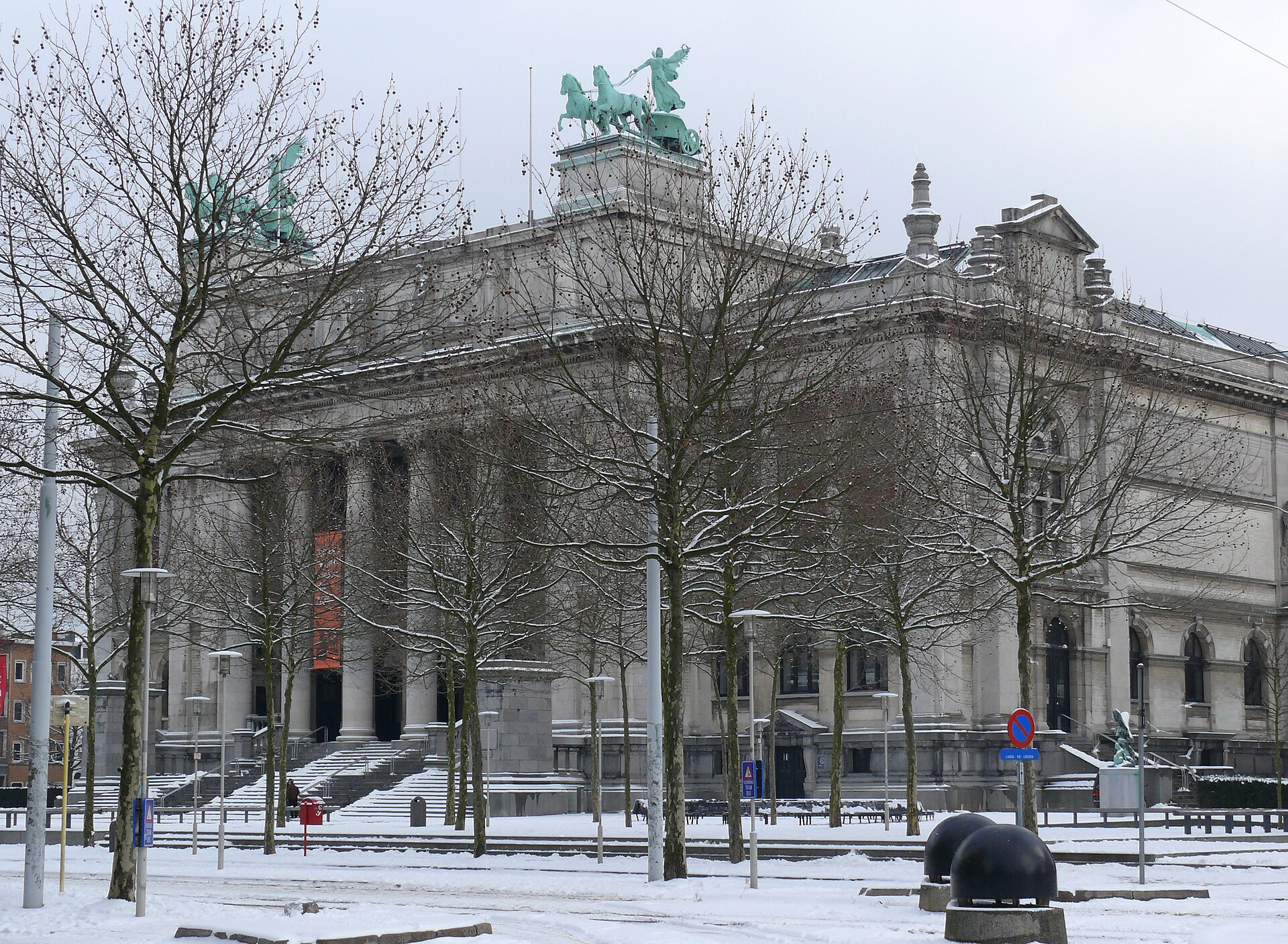
The Royal Museum of Fine Arts Antwerp (KMSKA) is a prominent art museum located in the Zuid district of Antwerp, Belgium. Housed in a monumental Neoclassical building designed by architects Jacob Winders and Frans Van Dijk, the institution opened its doors in 1890. It serves as the primary repository for the Flemish artistic heritage, holding a vast collection that spans seven centuries of European art.
The museum's collection includes approximately 7,600 works, ranging from the Flemish Primitives to contemporary art. It is particularly renowned for its extensive holdings of 17th-century Baroque masterpieces by Peter Paul Rubens, as well as the world's largest collection of works by the Belgian expressionist James Ensor. Following an extensive decade-long renovation and expansion project, the museum reopened in 2022 with modernized exhibition spaces that integrate the historic architecture with contemporary design.
Key Facts
- Materials
- Brick, Stone, Glass, Steel
- Civilization
- Belgian
- Accessibility
- Fully wheelchair accessible
- Date(s)
- 1884-1890
- Condition
- Fully restored and modernized
- Original Function
- Art Museum
- Key Figures
- Peter Paul Rubens, James Ensor, Jacob Winders, Frans Van Dijk
Foundation and Construction
1810-1890The museum originated from the collection of the Antwerp Guild of Saint Luke. After decades of housing the collection in various temporary locations, the city commissioned a dedicated building on the site of the former Zuid citadel. Construction began in 1884 and was completed in 1890.
Expansion and Collection Growth
1890-1945Throughout the early 20th century, the museum significantly expanded its holdings, particularly through acquisitions of Flemish Primitives and the works of James Ensor. The collection survived the turmoil of both World Wars largely intact, though some works were relocated for safekeeping.
Renovation and Modernization
2011-2022The museum closed in 2011 for a comprehensive renovation project. This involved the restoration of the historic 19th-century galleries and the construction of a new, minimalist volume within the existing structure, designed by KAAN Architecten, which added significant exhibition space.
Cultural Significance
The KMSKA is central to the cultural identity of Antwerp and the broader Flemish region. It acts as a guardian of the 'Flemish Masters' tradition, providing a comprehensive narrative of art history from the Middle Ages to the modern era. Its presence in the Zuid district has been a catalyst for the area's development into a major cultural and creative hub.
Beyond its role as a repository, the museum serves as a site for ongoing research into conservation and art history. Its collection of Rubens' altarpieces remains a focal point for scholars studying the Baroque period, while its Ensor collection is essential for understanding the development of modernism in Belgium.
Interpretive Notes
Scholarly debates and areas of uncertainty
Debates often center on the balance between preserving the museum's 19th-century architectural integrity and the necessity of modernizing facilities to meet contemporary exhibition standards. The 2022 expansion, which inserted a starkly modern 'museum within a museum,' sparked discourse among architectural critics regarding the juxtaposition of Neoclassical and contemporary design.
Visiting Information
Entry Rules
Open Tuesday through Sunday. Tickets can be purchased online or at the entrance. Visitors are requested to leave large bags in lockers. Photography is permitted for personal use without flash.
Best Times to Visit
Weekday mornings are generally quieter. The museum is closed on Mondays.
Photography
Personal photography is allowed without flash or tripods. Professional or commercial photography requires prior written permission.
Preservation Notes
Do not touch the artworks or frames. Maintain a safe distance from all exhibits. Food and drink are strictly prohibited in the galleries.
Nearby POIs
11 shownKey Facts
- Materials
- Brick, Stone, Glass, Steel
- Civilization
- Belgian
- Accessibility
- Fully wheelchair accessible
- Date(s)
- 1884-1890
- Condition
- Fully restored and modernized
- Original Function
- Art Museum
- Key Figures
- Peter Paul Rubens, James Ensor, Jacob Winders, Frans Van Dijk