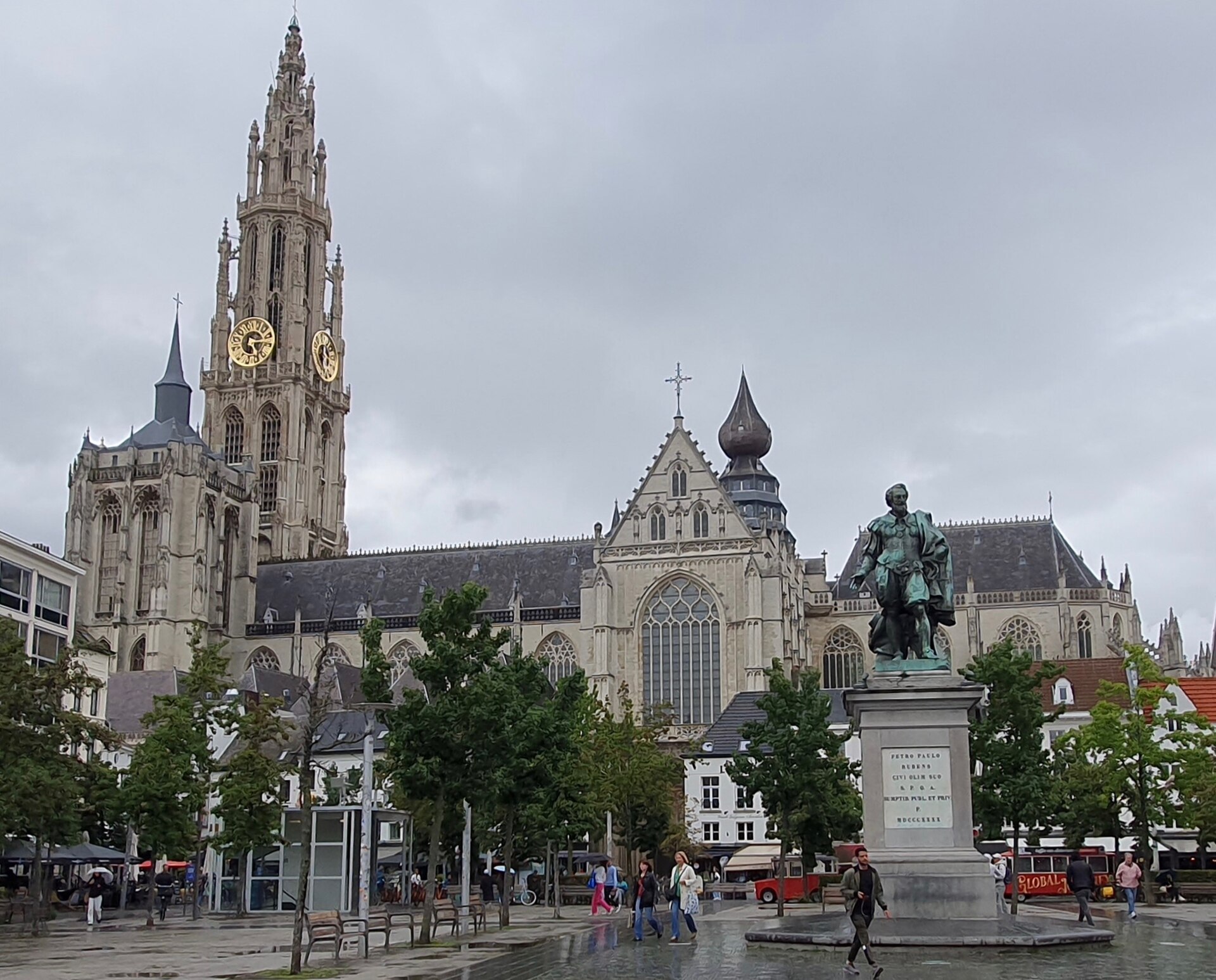
The Cathedral of Our Lady in Antwerp is a Roman Catholic cathedral that stands as a preeminent example of Brabantine Gothic architecture. Construction began in 1352 and continued in phases over nearly two centuries, resulting in a structure characterized by its massive scale and a singular, soaring north tower that reaches 123 meters, making it the tallest church tower in the Low Countries.
The interior serves as a significant repository of Flemish art, most notably housing four monumental altarpieces by Peter Paul Rubens, including 'The Elevation of the Cross' and 'The Descent from the Cross'. These works, commissioned in the early 17th century, represent the pinnacle of the Flemish Baroque style and remain in their original setting, integrated into the cathedral's liturgical and architectural space.
Key Facts
- Materials
- Brick, Ledian stone, Sandstone
- Civilization
- Flemish
- Accessibility
- Wheelchair accessible via designated entrance
- Date(s)
- 1352–1521
- Condition
- Well-preserved, active place of worship
- Original Function
- Catholic Cathedral
- Key Figures
- Peter Paul Rubens, Jan Appelmans, Pieter Appelmans
Foundations and Construction
1352–1521The current structure replaced a smaller Romanesque chapel. Construction was initiated by the architect Jan Appelmans and his son Pieter, following the Brabantine Gothic style. The project was interrupted by financial difficulties and the massive fire of 1533, which halted the completion of the second tower.
Iconoclasm and Restoration
16th centuryDuring the Beeldenstorm (Iconoclastic Fury) of 1566, the cathedral suffered significant damage to its interior, including the destruction of many statues and altarpieces. Subsequent decades saw the interior refurnished in the Baroque style, reflecting the Counter-Reformation spirit.
The Rubens Era
1610–1626The cathedral commissioned Peter Paul Rubens to create several large-scale altarpieces. These works were designed specifically for the cathedral's architecture, cementing the site's status as a center for Baroque artistic production.
Modern Preservation
19th century–presentThe cathedral underwent extensive restoration in the 19th and 20th centuries to repair structural decay and war damage. It was designated a UNESCO World Heritage site in 1999 as part of the Belfries of Belgium and France.
Cultural Significance
The Cathedral of Our Lady is a symbol of Antwerp's historical wealth and its status as a major European trade hub during the late Middle Ages and the Renaissance. It serves as a focal point for the city's religious and cultural identity, bridging the gap between medieval architectural traditions and the artistic innovations of the Flemish Baroque.
Beyond its religious function, the cathedral is a vital site for art historical study. The presence of Rubens' masterpieces in their original context provides a unique insight into the relationship between ecclesiastical patronage and the development of Baroque visual language.
Interpretive Notes
Scholarly debates and areas of uncertainty
There is ongoing academic discussion regarding the original intended height and design of the unfinished south tower. While some scholars argue it was meant to mirror the north tower, others suggest the design was intentionally asymmetrical to reflect the evolving architectural priorities of the 16th-century guild system.
Visiting Information
Entry Rules
Open to visitors daily. Tickets are required for tourist access. Modest dress is requested, and visitors are asked to respect ongoing religious services.
Best Times to Visit
Weekday mornings are generally quieter. The cathedral is particularly significant during major liturgical feasts, though tourist access may be restricted during these times.
Photography
Personal photography is permitted without flash or tripods. Professional photography requires prior authorization from the cathedral administration.
Preservation Notes
The cathedral is subject to ongoing conservation efforts. Some areas may be restricted due to restoration work on the stonework or the cleaning of historical paintings.
Nearby POIs
11 shownSources & Further Reading
- [1]The Cathedral of Our Lady in Antwerp — Nora de Poorter. Fonds Mercator (1993)
- [2]Rubens and the Cathedral of Antwerp — John Rupert Martin. Art Bulletin (1966)
Key Facts
- Materials
- Brick, Ledian stone, Sandstone
- Civilization
- Flemish
- Accessibility
- Wheelchair accessible via designated entrance
- Date(s)
- 1352–1521
- Condition
- Well-preserved, active place of worship
- Original Function
- Catholic Cathedral
- Key Figures
- Peter Paul Rubens, Jan Appelmans, Pieter Appelmans