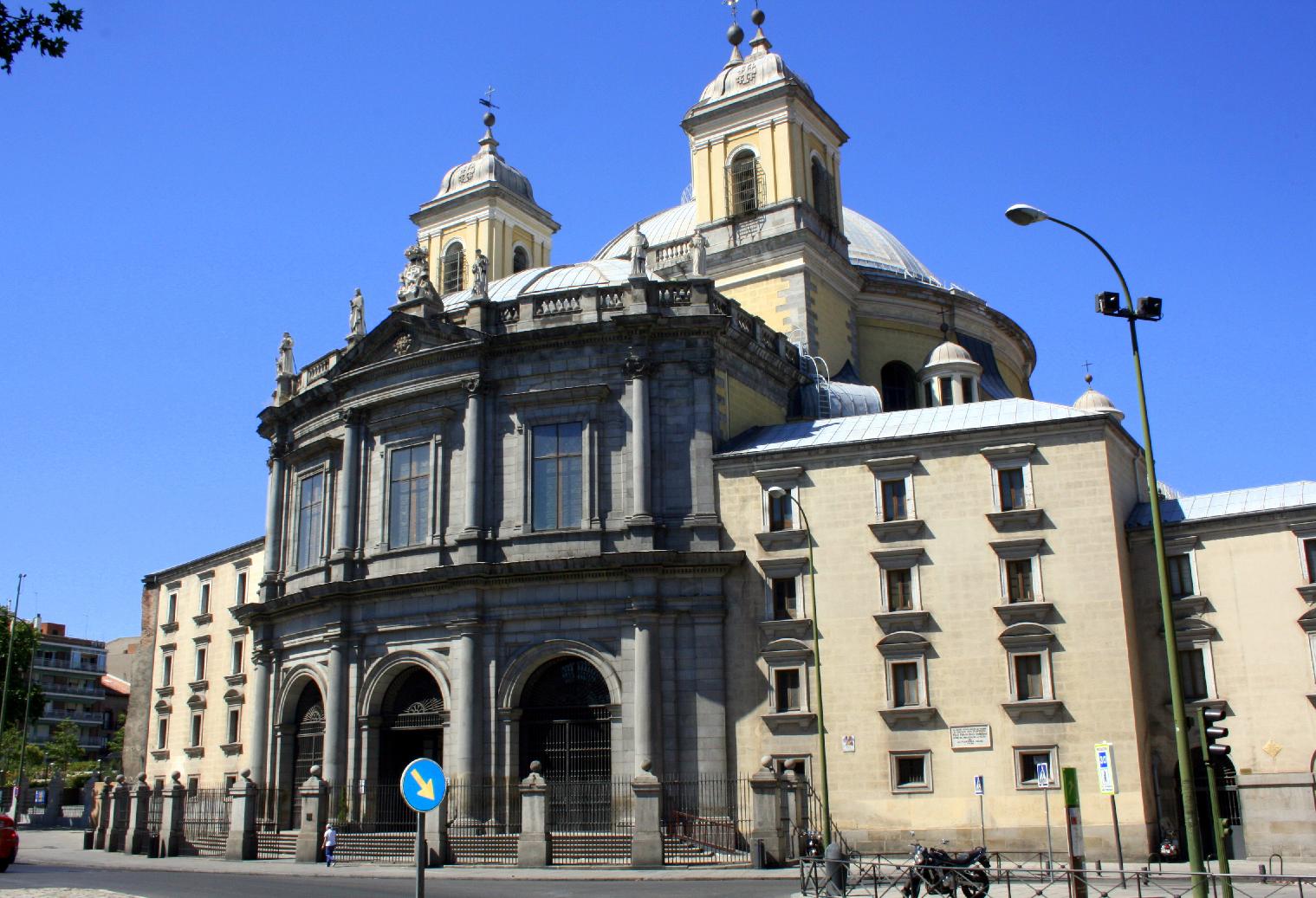
The Real Basílica de San Francisco el Grande is a Roman Catholic church located in the historic center of Madrid. Constructed in the late 18th century, it is most notable for its massive dome, which measures 33 meters in diameter and remains the largest in Spain and the fourth largest in the world.
The interior is designed in a circular plan with six side chapels. It houses an extensive collection of Spanish art, including works by Francisco de Goya and Francisco de Zurbarán, as well as a significant series of paintings commissioned for the basilica's decoration in the 19th century.
Key Facts
- Materials
- Stone, Brick, Marble, Stucco
- Civilization
- Spanish
- Accessibility
- Ground level access available
- Date(s)
- 1761-1784
- Condition
- Active basilica and museum
- Original Function
- Franciscan convent church
- Key Figures
- Francisco Sabatini, Miguel Fernández, Francisco de Goya
Origins and Construction
18th centuryThe basilica was built on the site of a former Franciscan convent. King Charles III commissioned the project, with the initial design by Francisco Cabezas and later modifications by Antonio Plo and Francisco Sabatini.
Artistic Development
19th centuryDuring the 19th century, the church became a repository for significant religious art. The government commissioned various Spanish painters to decorate the chapels, resulting in a collection that serves as a survey of 19th-century Spanish academic painting.
Modern Status
20th century - presentThe building was declared a National Monument in 1980. It continues to function as a parish church while operating as a museum that allows visitors to view its architectural features and art collection.
Cultural Significance
The basilica serves as a landmark of Neoclassical architecture in Madrid. Its dome represents a significant engineering achievement of the 18th century, and the church is central to the city's religious and artistic heritage, preserving a unique concentration of Spanish masters in a single ecclesiastical space.
Interpretive Notes
Scholarly debates and areas of uncertainty
There is ongoing discussion regarding the structural integrity of the dome and the attribution of certain minor decorative elements within the side chapels, as the construction process spanned several decades and involved multiple architects.
Visiting Information
Entry Rules
Open to the public for visits and religious services. Tickets are required for the museum tour which includes access to the chapels and the art collection. Modest dress is expected.
Best Times to Visit
Weekday mornings are generally quieter for visitors wishing to view the art collection without crowds.
Photography
Photography is permitted for personal use without flash. Tripods and professional equipment require prior authorization.
Preservation Notes
The building is subject to ongoing maintenance due to its age and the scale of the dome. Visitors are requested to remain within designated areas and avoid touching the artworks.
Nearby POIs
11 shown- Catedral de la Almudena0.6 km
- Royal Palace of Madrid0.7 km
- Monument to Miguel de Cervantes1.4 km
- Cerralbo Museum1.5 km
- Temple of Debod1.5 km
- Museo Nacional Centro de Arte Reina Sofia1.7 km
- Thyssen-Bornemisza Museum1.8 km
- Museo del Prado1.9 km
- Naval Museum of Madrid2 km
- Cybele Palace2.1 km
- Museo del Romanticismo2.2 km
Sources & Further Reading
- [1]La Real Basílica de San Francisco el Grande — Javier Ortega Vidal. Ediciones La Librería (2005)
- [2]Arquitectura Neoclásica en Madrid — Pedro Navascués Palacio. Comunidad de Madrid (1999)
Key Facts
- Materials
- Stone, Brick, Marble, Stucco
- Civilization
- Spanish
- Accessibility
- Ground level access available
- Date(s)
- 1761-1784
- Condition
- Active basilica and museum
- Original Function
- Franciscan convent church
- Key Figures
- Francisco Sabatini, Miguel Fernández, Francisco de Goya
Nearby POIs
11 shown- Catedral de la Almudena0.6 km
- Royal Palace of Madrid0.7 km
- Monument to Miguel de Cervantes1.4 km
- Cerralbo Museum1.5 km
- Temple of Debod1.5 km
- Museo Nacional Centro de Arte Reina Sofia1.7 km
- Thyssen-Bornemisza Museum1.8 km
- Museo del Prado1.9 km
- Naval Museum of Madrid2 km
- Cybele Palace2.1 km
- Museo del Romanticismo2.2 km