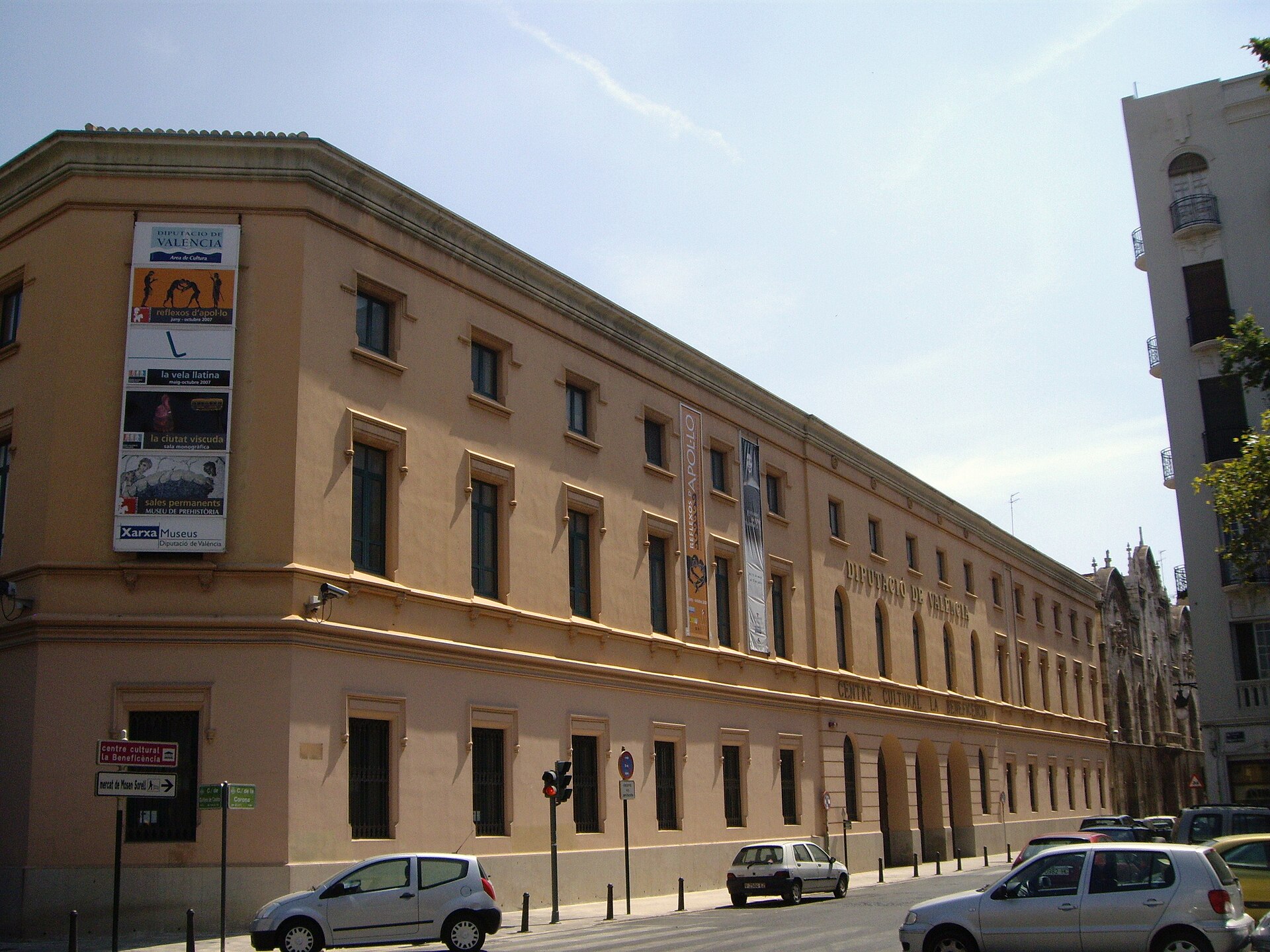
The Prehistory Museum of Valencia, located within the historic Centre Cultural la Beneficència, serves as a primary repository for the archaeological heritage of the Valencia region. Its extensive collections trace human development from the Lower Paleolithic era through the Visigothic period, offering a comprehensive overview of the cultural and technological evolution of the Iberian Peninsula.
The museum is particularly noted for its significant collection of prehistoric artifacts, including human remains from the Bolomor Cave and the intricate Font de Mussa mosaic. Through its permanent exhibitions, the institution provides critical insight into the daily lives, artistic expressions, and funerary practices of the diverse civilizations that inhabited the Mediterranean coast over several millennia.
Key Facts
- Materials
- Stone, Ceramic, Metal, Bone
- Civilization
- Various (Prehistoric to Visigothic)
- Accessibility
- Fully accessible
- Date(s)
- 1982
- Condition
- Active
- Original Function
- Museum
- Key Figures
- Helena Bonet Rosado
Establishment
1982The museum was officially established in 1982 to consolidate and display the archaeological findings recovered from various excavations across the province of Valencia.
Relocation to La Beneficència
1995The institution moved to its current location in the Centre Cultural la Beneficència, a former 19th-century orphanage, which underwent extensive renovations to accommodate the museum's growing collection.
Modern Expansion
21st centuryThe museum has continued to modernize its exhibition spaces, focusing on digital integration and the preservation of significant regional finds such as the Iberian-era artifacts and Roman mosaics.
Cultural Significance
The museum acts as a cornerstone for regional identity by preserving the tangible history of the Valencian territory. It plays a vital role in public education, bridging the gap between academic archaeological research and the general public's understanding of their ancestral roots.
Interpretive Notes
Scholarly debates and areas of uncertainty
Ongoing academic discussion surrounds the interpretation of specific Iberian votive offerings and the precise dating of early Paleolithic occupation layers found in the surrounding cave systems.
Visiting Information
Entry Rules
Open Tuesday to Sunday. Admission is free for all visitors. Large bags must be left in lockers provided at the entrance.
Best Times to Visit
Weekday mornings are generally quieter, allowing for a more focused viewing of the permanent collection.
Photography
Non-commercial photography is permitted without flash. Tripods and selfie sticks are prohibited.
Preservation Notes
Do not touch artifacts or display cases. Maintain a respectful volume within the galleries.
Nearby POIs
11 shown- Valencian Museum of Ethnology
- Institut Valencia d'Art Modern0.2 km
- Torres de Quart0.3 km
- Lonja de la Seda0.6 km
- Torres de Serranos0.6 km
- La Casa de la Ciencia0.7 km
- Catedral de Valencia0.7 km
- Gonzalez Marti National Museum of Ceramics and Decorative Arts0.9 km
- Museu de Belles Arts de Valencia1 km
- Valencia History Museum2.3 km
- City of Arts and Sciences3.7 km
Sources & Further Reading
- [1]Museu de Prehistòria de València: Guia de la col·lecció — Helena Bonet Rosado. Diputació de València (2010)View
- [2]The Paleolithic of the Valencia Region — J. Emili Aura Tortosa. Journal of Iberian Archaeology (2015)
Key Facts
- Materials
- Stone, Ceramic, Metal, Bone
- Civilization
- Various (Prehistoric to Visigothic)
- Accessibility
- Fully accessible
- Date(s)
- 1982
- Condition
- Active
- Original Function
- Museum
- Key Figures
- Helena Bonet Rosado
Nearby POIs
11 shown- Valencian Museum of Ethnology
- Institut Valencia d'Art Modern0.2 km
- Torres de Quart0.3 km
- Lonja de la Seda0.6 km
- Torres de Serranos0.6 km
- La Casa de la Ciencia0.7 km
- Catedral de Valencia0.7 km
- Gonzalez Marti National Museum of Ceramics and Decorative Arts0.9 km
- Museu de Belles Arts de Valencia1 km
- Valencia History Museum2.3 km
- City of Arts and Sciences3.7 km