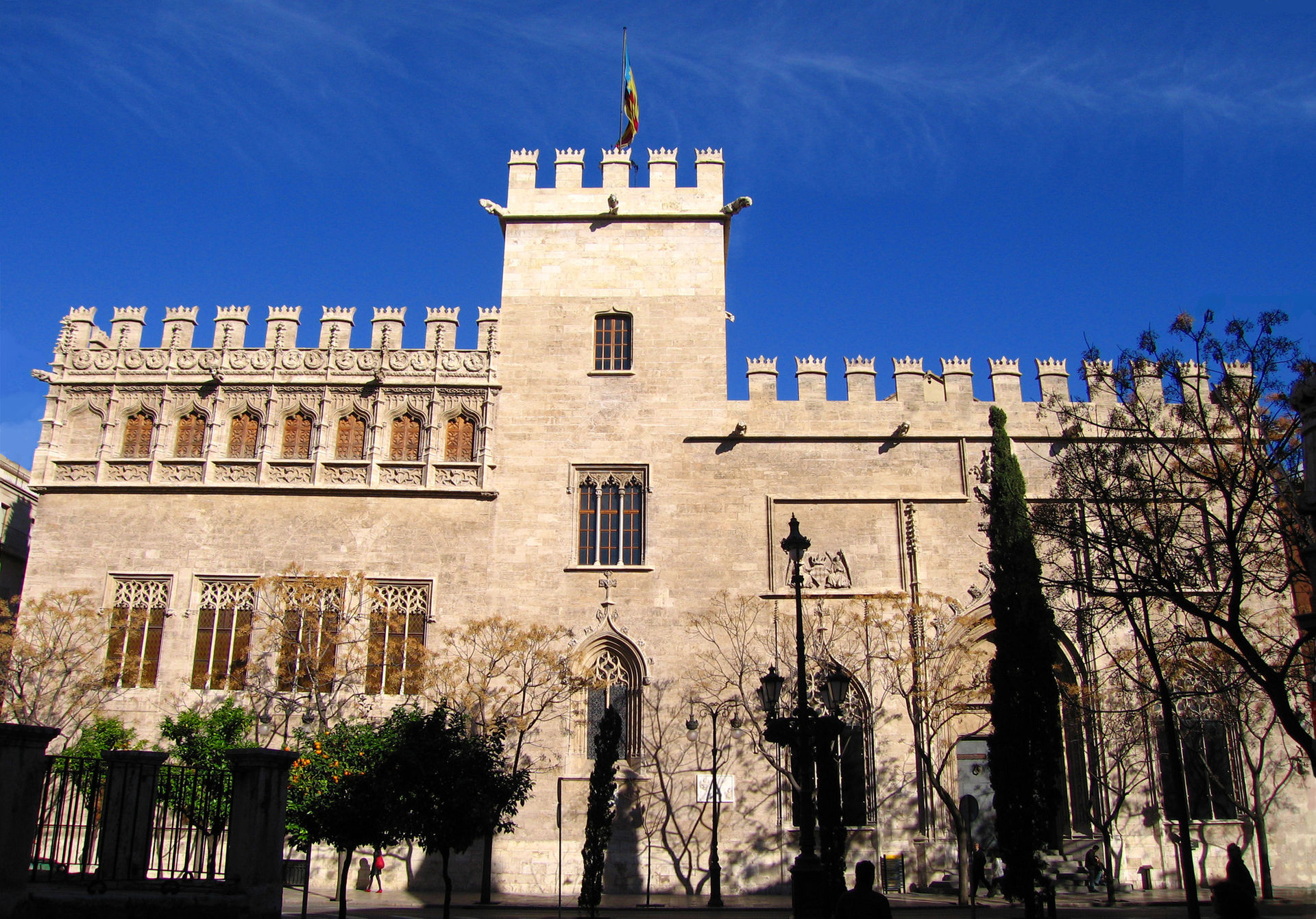
The Lonja de la Seda, or Silk Exchange, is a masterpiece of late Gothic architecture located in the heart of Valencia. Constructed between 1482 and 1548, the complex served as the center for the city's thriving silk trade, symbolizing the economic power and prosperity of Valencia during its Golden Age.
The site consists of four main sections: the Sala de Contratación (Contract Hall), the Tower, the Consulado del Mar, and the Orange Garden. Its design, characterized by spiraling columns and intricate stone carvings, reflects the transition from medieval Gothic forms to the early Renaissance, serving as a testament to the Mediterranean mercantile culture of the 15th and 16th centuries.
Key Facts
- Materials
- Limestone, Stone
- Civilization
- Crown of Aragon
- Accessibility
- Ground floor is wheelchair accessible
- Date(s)
- 1482-1548
- Condition
- Well-preserved, used for cultural events and tourism
- Original Function
- Silk exchange and commercial trading center
- Key Figures
- Pere Compte, Joan Iborra
Origins and Construction
1482-1498The construction of the main hall, the Sala de Contratación, was commissioned by the city council to replace an older, smaller exchange. Master architect Pere Compte led the project, creating a space that would define Valencian civic architecture.
Expansion and Completion
1498-1548Following the completion of the main hall, the Consulado del Mar and the tower were added. These sections were designed to house the maritime tribunal, which oversaw commercial disputes and trade regulations.
Modern Recognition
1996-PresentIn 1996, the Lonja de la Seda was inscribed as a UNESCO World Heritage Site. It is recognized as an exceptional example of a secular building in late Gothic style, illustrating the power and wealth of one of the great Mediterranean mercantile cities.
Cultural Significance
The Lonja de la Seda is a profound symbol of Valencia's historical status as a major European commercial hub. It represents the intersection of economic ambition and artistic expression, reflecting the city's role in the Mediterranean silk trade network.
Today, the site remains a focal point for Valencian identity and is frequently used for cultural exhibitions and civic ceremonies, maintaining its historical connection to the city's public life.
Interpretive Notes
Scholarly debates and areas of uncertainty
There is ongoing academic discussion regarding the extent to which the building's design was influenced by Italian Renaissance architectural treatises versus traditional Valencian Gothic techniques. While the structure is undeniably Gothic, the proportions and the specific decorative motifs in the Consulado del Mar suggest a sophisticated awareness of contemporary European architectural shifts.
Visiting Information
Entry Rules
Open daily. Tickets are required for entry. Visitors are expected to maintain a respectful demeanor as the site is a protected monument.
Best Times to Visit
Weekday mornings are recommended to avoid weekend crowds. The site is particularly pleasant in the spring when the orange trees in the courtyard are in bloom.
Photography
Personal photography is permitted without the use of flash or tripods. Professional or commercial photography requires prior authorization from the municipal authorities.
Preservation Notes
Visitors are requested not to touch the stone carvings or columns. Stay within designated visitor paths to protect the historic flooring and architectural details.
Nearby POIs
11 shown- Catedral de Valencia0.3 km
- La Casa de la Ciencia0.3 km
- Gonzalez Marti National Museum of Ceramics and Decorative Arts0.4 km
- Torres de Quart0.5 km
- Torres de Serranos0.6 km
- Prehistory Museum of Valencia0.6 km
- Valencian Museum of Ethnology0.6 km
- Institut Valencia d'Art Modern0.7 km
- Museu de Belles Arts de Valencia0.8 km
- Valencia History Museum2.6 km
- City of Arts and Sciences3.1 km
Key Facts
- Materials
- Limestone, Stone
- Civilization
- Crown of Aragon
- Accessibility
- Ground floor is wheelchair accessible
- Date(s)
- 1482-1548
- Condition
- Well-preserved, used for cultural events and tourism
- Original Function
- Silk exchange and commercial trading center
- Key Figures
- Pere Compte, Joan Iborra
Nearby POIs
11 shown- Catedral de Valencia0.3 km
- La Casa de la Ciencia0.3 km
- Gonzalez Marti National Museum of Ceramics and Decorative Arts0.4 km
- Torres de Quart0.5 km
- Torres de Serranos0.6 km
- Prehistory Museum of Valencia0.6 km
- Valencian Museum of Ethnology0.6 km
- Institut Valencia d'Art Modern0.7 km
- Museu de Belles Arts de Valencia0.8 km
- Valencia History Museum2.6 km
- City of Arts and Sciences3.1 km