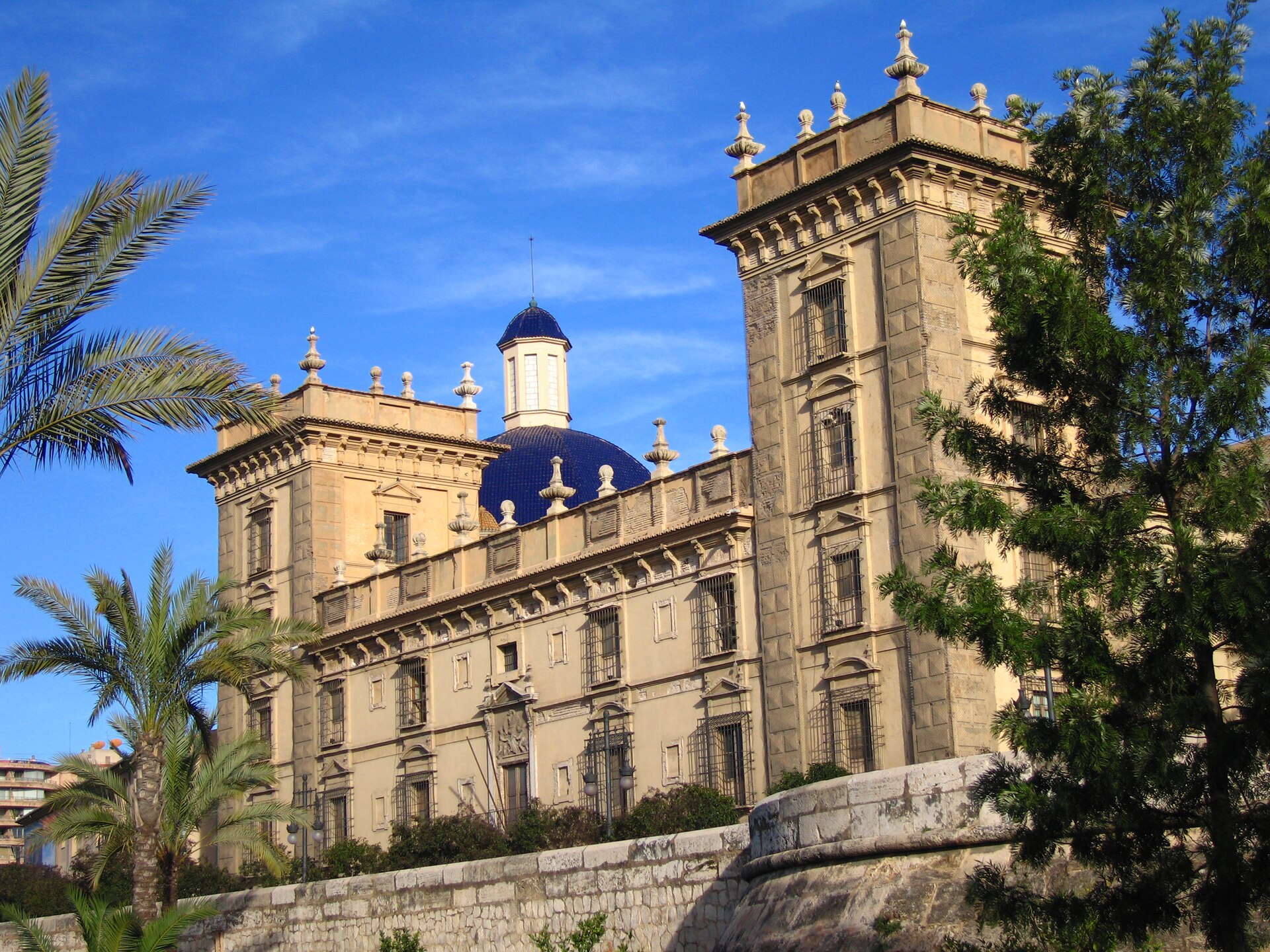
The Museu de Belles Arts de València is one of Spain's premier art galleries, housed primarily within the former Colegio Seminario de San Pío V. Founded in 1913, the museum holds an extensive collection of paintings, sculptures, and archaeological artifacts, with a particular emphasis on the Valencian school of painting from the 14th to the 17th centuries.
The building itself is a significant architectural landmark, featuring a 17th-century Baroque structure that was originally a seminary. Following extensive renovations and expansions, the museum now serves as a comprehensive repository for regional art history, bridging the gap between medieval religious works and contemporary artistic expressions.
Key Facts
- Materials
- Brick, Stone, Stucco
- Civilization
- Spanish
- Accessibility
- Fully accessible with elevators and ramps
- Date(s)
- 1683-1744
- Condition
- Well-preserved and active
- Original Function
- Seminary (Colegio Seminario de San Pío V)
- Key Figures
- Juan de Ribalta, Joaquín Sorolla, Francisco de Goya, Diego Velázquez
Foundation and Origins
1913The museum was established by royal decree in 1913, utilizing the collections previously held by the Academy of Fine Arts of San Carlos. It was initially housed in the Convent of El Carmen before moving to its current location.
Relocation to San Pío V
1946In 1946, the institution moved to the Colegio Seminario de San Pío V, a 17th-century building that had previously served as a military academy and a prison. This move provided the space necessary to display the growing collection properly.
Modern Expansion
20th-21st centuryThroughout the late 20th century, the museum underwent several phases of architectural expansion and restoration, including the addition of new wings to accommodate contemporary art and temporary exhibition spaces, modernizing the visitor experience.
Cultural Significance
The museum is central to the cultural identity of Valencia, acting as the primary guardian of the region's artistic heritage. It is particularly noted for its collection of works by local masters, which provides a unique insight into the development of the Valencian School of painting.
Interpretive Notes
Scholarly debates and areas of uncertainty
There is ongoing academic discussion regarding the attribution of several anonymous 15th-century Valencian panels, with scholars frequently re-evaluating stylistic influences between the local school and contemporary Flemish masters.
Visiting Information
Entry Rules
Open Tuesday to Sunday. Admission is free for all visitors. Large bags must be left in lockers provided at the entrance.
Best Times to Visit
Weekday mornings are generally quieter, allowing for a more focused viewing of the permanent collection.
Photography
Photography is permitted for personal use without flash or tripods. Professional photography requires prior authorization.
Preservation Notes
Maintain a respectful distance from all canvases and sculptures. Flash photography is strictly prohibited to prevent light damage to pigments.
Nearby POIs
11 shown- Torres de Serranos0.4 km
- La Casa de la Ciencia0.5 km
- Catedral de Valencia0.5 km
- Gonzalez Marti National Museum of Ceramics and Decorative Arts0.7 km
- Lonja de la Seda0.8 km
- Institut Valencia d'Art Modern1 km
- Prehistory Museum of Valencia1 km
- Valencian Museum of Ethnology1.1 km
- Torres de Quart1.2 km
- City of Arts and Sciences3.1 km
- Valencia History Museum3.3 km
Sources & Further Reading
- [1]Museu de Belles Arts de València: Guía de la colección — Pérez Sánchez, Alfonso E.. Generalitat Valenciana (2005)View
- [2]The Valencian School of Painting — Benito Domenech, Fernando. Editorial Albatros (1998)
Key Facts
- Materials
- Brick, Stone, Stucco
- Civilization
- Spanish
- Accessibility
- Fully accessible with elevators and ramps
- Date(s)
- 1683-1744
- Condition
- Well-preserved and active
- Original Function
- Seminary (Colegio Seminario de San Pío V)
- Key Figures
- Juan de Ribalta, Joaquín Sorolla, Francisco de Goya, Diego Velázquez
Nearby POIs
11 shown- Torres de Serranos0.4 km
- La Casa de la Ciencia0.5 km
- Catedral de Valencia0.5 km
- Gonzalez Marti National Museum of Ceramics and Decorative Arts0.7 km
- Lonja de la Seda0.8 km
- Institut Valencia d'Art Modern1 km
- Prehistory Museum of Valencia1 km
- Valencian Museum of Ethnology1.1 km
- Torres de Quart1.2 km
- City of Arts and Sciences3.1 km
- Valencia History Museum3.3 km