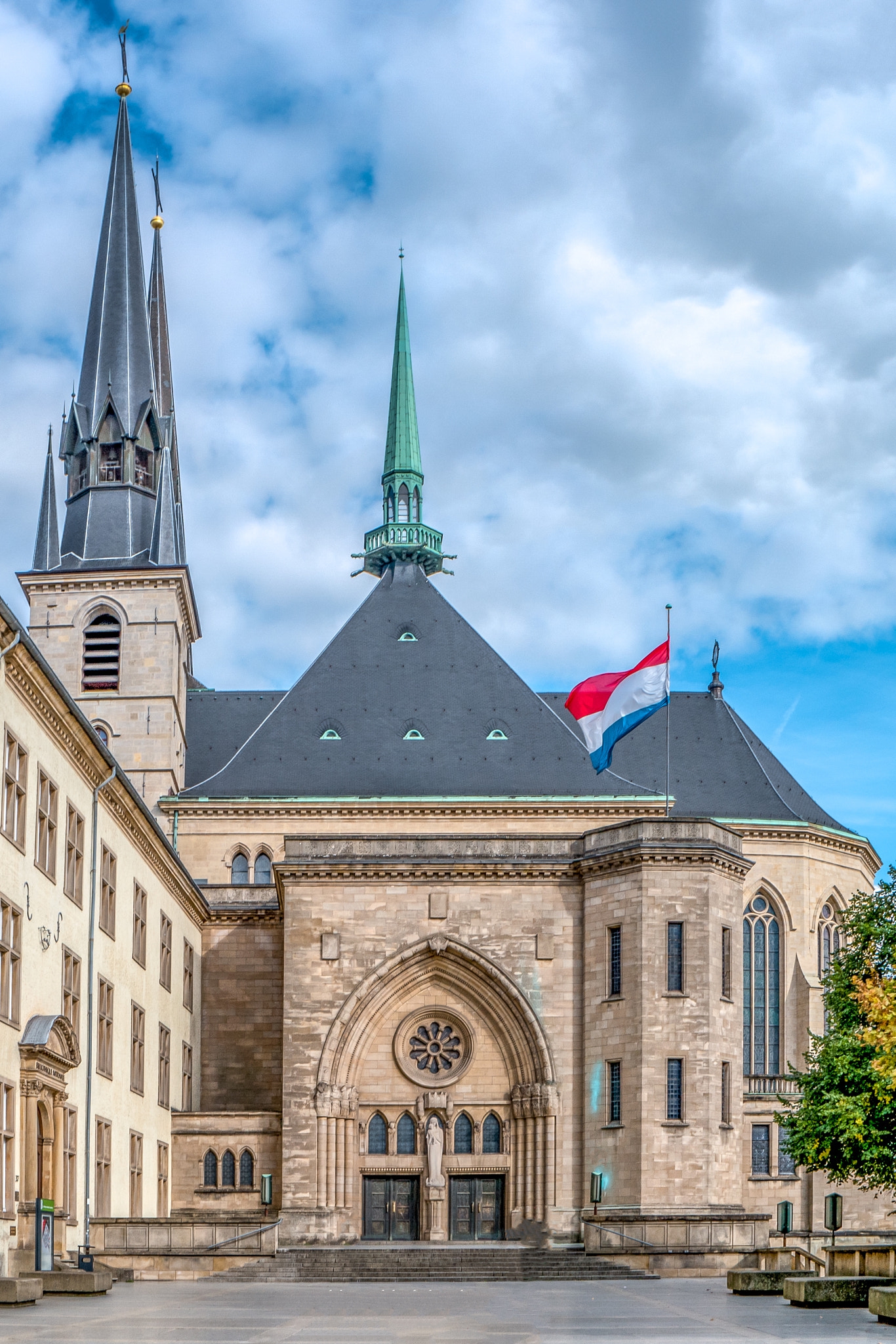
Notre-Dame Cathedral of Luxembourg
The Notre-Dame Cathedral of Luxembourg, originally built as a Jesuit church between 1613 and 1621, serves as the primary Catholic cathedral for the Archdiocese of Luxembourg. The structure is a notable example of late Gothic architecture, featuring significant Renaissance and Baroque decorative elements that reflect the evolving tastes of the 17th century.
Beyond its religious function, the cathedral serves as a national monument and the final resting place for the Grand Ducal family of Luxembourg. It is the site of major state ceremonies, including royal weddings and funerals, and houses the miraculous image of the Comforter of the Afflicted, the patron saint of the city and the nation.
Key Facts
- Materials
- Sandstone, Stained glass
- Civilization
- Luxembourgish
- Accessibility
- Ground level accessible
- Date(s)
- 1613-1621
- Condition
- Active cathedral
- Original Function
- Jesuit Church
- Key Figures
- Grand Duke Jean, Grand Duchess Charlotte
Jesuit Origins
1613-1621The church was commissioned by the Jesuit order and constructed under the direction of architect Ulrich Job. It served as a college church for the Jesuits until the order was suppressed in the late 18th century.
Elevation to Cathedral
1870Pope Pius IX elevated the church to the status of a cathedral in 1870, reflecting the growing ecclesiastical importance of Luxembourg City within the Catholic Church.
Expansion and Restoration
1935-1938Between 1935 and 1938, the cathedral underwent a significant expansion designed by architect Hubert Schumacher. This project added the western bays and the two side towers, which significantly altered the building's silhouette.
Cultural Significance
The cathedral is the spiritual heart of Luxembourg. The annual Octave of Our Lady of Luxembourg, a pilgrimage dedicated to the Comforter of the Afflicted, draws thousands of visitors and locals to the cathedral, reinforcing its role as a focal point for national identity and religious devotion.
Interpretive Notes
Scholarly debates and areas of uncertainty
There is minor academic discussion regarding the extent to which the 1930s expansion compromised the original 17th-century architectural integrity of the Jesuit design, though the consensus generally views the expansion as a successful integration of styles.
Visiting Information
Entry Rules
Open daily to the public. Entry is free. Visitors are requested to maintain silence and respect ongoing religious services. Modest attire is expected.
Best Times to Visit
Weekday mornings for quiet reflection. The Octave festival in the spring provides the most culturally significant experience.
Photography
Photography is permitted without flash. Tripods and professional equipment require prior authorization from the parish office.
Preservation Notes
The interior features delicate stained glass and historical monuments; visitors should refrain from touching surfaces. Restoration work is conducted periodically to maintain the sandstone facade.
Nearby POIs
10 shownSources & Further Reading
- [1]
- [2]The History of the Jesuit Church in Luxembourg — Michel Pauly. Luxembourg City History Series (2015)
Key Facts
- Materials
- Sandstone, Stained glass
- Civilization
- Luxembourgish
- Accessibility
- Ground level accessible
- Date(s)
- 1613-1621
- Condition
- Active cathedral
- Original Function
- Jesuit Church
- Key Figures
- Grand Duke Jean, Grand Duchess Charlotte