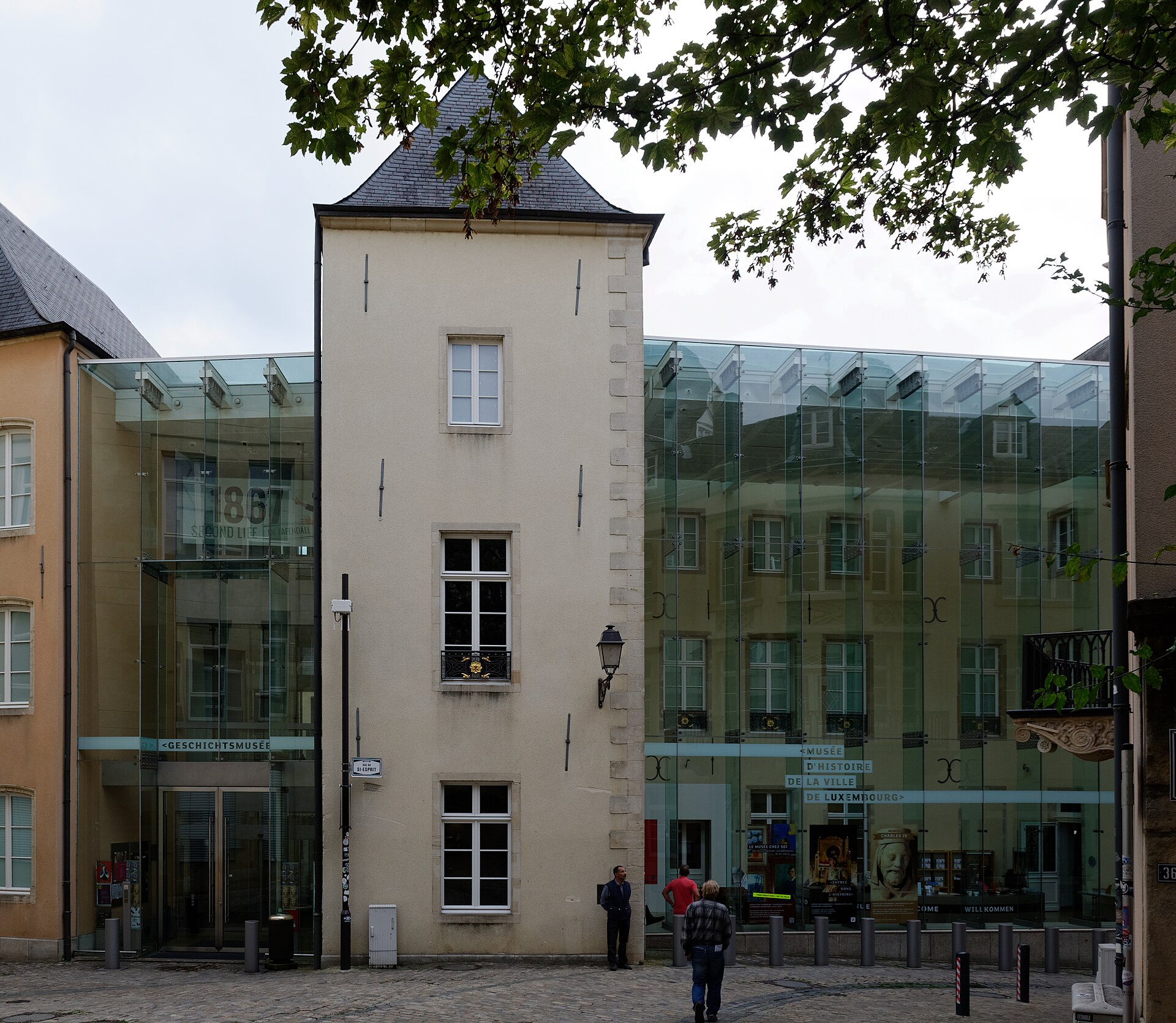
The Luxembourg City History Museum is housed within a complex of four restored seventeenth-century patrician houses, seamlessly integrated with modern architectural additions. The museum documents the urban, social, and cultural development of Luxembourg City from its founding in 963 CE to the present day.
The permanent exhibition utilizes a combination of historical artifacts, scale models, and multimedia displays to illustrate the city's transformation from a medieval fortress to a modern European capital. The building itself serves as a primary exhibit, showcasing the evolution of urban domestic architecture through the preservation of original vaulted cellars and structural elements.
Key Facts
- Materials
- Sandstone, Glass, Steel, Timber
- Civilization
- Luxembourgish
- Accessibility
- Fully wheelchair accessible via glass elevator
- Date(s)
- 1996 (Museum opening)
- Condition
- Well-preserved, active museum
- Original Function
- Residential houses
- Key Figures
- Conrad I of Luxembourg
Origins of the Site
17th CenturyThe museum occupies a cluster of four historic townhouses located in the heart of the old city. These buildings represent the architectural heritage of the merchant class during the 1600s, featuring traditional stone masonry and vaulted basements.
Museum Foundation
1996The museum was inaugurated in 1996 following an extensive renovation project that combined the historic structures with contemporary architecture. The project was designed to provide a comprehensive narrative of the city's thousand-year history.
Modern Expansion
21st CenturyThe museum continues to serve as a center for urban research and public engagement, frequently hosting temporary exhibitions that explore the intersection of Luxembourg's history with broader European developments.
Cultural Significance
The museum acts as the primary repository for the collective memory of Luxembourg City. By bridging the gap between the medieval fortress era and the contemporary financial hub, it provides essential context for the city's unique identity as a crossroads of European culture.
Interpretive Notes
Scholarly debates and areas of uncertainty
Discussions often center on the balance between preserving the authentic seventeenth-century fabric of the houses and the necessity of modern interventions required for museum functionality and accessibility.
Visiting Information
Entry Rules
Open Tuesday to Sunday. Ticketed entry required. No food or drink allowed in exhibition galleries.
Best Times to Visit
Weekday mornings are generally quieter. The museum is a suitable indoor activity during inclement weather.
Photography
Non-commercial photography is permitted without flash. Tripods require prior authorization.
Preservation Notes
Visitors are requested to refrain from touching artifacts and to remain on designated paths to protect the historic flooring and structural elements.
Nearby POIs
10 shownSources & Further Reading
- [1]Luxembourg City History Museum: Official Guide — Musée d'Histoire de la Ville de Luxembourg. Ville de Luxembourg (2020)View
- [2]The Architecture of Luxembourg City — Christian Aschman. Maison Moderne (2013)
Key Facts
- Materials
- Sandstone, Glass, Steel, Timber
- Civilization
- Luxembourgish
- Accessibility
- Fully wheelchair accessible via glass elevator
- Date(s)
- 1996 (Museum opening)
- Condition
- Well-preserved, active museum
- Original Function
- Residential houses
- Key Figures
- Conrad I of Luxembourg