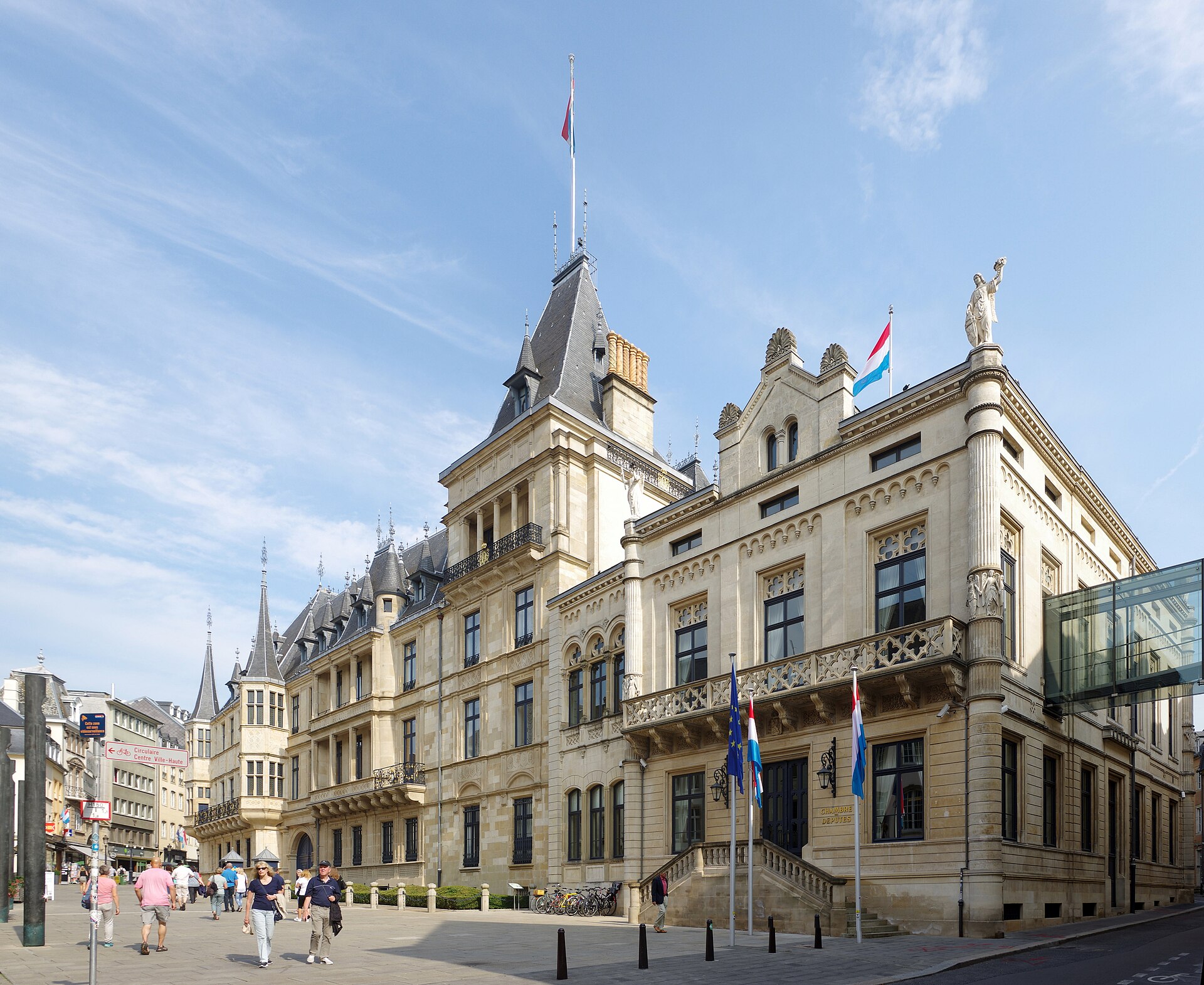
The Grand Ducal Palace is the official residence of the Grand Duke of Luxembourg, located in the heart of the historic capital. Originally constructed in 1572 to serve as the city's first town hall, the building underwent significant expansions and renovations over the centuries, most notably in the 19th century when it was adapted for royal use.
The structure is renowned for its Flemish Renaissance facade, which features intricate stonework and ornate detailing. While it serves as the primary site for state ceremonies, official receptions, and the daily administrative functions of the Grand Ducal household, it remains a central landmark of the Luxembourg City UNESCO World Heritage site.
Key Facts
- Materials
- Sandstone, Copper
- Civilization
- Luxembourgish
- Accessibility
- Limited; guided tours available in summer
- Date(s)
- 1572
- Condition
- Well-preserved, active official residence
- Original Function
- City Hall
- Key Figures
- Grand Duke Henri, Grand Duchess Charlotte
Origins as Town Hall
1572The building was originally constructed to serve as the town hall of Luxembourg City, replacing a previous structure destroyed by an explosion in 1554.
Royal Transformation
1817-1890The building became the residence of the Governor of Luxembourg in 1817. It underwent significant expansion in 1859 to accommodate the needs of the royal family, including the addition of a new wing.
Modern Era
1890-PresentFollowing the accession of the House of Nassau-Weilburg in 1890, the palace became the permanent official residence of the Grand Dukes of Luxembourg. It was extensively restored between 1991 and 1996 to preserve its architectural integrity.
Cultural Significance
The Grand Ducal Palace serves as the physical embodiment of the Luxembourgish monarchy and national sovereignty. It is the site of major state events, including the annual National Day celebrations and the reception of foreign heads of state, acting as a focal point for national identity.
Interpretive Notes
Scholarly debates and areas of uncertainty
There is limited academic debate regarding the palace, though architectural historians occasionally discuss the extent of the 19th-century modifications and how they altered the original 16th-century Flemish Renaissance aesthetic.
Visiting Information
Entry Rules
The palace is only open to the public for guided tours during the summer months (typically July to early September). Visitors must book tickets in advance through the Luxembourg City Tourist Office. Security screening is mandatory.
Best Times to Visit
Summer months for guided interior tours; year-round for exterior viewing of the changing of the guard.
Photography
Photography is permitted on the exterior. Interior photography rules are strictly enforced by guides during tours.
Preservation Notes
The building is a protected national monument. Visitors are required to follow all instructions from security and guides to ensure the preservation of the historic interiors.
Nearby POIs
10 shownSources & Further Reading
- [1]The Grand Ducal Palace of Luxembourg — Cour Grand-Ducale. Official Website of the Grand Ducal Court (2023)View
- [2]Luxembourg: A History — James Newcomer. University of Delaware Press (1984)
Key Facts
- Materials
- Sandstone, Copper
- Civilization
- Luxembourgish
- Accessibility
- Limited; guided tours available in summer
- Date(s)
- 1572
- Condition
- Well-preserved, active official residence
- Original Function
- City Hall
- Key Figures
- Grand Duke Henri, Grand Duchess Charlotte