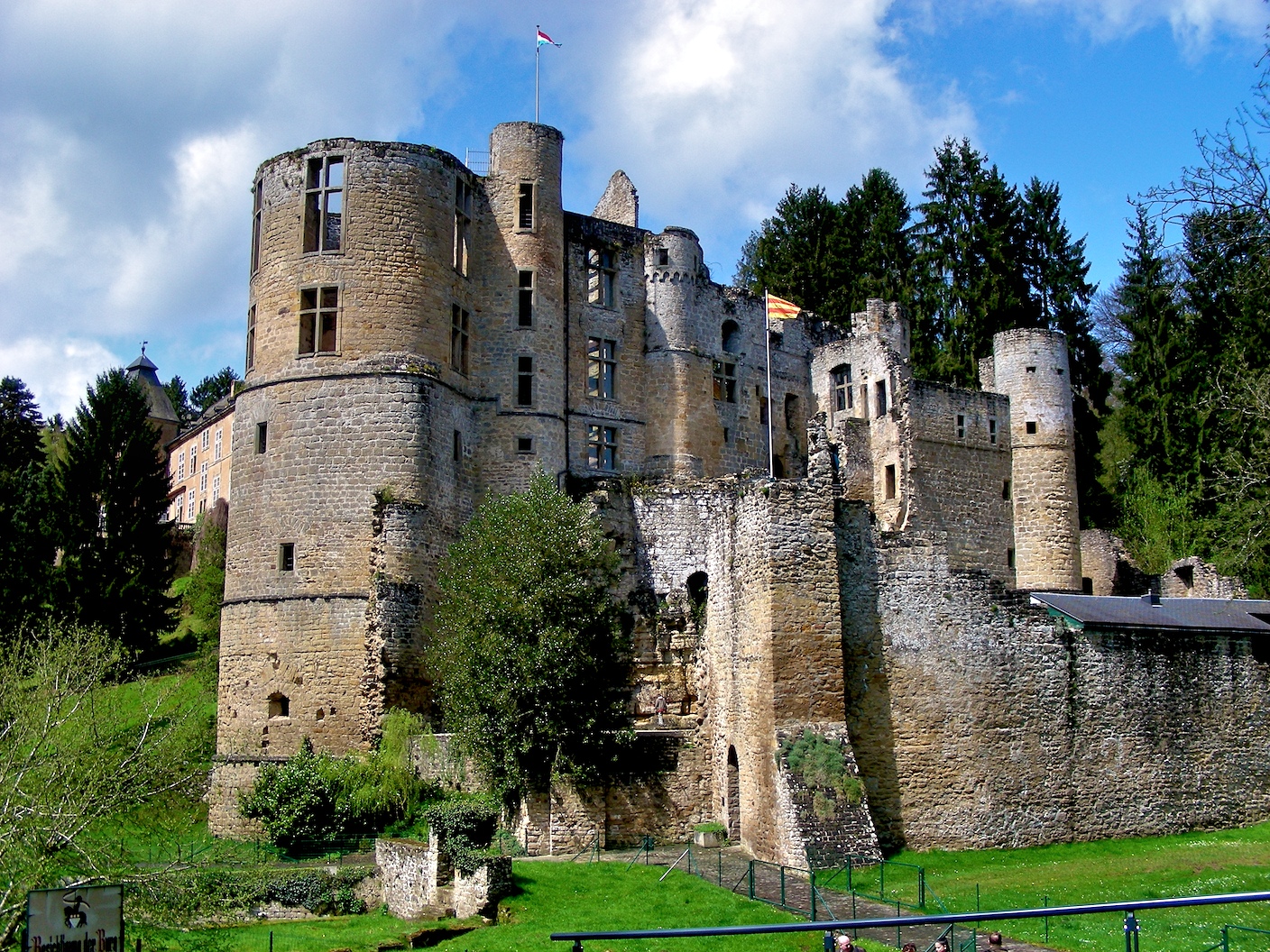
Beaufort Castle is a medieval fortress located in the Müllerthal region of Luxembourg. The site consists of two distinct parts: the ruins of the original 11th-century castle and a well-preserved Renaissance-style manor house built in the 17th century. The medieval section features massive defensive walls, a moat, and vaulted chambers that reflect the evolution of feudal military architecture over several centuries.
The fortress was strategically positioned to control the surrounding valley, serving as a residence for local lords and a defensive stronghold. While the medieval structure fell into disrepair following the Thirty Years' War, the Renaissance manor remained inhabited until the early 20th century, providing a unique contrast between the rugged defensive ruins and the refined domestic architecture of the later period.
Key Facts
- Materials
- Sandstone, Limestone
- Civilization
- Luxembourgish
- Accessibility
- Grounds are accessible, some interior areas have stairs
- Date(s)
- 11th - 17th century
- Condition
- Partially ruined medieval section, restored Renaissance manor
- Original Function
- Defensive fortress and residential manor
- Key Figures
- Johann von Beck
Origins and Medieval Expansion
11th - 14th centuryThe earliest parts of the castle date back to the 11th century, beginning as a small stone keep. Over the following centuries, the structure was expanded with additional defensive walls and towers to accommodate the growing needs of the local nobility.
Renaissance Transformation
17th centuryIn the early 17th century, Jean de Beck, a military commander, commissioned the construction of a Renaissance-style manor house adjacent to the older ruins. This addition shifted the site's primary function from a purely defensive fortification to a comfortable residential estate.
Decline and Modern Preservation
18th century - presentFollowing the death of its inhabitants and the impact of regional conflicts, the medieval castle fell into ruin. In the 20th century, the site was acquired by the state, which initiated preservation efforts to stabilize the ruins and open the castle to the public as a cultural heritage site.
Cultural Significance
Beaufort Castle serves as a primary historical landmark in the Müllerthal region, often referred to as 'Little Switzerland.' It represents the transition of Luxembourgish nobility from feudal warlords to landed gentry, illustrating the shift in architectural priorities from military defense to domestic comfort.
Interpretive Notes
Scholarly debates and areas of uncertainty
There is ongoing discussion regarding the extent of the original 11th-century footprint, as subsequent medieval modifications significantly obscured the earliest foundations. Archaeological surveys continue to refine the timeline of the castle's expansion phases.
Visiting Information
Entry Rules
Open to the public from Easter to November. Tickets are required for entry into the Renaissance manor and the castle ruins. Guided tours are available for groups by appointment.
Best Times to Visit
Late spring and early autumn offer the best conditions for exploring the outdoor ruins, as the surrounding Müllerthal forest is particularly scenic during these seasons.
Photography
Personal photography is permitted throughout the site. Commercial photography requires prior authorization from the site management.
Preservation Notes
Visitors are advised to stay on marked paths within the ruins. Due to the age of the masonry, some areas may be restricted for safety reasons during ongoing maintenance.
Nearby POIs
10 shownSources & Further Reading
- [1]Les châteaux forts de Luxembourg — Jean-Pierre Koltz. Editions Saint-Paul (1975)
- [2]Beaufort: Geschichte und Architektur — Service des Sites et Monuments Nationaux. Luxembourg Ministry of Culture (2010)View
Key Facts
- Materials
- Sandstone, Limestone
- Civilization
- Luxembourgish
- Accessibility
- Grounds are accessible, some interior areas have stairs
- Date(s)
- 11th - 17th century
- Condition
- Partially ruined medieval section, restored Renaissance manor
- Original Function
- Defensive fortress and residential manor
- Key Figures
- Johann von Beck