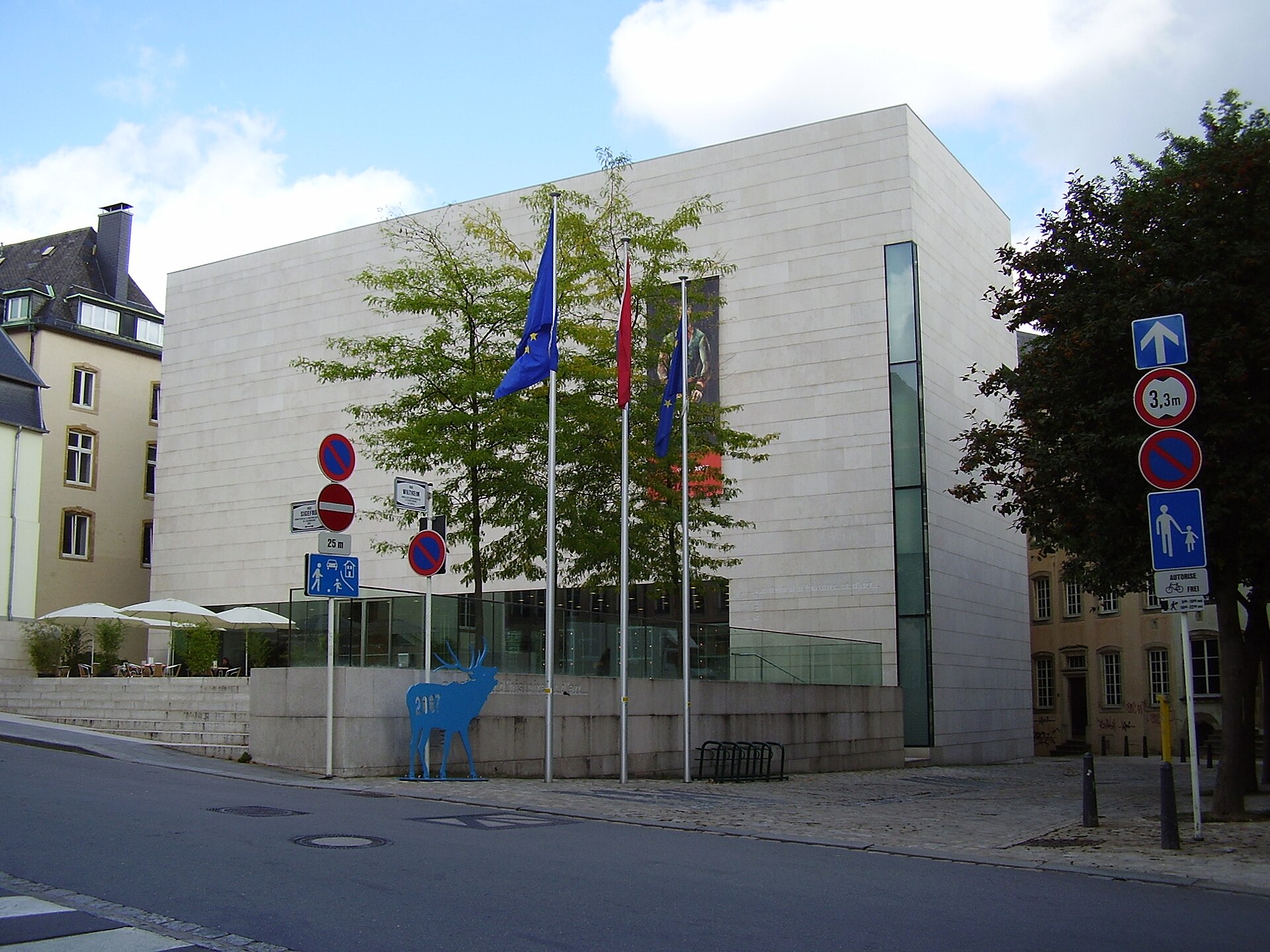
National Museum of Archaeology, History, and Art
The National Museum of Archaeology, History, and Art (MNHA) is a premier cultural institution located in the historic Fish Market district of Luxembourg City. The museum houses extensive collections that document the evolution of the Grand Duchy from prehistoric times through the Roman era and into the modern period, emphasizing the region's unique historical trajectory within Europe.
The institution is housed in a complex that integrates historic buildings with contemporary architecture, providing a modern setting for its diverse holdings. Its collections encompass archaeology, fine arts, decorative arts, and numismatics, serving as a primary repository for the nation's cultural heritage and artistic development.
Key Facts
- Materials
- Sandstone, Glass, Steel
- Civilization
- Luxembourgish
- Accessibility
- Fully wheelchair accessible
- Date(s)
- 1854 (founding), 2002 (current building)
- Condition
- Active, well-maintained
- Original Function
- National museum
- Key Figures
- Jean-Pierre Pescatore
Founding and Early Years
19th CenturyThe museum was established in the mid-19th century following the creation of the Luxembourg Society for the Study and Preservation of Historical Monuments, which sought to protect the nation's archaeological and historical artifacts.
Expansion and Modernization
20th CenturyThroughout the 20th century, the museum expanded its scope to include fine and decorative arts. The institution underwent significant professionalization, becoming a central hub for academic research and public education regarding Luxembourgish history.
Contemporary Development
21st CenturyIn 2002, the museum inaugurated a new, architecturally significant building designed to house its permanent collections. This expansion allowed for a more comprehensive display of artifacts and improved facilities for temporary exhibitions and research.
Cultural Significance
The MNHA serves as the primary guardian of Luxembourg's national identity, bridging the gap between the country's ancient archaeological roots and its modern status as a European political center. It plays a vital role in local education and international cultural diplomacy.
Interpretive Notes
Scholarly debates and areas of uncertainty
Discussions within the museum community often focus on the balance between displaying nationalistic historical narratives and integrating Luxembourg's history into the broader context of European and regional developments.
Visiting Information
Entry Rules
Open Tuesday to Sunday. Admission is free for the permanent collection; temporary exhibitions may require a ticket. Visitors are expected to follow standard museum conduct.
Best Times to Visit
Weekday mornings are generally quieter, allowing for a more focused viewing of the archaeological galleries.
Photography
Non-commercial photography is permitted without flash. Tripods and selfie sticks are prohibited.
Preservation Notes
Maintain a respectful distance from artifacts. Do not touch display cases or exhibits. Large bags must be stored in provided lockers.
Nearby POIs
10 shownSources & Further Reading
- [1]MNHA: National Museum of Archaeology, History and Art — Michel Polfer. Musée national d'histoire et d'art (2015)View
- [2]The History of Luxembourg's Museums — Jean-Luc Mousset. Luxembourgish Historical Review (2018)
Key Facts
- Materials
- Sandstone, Glass, Steel
- Civilization
- Luxembourgish
- Accessibility
- Fully wheelchair accessible
- Date(s)
- 1854 (founding), 2002 (current building)
- Condition
- Active, well-maintained
- Original Function
- National museum
- Key Figures
- Jean-Pierre Pescatore