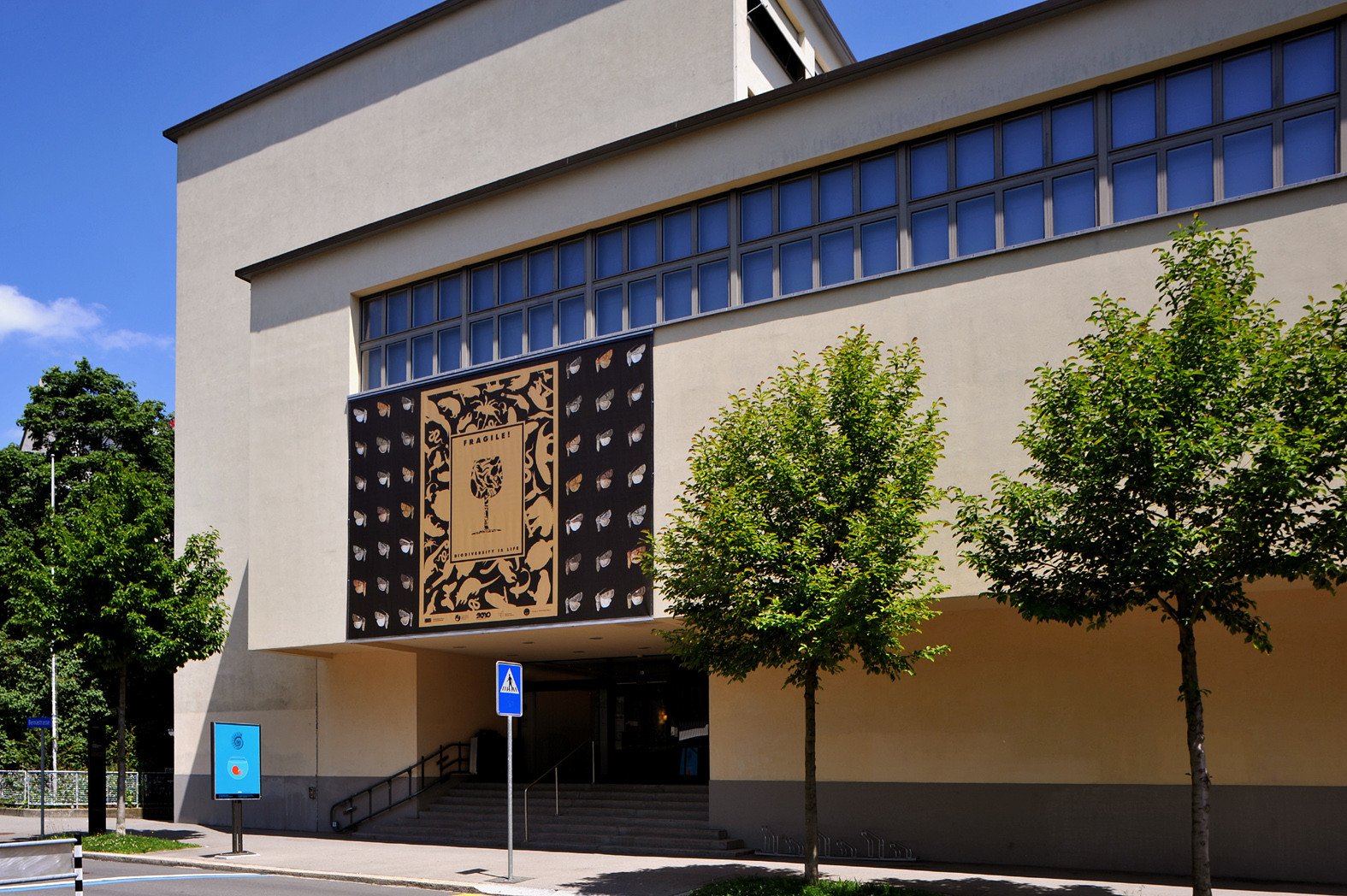
The Natural History Museum of Bern (Naturhistorisches Museum der Burgergemeinde Bern) is a prominent scientific institution located in the Kirchenfeld district of Bern, Switzerland. Established in its current building in the late 19th century, the museum houses an extensive collection of zoological, paleontological, and mineralogical specimens that document the natural history of the region and the broader world.
The museum is particularly noted for its dioramas, which were among the first of their kind in Europe, and the famous display of Barry, the legendary St. Bernard rescue dog. Its research departments focus on biodiversity, geology, and the evolution of Alpine landscapes, serving as both a public educational facility and a center for academic study.
Key Facts
- Materials
- Sandstone, Brick, Glass
- Civilization
- Swiss
- Accessibility
- Fully wheelchair accessible
- Date(s)
- 1878-1881
- Condition
- Well-maintained and active
- Original Function
- Natural History Museum
- Key Figures
- Barry the St. Bernard
Foundation and Early Collections
18th-19th CenturyThe museum's roots trace back to the private collections of the Bernese bourgeoisie in the 18th century. These collections were eventually consolidated and placed under the administration of the Burgergemeinde Bern, leading to the need for a dedicated public facility.
Construction of the Current Building
1878-1881The current museum building was constructed in the Kirchenfeld quarter to accommodate the growing scientific collections. Designed in a historicist style, it provided the necessary space for the systematic classification and display of specimens.
Modernization and Expansion
20th Century - PresentThroughout the 20th century, the museum expanded its research capabilities and updated its exhibition techniques. The introduction of modern dioramas and interactive displays has kept the institution relevant as a center for public science education.
Cultural Significance
The museum serves as a vital repository for Swiss natural heritage, playing a key role in the public understanding of Alpine ecology and biodiversity. It is a cornerstone of Bern's cultural district, bridging the gap between historical scientific inquiry and contemporary environmental awareness.
Interpretive Notes
Scholarly debates and areas of uncertainty
Discussions within the institution often focus on the ethics of taxidermy displays in modern museum practice and the balance between maintaining historical dioramas versus implementing digital, interactive educational tools.
Visiting Information
Entry Rules
Open daily. Ticketed entry required for permanent and special exhibitions. No food or drink allowed in the galleries.
Best Times to Visit
Weekday mornings are generally quieter. The museum is a popular destination for school groups during the academic year.
Photography
Personal photography is permitted without flash or tripods. Commercial photography requires prior authorization.
Preservation Notes
Do not touch the display cases or specimens. Flash photography is prohibited to prevent light damage to sensitive biological materials.
Nearby POIs
11 shownSources & Further Reading
- [1]Naturhistorisches Museum der Burgergemeinde Bern: Geschichte — NMBE Staff. NMBE Official Website (2023)View
- [2]Museums of Switzerland: A Guide — Swiss Federal Office of Culture. Swiss Government Publications (2020)
Key Facts
- Materials
- Sandstone, Brick, Glass
- Civilization
- Swiss
- Accessibility
- Fully wheelchair accessible
- Date(s)
- 1878-1881
- Condition
- Well-maintained and active
- Original Function
- Natural History Museum
- Key Figures
- Barry the St. Bernard