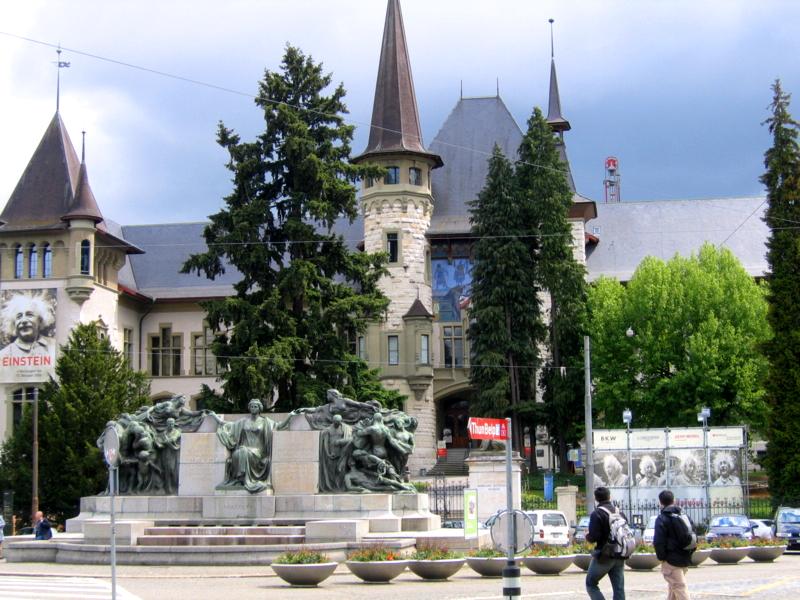
The Bern Historical Museum (Bernisches Historisches Museum) is the second-largest historical museum in Switzerland. Housed in a distinctive castle-like building designed by architect André Lambert, the institution was completed in 1894. The structure was inspired by 15th-century Burgundian castles, featuring a prominent tower and elaborate stonework that reflects the historicist architectural trends of the late 19th century.
The museum holds a vast collection of over 500,000 objects, documenting the cultural history of the Bern region and Switzerland from the Stone Age to the present day. Its permanent exhibitions cover diverse themes, including archaeology, ethnography, and numismatics, while also housing the integrated Einstein Museum, which explores the life and work of Albert Einstein during his time in Bern.
Key Facts
- Materials
- Sandstone, Granite, Steel
- Civilization
- Swiss
- Accessibility
- Fully wheelchair accessible
- Date(s)
- 1892-1894
- Condition
- Well-preserved, active museum
- Original Function
- Historical Museum
- Key Figures
- André Lambert, Albert Einstein
Founding and Architecture
1892-1894The museum was established to house the growing collection of the city's historical artifacts. Architect André Lambert designed the building in a historicist style, utilizing a castle-like aesthetic to provide a monumental setting for the city's heritage.
Expansion and Integration
20th CenturyThroughout the 20th century, the museum expanded its scope significantly. In 2005, the Einstein Museum was integrated into the existing structure, providing a dedicated space to examine the physicist's formative years in Bern.
Modern Operations
21st CenturyToday, the museum functions as a major cultural hub, focusing on digital accessibility and the curation of its extensive ethnographic and archaeological holdings. It continues to serve as a primary research center for Swiss history.
Cultural Significance
The museum serves as the primary repository for the cultural memory of the Canton of Bern. Its collections provide a comprehensive narrative of Swiss identity, bridging the gap between prehistoric archaeological findings and contemporary social history. The inclusion of the Einstein Museum highlights the city's intellectual heritage, making it a focal point for both local education and international tourism.
Interpretive Notes
Scholarly debates and areas of uncertainty
Discussions within the museum community often center on the ethics of displaying ethnographic collections acquired during the colonial era. The institution is currently engaged in provenance research to address the origins of non-European artifacts within its holdings.
Visiting Information
Entry Rules
Open Tuesday to Sunday. Tickets can be purchased on-site or online. Large bags and backpacks must be stored in provided lockers.
Best Times to Visit
Weekday mornings are generally quieter. The museum is particularly busy during school holidays and special temporary exhibition openings.
Photography
Non-commercial photography is permitted without flash. Tripods and selfie sticks are prohibited in exhibition galleries.
Preservation Notes
Maintain a respectful distance from all artifacts. Flash photography is strictly prohibited to prevent light damage to sensitive textiles and historical documents.
Nearby POIs
11 shownSources & Further Reading
- [1]
- [2]Swiss Museum Architecture: 1850-1900 — Hans-Peter Bärtschi. Verlag Neue Zürcher Zeitung (2015)
Key Facts
- Materials
- Sandstone, Granite, Steel
- Civilization
- Swiss
- Accessibility
- Fully wheelchair accessible
- Date(s)
- 1892-1894
- Condition
- Well-preserved, active museum
- Original Function
- Historical Museum
- Key Figures
- André Lambert, Albert Einstein