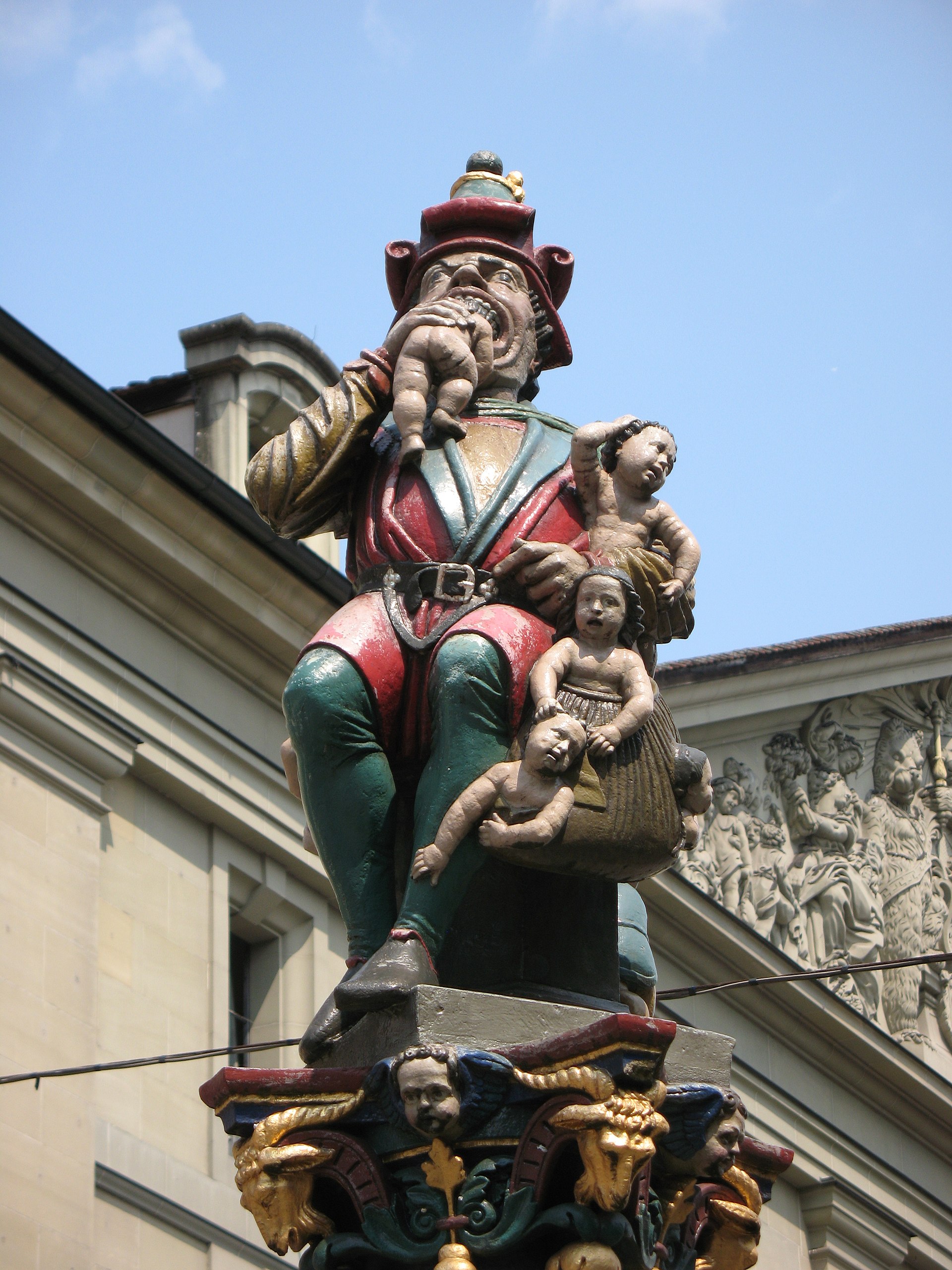
The Kindlifresserbrunnen, or 'Child Eater Fountain,' is a prominent 16th-century fountain located on Kornhausplatz in the Old City of Bern, Switzerland. Constructed in 1545-1546, it features a striking polychrome sculpture of a seated ogre devouring a naked child, with several other children tucked into his satchel and pockets. The fountain serves as a significant example of Renaissance urban art and is a well-known landmark within the UNESCO-listed historic center of Bern.
The sculpture is attributed to Hans Gieng, a master sculptor active in the region during the mid-16th century. While the exact meaning of the iconography remains a subject of historical speculation, the fountain has become a central element of Bernese folklore and a distinct feature of the city's public water infrastructure, which historically served as a vital social and functional hub for the urban population.
Key Facts
- Materials
- Stone, Polychrome paint
- Civilization
- Swiss
- Accessibility
- Public square, fully accessible
- Date(s)
- 1545-1546
- Condition
- Well-preserved, active
- Original Function
- Public water fountain
- Key Figures
- Hans Gieng
Commission and Construction
1545-1546The fountain was commissioned by the city of Bern to replace an earlier wooden structure. Hans Gieng was contracted to create the stone sculpture, which was painted in vibrant colors to serve as a visual landmark on the Kornhausplatz.
Iconographic Interpretations
16th-19th centuryOver the centuries, the figure has been interpreted in various ways, ranging from a representation of the Greek god Cronus to a warning to children, or even an anti-Semitic caricature. These interpretations have evolved alongside the city's changing social and political landscape.
Modern Preservation
20th century - presentAs part of the Old City of Bern, the fountain is protected under heritage conservation laws. It underwent significant restoration in the mid-20th century to preserve the original stone and the historical polychrome finish.
Cultural Significance
The Kindlifresserbrunnen is deeply embedded in Bernese cultural identity. It is one of the many elaborate fountains that define the aesthetic of the city's medieval and Renaissance streets. Beyond its artistic value, it serves as a focal point for local legends and has become a subject of international curiosity due to its macabre and enigmatic subject matter.
In the context of the UNESCO World Heritage status of the Old City of Bern, the fountain represents the high level of civic pride and artistic investment characteristic of the Swiss Confederation during the Reformation era.
Interpretive Notes
Scholarly debates and areas of uncertainty
The primary scholarly debate concerns the intended meaning of the ogre. While some historians suggest it is a representation of the Titan Cronus, others argue it may be a 'Fastnacht' (carnival) figure or a symbolic warning to children. There is also ongoing discussion regarding whether the figure carries anti-Semitic undertones, given the resemblance of the hat to the 'Judenhut' worn by Jews in the Middle Ages, though this remains a point of contention among art historians.
Visiting Information
Entry Rules
The fountain is located in a public square and is accessible 24 hours a day. No entry fees or restrictions apply.
Best Times to Visit
Early morning or late evening to avoid the heavy pedestrian traffic of the Kornhausplatz.
Photography
None; the fountain is in a public space.
Preservation Notes
The fountain is a protected historical monument. Do not climb on the structure or touch the painted surfaces.
Nearby POIs
11 shownSources & Further Reading
- [1]Bern: Die Stadtbrunnen — Paul Hofer. Benteli Verlag (1971)
- [2]The Kindlifresserbrunnen: Iconography and Context — Various. Bern Historical Museum Archives (2015)
Key Facts
- Materials
- Stone, Polychrome paint
- Civilization
- Swiss
- Accessibility
- Public square, fully accessible
- Date(s)
- 1545-1546
- Condition
- Well-preserved, active
- Original Function
- Public water fountain
- Key Figures
- Hans Gieng