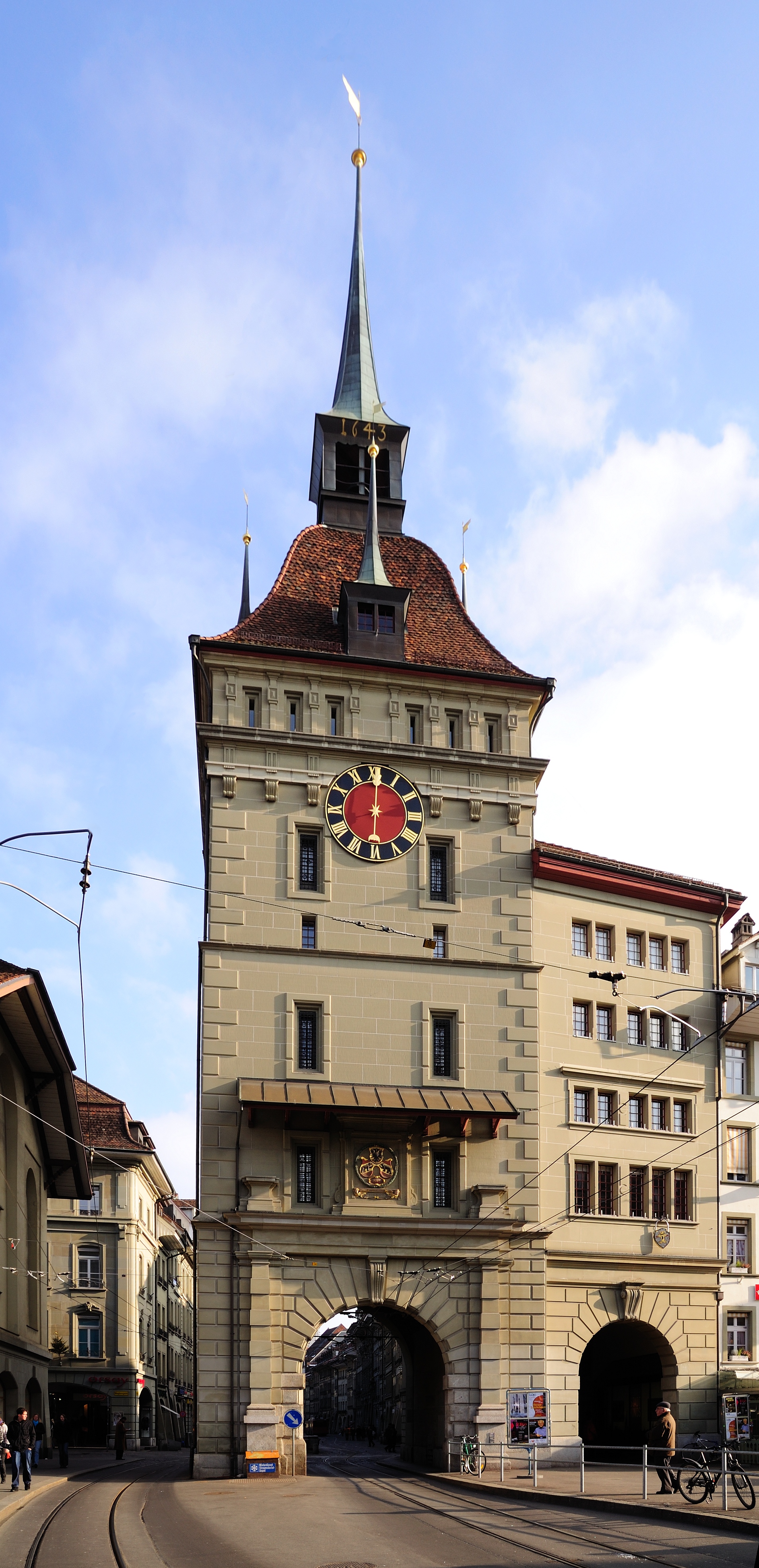
The Käfigturm, or Prison Tower, is a historic gatehouse located in the Old City of Bern, Switzerland. Originally constructed as part of the city's second defensive wall system, it served as a prison and a fortified gateway for several centuries. The current structure dates primarily to the mid-17th century, replacing an earlier medieval tower that had fallen into disrepair.
Architecturally, the tower is characterized by its robust stone masonry, a prominent clock face, and a distinctive hipped roof. Following its decommissioning as a prison, the building has served various civic functions, including as an archive and a political forum. It remains a key landmark within the UNESCO-listed historic center of Bern, reflecting the city's evolution from a medieval stronghold to a modern political capital.
Key Facts
- Materials
- Sandstone, Timber
- Civilization
- Swiss
- Accessibility
- Ground floor accessible, upper levels via stairs
- Date(s)
- 1641-1644
- Condition
- Well-preserved, used as a political forum
- Original Function
- Gatehouse and prison
- Key Figures
- Joseph Plepp
Medieval Origins
13th CenturyThe original tower was built as part of the second expansion of Bern's fortifications. It served as the primary western gate to the city until the construction of the third wall system.
Reconstruction
1641-1644Due to the structural instability of the medieval tower, the city council commissioned a new building. Designed by Joseph Plepp, the current structure was completed in the mid-17th century, incorporating a prison and a gatehouse.
Civic Transformation
19th-20th CenturyThe tower ceased its function as a prison in the late 19th century. It subsequently housed the city archives and later served as a venue for exhibitions and political debates.
Cultural Significance
The Käfigturm is a symbol of Bern's medieval defensive heritage and its transition into a modern administrative center. As part of the Old City of Bern, it is protected as a UNESCO World Heritage site, representing the continuity of Swiss urban planning and civic governance.
Interpretive Notes
Scholarly debates and areas of uncertainty
There is minor academic discussion regarding the exact extent of the original medieval foundations versus the 17th-century modifications, as archaeological access to the lower subterranean levels remains limited.
Visiting Information
Entry Rules
Open to the public during scheduled exhibition hours. Entry is generally free of charge.
Best Times to Visit
Weekday mornings are recommended to avoid the peak tourist traffic in the Old City.
Photography
Personal photography is permitted. Commercial use requires prior authorization from the city administration.
Preservation Notes
The structure is subject to strict heritage protection laws. Visitors are requested to refrain from touching the historic masonry.
Nearby POIs
11 shownSources & Further Reading
- [1]
- [2]Die Kunstdenkmäler des Kantons Bern: Die Stadt Bern — Paul Hofer. Birkhäuser (1952)
Key Facts
- Materials
- Sandstone, Timber
- Civilization
- Swiss
- Accessibility
- Ground floor accessible, upper levels via stairs
- Date(s)
- 1641-1644
- Condition
- Well-preserved, used as a political forum
- Original Function
- Gatehouse and prison
- Key Figures
- Joseph Plepp