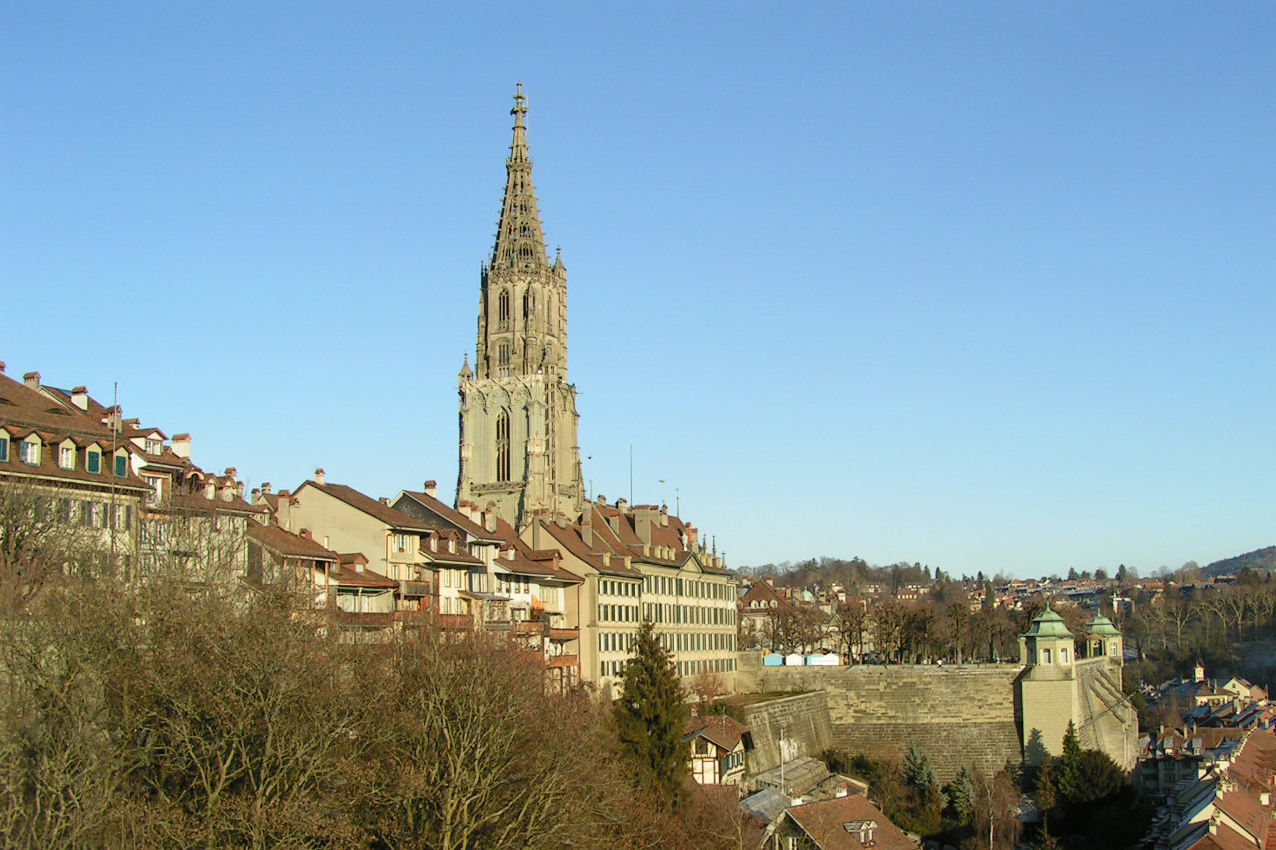
The Bern Minster (Berner Münster) is a Swiss Reformed cathedral located in the old city of Bern. Construction began in 1421 under the direction of master builder Matthäus Ensinger, following the design of a three-aisled basilica. It stands as the largest and most important late medieval church in Switzerland, serving as a landmark of the city's skyline.
The structure is renowned for its elaborate western portal, which features a detailed depiction of the Last Judgment. The tower, completed in 1893 after centuries of intermittent construction, reaches a height of 100.6 meters, making it the tallest church tower in the country and providing panoramic views of the city and the Bernese Alps.
Key Facts
- Materials
- Sandstone
- Civilization
- Swiss
- Accessibility
- Ground floor accessible; tower climb involves stairs
- Date(s)
- 1421 - 1893
- Condition
- Well-preserved, active Reformed church
- Original Function
- Catholic Cathedral
- Key Figures
- Matthäus Ensinger, Erhard Küng
Foundations and Early Construction
1421-1500Construction commenced in 1421 on the site of an earlier chapel. The project was led by the Ensinger family, who brought architectural influences from the Ulm Minster. By the end of the 15th century, the nave and the choir were largely completed.
Reformation and Interior Changes
16th centuryFollowing the Protestant Reformation in Bern in 1528, the cathedral underwent significant interior changes. Many Catholic altars and religious icons were removed, and the building was repurposed for Reformed worship.
Tower Completion
1889-1893While the lower portion of the tower had stood for centuries, the upper spire and belfry were not completed until the late 19th century. This final phase was executed in a neo-Gothic style that respected the original medieval design.
Cultural Significance
The Bern Minster is a central symbol of Bern's historical and religious identity. Its construction reflected the growing wealth and political ambition of the city-state during the late Middle Ages. The Last Judgment portal remains one of the most significant pieces of late Gothic sculpture in Europe, representing the transition from medieval religious art to the humanistic sensibilities of the Renaissance.
Today, the cathedral serves as a focal point for the UNESCO World Heritage-listed Old City of Bern. It remains an active site of worship and a major cultural venue, hosting organ concerts and community events that bridge its medieval heritage with contemporary urban life.
Interpretive Notes
Scholarly debates and areas of uncertainty
There is ongoing academic discussion regarding the extent of the original iconographic program of the Last Judgment portal. Some scholars argue that the Reformation-era removal of certain figures altered the intended theological narrative of the sculpture, while others suggest the remaining elements provide a sufficient, albeit truncated, view of the original medieval vision.
Visiting Information
Entry Rules
Open daily to the public. Entry to the nave is free, though donations are encouraged. Access to the tower requires a paid ticket. Visitors are expected to maintain a respectful demeanor as it is an active place of worship.
Best Times to Visit
Weekday mornings offer the quietest experience for viewing the interior. The tower is best visited on clear days for optimal visibility of the Bernese Alps.
Photography
Personal photography is permitted without flash. Tripods and commercial photography require prior authorization from the church administration.
Preservation Notes
The sandstone exterior is subject to ongoing weathering and requires periodic conservation. Visitors should avoid touching the delicate stone carvings on the exterior portals.
Nearby POIs
11 shownSources & Further Reading
- [1]
- [2]Die Kunstdenkmäler des Kantons Bern — Paul Hofer. Birkhäuser (1952)
Key Facts
- Materials
- Sandstone
- Civilization
- Swiss
- Accessibility
- Ground floor accessible; tower climb involves stairs
- Date(s)
- 1421 - 1893
- Condition
- Well-preserved, active Reformed church
- Original Function
- Catholic Cathedral
- Key Figures
- Matthäus Ensinger, Erhard Küng