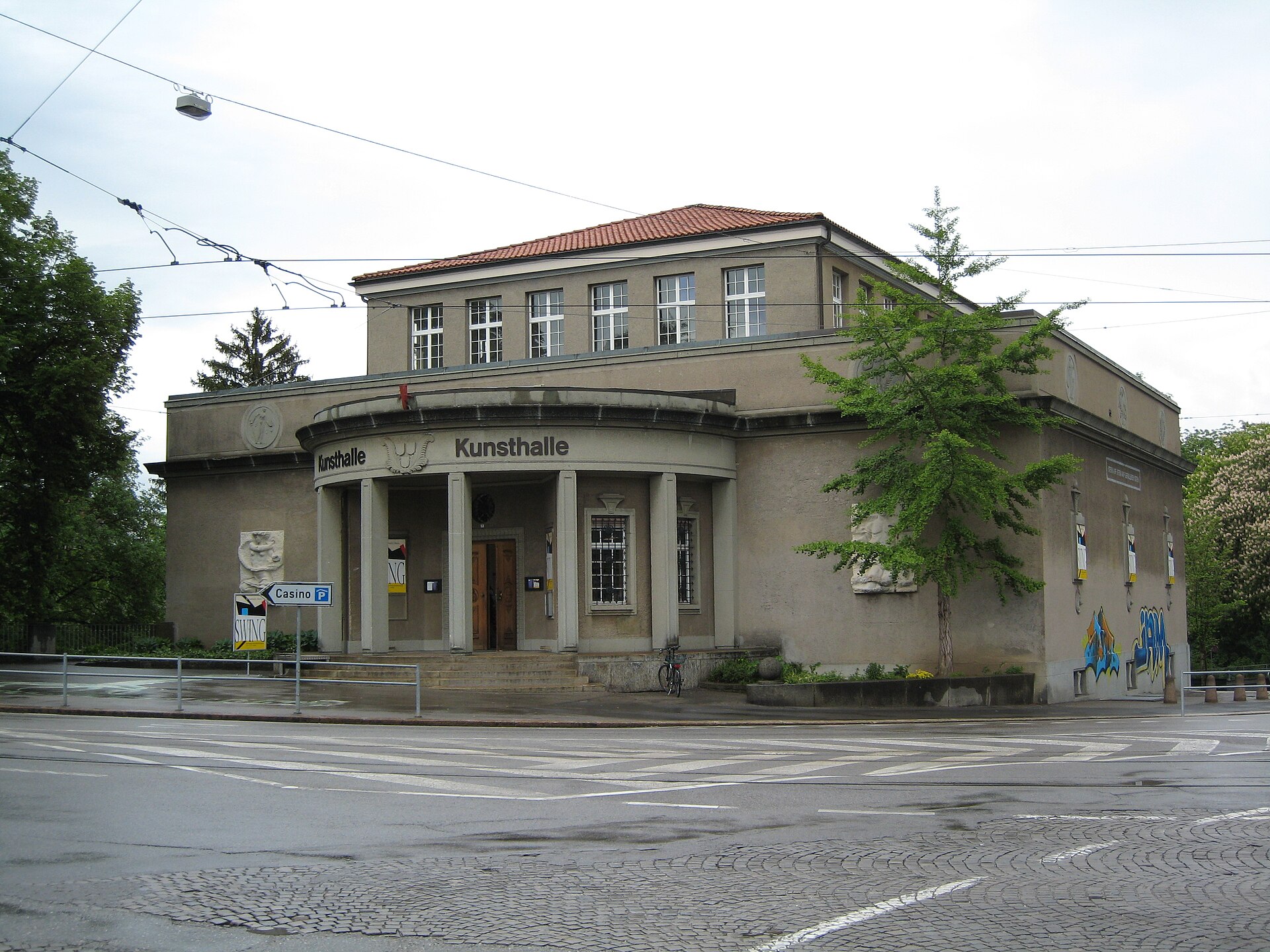
The Kunsthalle Bern is a renowned contemporary art institution located in the Helvetiaplatz district of Bern, Switzerland. Established in 1918, the building is a 19th-century structure that has been adapted to serve as a platform for avant-garde and experimental art. It is widely recognized for its 'white cube' gallery spaces and distinctive skylights, which provide neutral, natural lighting designed to emphasize the artwork over the architecture.
Unlike traditional museums with permanent collections, the Kunsthalle operates as a 'Kunstverein' (art association), focusing exclusively on temporary exhibitions. This model has allowed the institution to maintain a reputation for institutional critique and the presentation of emerging artists, often serving as a launchpad for significant figures in the international contemporary art scene.
Key Facts
- Materials
- Brick, Glass, Steel
- Civilization
- Swiss
- Accessibility
- Wheelchair accessible
- Date(s)
- 1918
- Condition
- Active, well-maintained
- Original Function
- Exhibition space for contemporary art
- Key Figures
- Harald Szeemann, Ulrich Loock
Founding and Early Years
1918The Kunsthalle Bern was founded by the Bernischer Kunstverein to provide a dedicated space for contemporary art exhibitions in the city, moving away from the traditional museum model of permanent collection display.
The Szeemann Era
1961-1969Under the directorship of Harald Szeemann, the Kunsthalle gained international fame. Szeemann pioneered the role of the independent curator and organized groundbreaking exhibitions, most notably 'When Attitudes Become Form' in 1969, which redefined the boundaries of conceptual art.
Institutional Evolution
1970-PresentFollowing the departure of Szeemann, the institution continued its focus on experimental practice. It has hosted numerous solo exhibitions for artists who later achieved global prominence, maintaining its status as a critical site for discourse in the contemporary art world.
Cultural Significance
The Kunsthalle Bern is a cornerstone of the Swiss contemporary art landscape. Its significance lies in its rejection of the permanent collection model, which allows it to remain agile and responsive to current artistic developments. It is historically linked to the development of modern curatorial practice, particularly through the legacy of Harald Szeemann, whose work there fundamentally changed how exhibitions are conceived and executed globally.
Interpretive Notes
Scholarly debates and areas of uncertainty
There is ongoing academic discussion regarding the 'white cube' aesthetic of the Kunsthalle. While some scholars argue that the neutral space is essential for focusing on the artwork, others contend that the architecture itself imposes a specific, exclusionary ideology on the art displayed within it.
Visiting Information
Entry Rules
Open Tuesday through Sunday. Tickets can be purchased at the entrance. Concessions are available for students and members of the Kunstverein.
Best Times to Visit
Weekday afternoons offer the quietest experience for viewing exhibitions. The institution is closed on Mondays.
Photography
Personal photography is generally permitted without flash, though specific exhibition restrictions may apply at the discretion of the artists.
Preservation Notes
Visitors are requested to refrain from touching artworks or gallery walls. Large bags must be stored in provided lockers.
Nearby POIs
11 shownKey Facts
- Materials
- Brick, Glass, Steel
- Civilization
- Swiss
- Accessibility
- Wheelchair accessible
- Date(s)
- 1918
- Condition
- Active, well-maintained
- Original Function
- Exhibition space for contemporary art
- Key Figures
- Harald Szeemann, Ulrich Loock