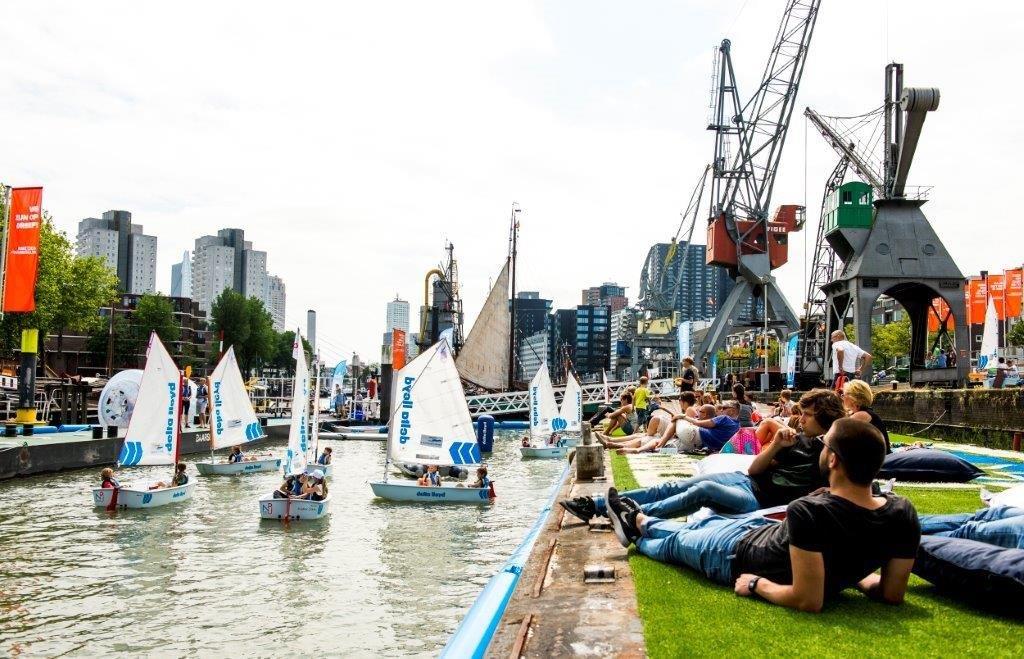
The Maritime Museum Rotterdam is a prominent cultural institution located in the Leuvehaven area of Rotterdam, dedicated to the history of the city's port and the broader evolution of global maritime trade. Founded in 1874 by Prince Henry of the Netherlands, the museum houses an extensive collection of ship models, navigational instruments, and historical artifacts that document six centuries of seafaring history.
The museum is uniquely characterized by its integration of indoor galleries and an outdoor historic harbor. This open-air section allows visitors to board a variety of restored vintage vessels, cranes, and industrial equipment, providing a tangible connection to the technological advancements that transformed Rotterdam into one of the world's largest shipping hubs.
Key Facts
- Materials
- Glass, Steel, Concrete
- Civilization
- Dutch
- Accessibility
- Fully wheelchair accessible
- Date(s)
- 1874
- Condition
- Active, well-maintained
- Original Function
- Maritime history museum
- Key Figures
- Prince Henry of the Netherlands
Founding and Early Years
1874The museum was established by Prince Henry of the Netherlands to preserve the maritime heritage of the Dutch nation and to provide educational resources for the growing port city of Rotterdam.
Expansion and Relocation
20th CenturyFollowing the destruction of the city center during World War II, the museum underwent several relocations before settling into its current purpose-built facility at the Leuvehaven in 1986, designed by architect Wim Quist.
Modern Integration
21st CenturyThe museum has shifted its focus toward interactive exhibits and the preservation of the 'Maritime District,' emphasizing the relationship between the city's urban development and its industrial harbor history.
Cultural Significance
The museum serves as a critical repository for Dutch maritime identity, reflecting Rotterdam's transition from a regional trading port to a global logistics powerhouse. It plays a vital role in local education, fostering an understanding of the complex socio-economic impact of the shipping industry on the Netherlands.
Interpretive Notes
Scholarly debates and areas of uncertainty
Discussions within the museum community often center on the balance between preserving industrial artifacts in an outdoor, corrosive harbor environment versus the need for modern, climate-controlled indoor exhibition spaces.
Visiting Information
Entry Rules
Open Tuesday through Sunday. Tickets can be purchased online or at the entrance. The museum is closed on Mondays, except during school holidays.
Best Times to Visit
Weekdays during the morning hours to avoid school group crowds. Summer months are ideal for exploring the outdoor harbor fleet.
Photography
Personal photography is permitted throughout the museum and harbor. Commercial photography requires prior authorization.
Preservation Notes
Visitors are requested to wear appropriate footwear for boarding historic vessels. Some older ships have steep stairs and narrow passages that may be difficult for visitors with limited mobility.
Nearby POIs
11 shownSources & Further Reading
- [1]Maritime Museum Rotterdam: History and Collection — Rotterdam City Archives. Stadsarchief Rotterdam (2018)View
- [2]The Architecture of the Maritime Museum — Wim Quist. Rotterdam Architectural Press (1986)
Key Facts
- Materials
- Glass, Steel, Concrete
- Civilization
- Dutch
- Accessibility
- Fully wheelchair accessible
- Date(s)
- 1874
- Condition
- Active, well-maintained
- Original Function
- Maritime history museum
- Key Figures
- Prince Henry of the Netherlands