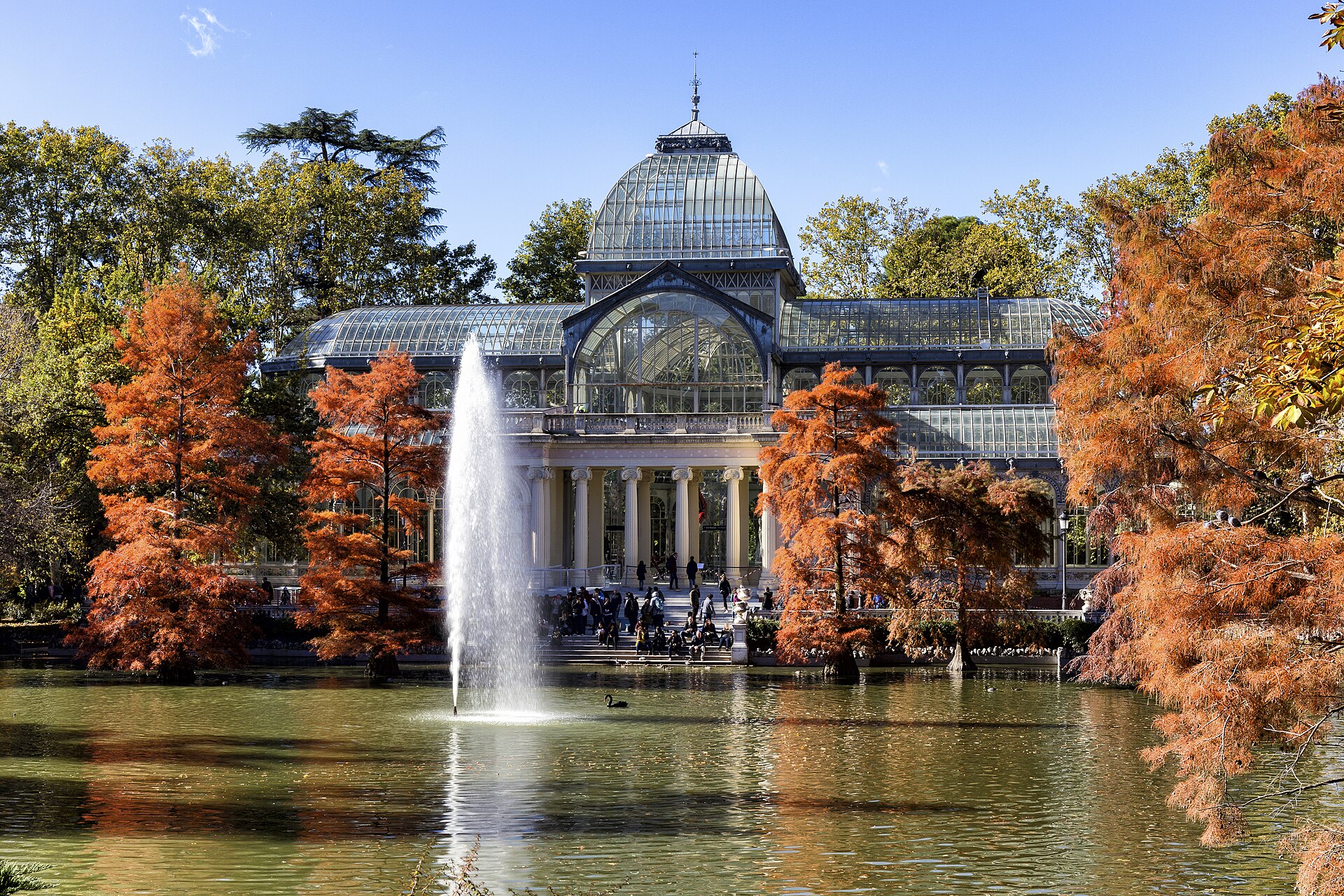
The Palacio de Cristal, located in Madrid's Retiro Park, is a glass and iron structure designed by architect Ricardo Velázquez Bosco in 1887. It was originally commissioned to house a collection of exotic flora and fauna from the Philippines during the General Exhibition of the Philippine Islands.
The building is a prime example of 19th-century metal architecture, featuring a Greek cross floor plan and a central dome reaching 22 meters in height. Today, it is managed by the Reina Sofía Museum and serves as a venue for contemporary art installations, maintaining its historical aesthetic while functioning as a public cultural space.
Key Facts
- Materials
- Iron, Glass, Brick, Ceramic
- Civilization
- Spanish
- Accessibility
- Ground level access, wheelchair friendly
- Date(s)
- 1887
- Condition
- Well-preserved, active exhibition space
- Original Function
- Greenhouse for Philippine colonial exhibition
- Key Figures
- Ricardo Velázquez Bosco
Design and Construction
1887The palace was constructed in just five months to serve as a conservatory for the Philippine Islands exhibition. Ricardo Velázquez Bosco utilized iron and glass to create a structure that maximized natural light, inspired by the Crystal Palace in London.
Exhibition Era
Late 19th CenturyDuring the 1887 exhibition, the structure housed tropical plants and indigenous flora from the Philippines, serving as a showcase for Spanish colonial interests in the archipelago.
Modern Transformation
20th Century - PresentFollowing years of neglect, the palace underwent significant restoration in 1975 to return it to its original appearance. It was subsequently integrated into the Reina Sofía Museum's network, transitioning from a botanical conservatory to a prominent site for contemporary art.
Cultural Significance
The Palacio de Cristal is a landmark of Madrid's architectural heritage, representing the industrial optimism of the late 19th century. Its integration into the Retiro Park landscape makes it a focal point for both local recreation and international tourism.
Beyond its architectural value, the building serves as a critical site for contemporary art in Madrid. Its transparent nature challenges artists to engage with the surrounding park environment, creating a dialogue between the historical structure and modern creative expression.
Interpretive Notes
Scholarly debates and areas of uncertainty
Debates often center on the tension between the building's colonial origins and its current role as a neutral art space. Some scholars argue that the structure's history as a colonial exhibition tool should be more explicitly addressed within the current curatorial framework.
Visiting Information
Entry Rules
Open daily. Entry is free to the public. Access may be restricted during specific art installation changeovers.
Best Times to Visit
Weekday mornings to avoid weekend crowds. The interior lighting is most effective during sunny hours.
Photography
Personal photography is permitted. Professional or commercial photography requires prior authorization from the museum administration.
Preservation Notes
The structure is fragile due to its glass and iron composition. Visitors are requested to refrain from touching the glass panels and to follow all posted capacity limits during exhibitions.
Nearby POIs
11 shownSources & Further Reading
- [1]
- [2]Arquitectura de Hierro en España — Pedro Navascués Palacio. Editorial Castalia (1973)
Key Facts
- Materials
- Iron, Glass, Brick, Ceramic
- Civilization
- Spanish
- Accessibility
- Ground level access, wheelchair friendly
- Date(s)
- 1887
- Condition
- Well-preserved, active exhibition space
- Original Function
- Greenhouse for Philippine colonial exhibition
- Key Figures
- Ricardo Velázquez Bosco