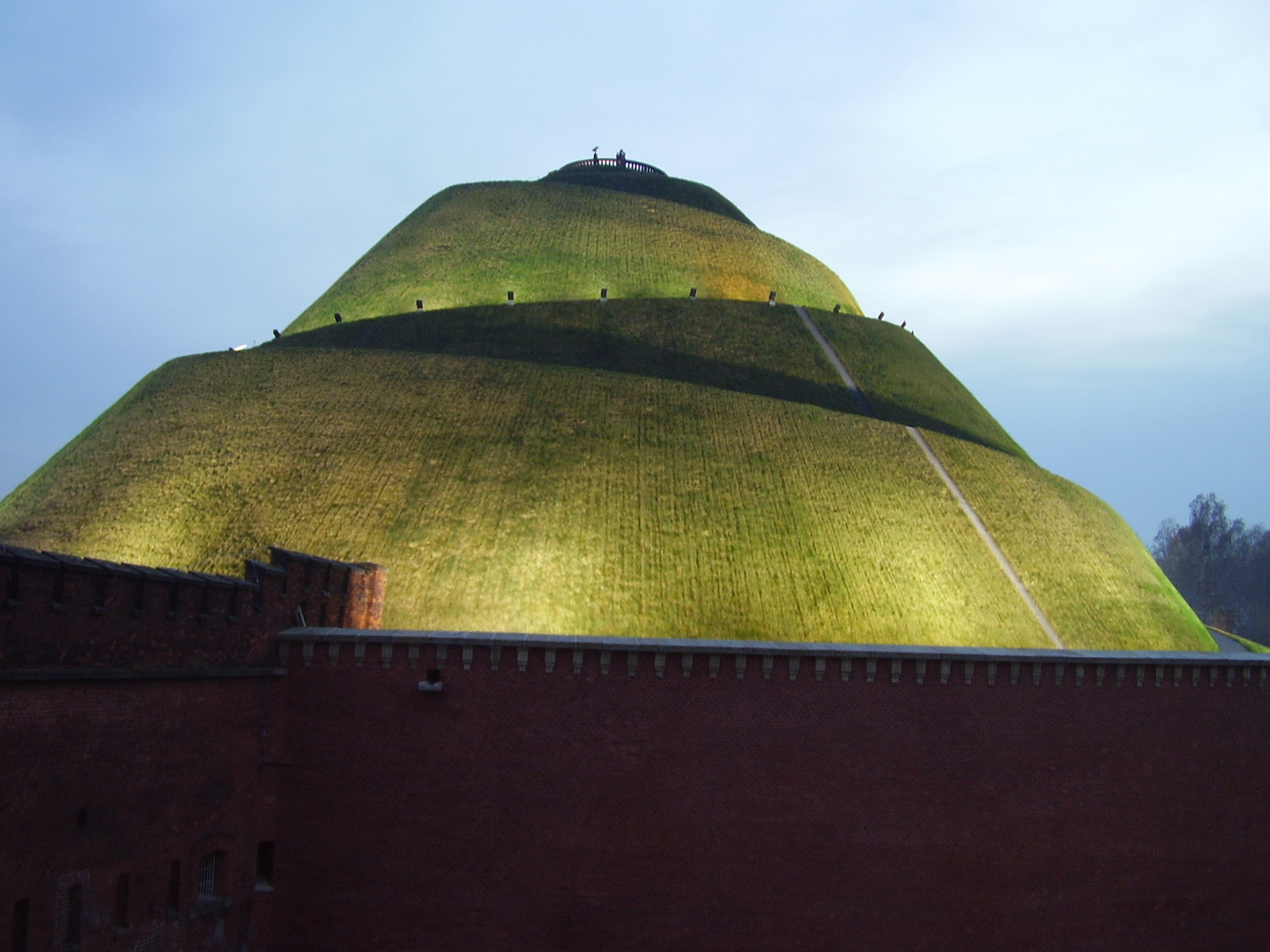
The Kościuszko Mound is a man-made hill located in Kraków, Poland, constructed between 1820 and 1823 to commemorate the Polish national hero Tadeusz Kościuszko. The mound was built by the citizens of Kraków, who transported soil from various battlefields where Kościuszko fought for the independence of both Poland and the United States, including Racławice and Saratoga.
Standing at 34 meters high, the mound is situated atop the natural St. Bronisława Hill, offering panoramic views of the city and the surrounding region. It serves as a symbol of Polish resilience and national identity, having survived various political upheavals and military occupations throughout the 19th and 20th centuries.
Key Facts
- Materials
- Earth, Stone
- Civilization
- Polish
- Accessibility
- Accessible via paved paths, though the final ascent is steep
- Date(s)
- 1820-1823
- Condition
- Well-preserved, active memorial and museum site
- Original Function
- National memorial
- Key Figures
- Tadeusz Kościuszko, Franciszek Maria Lanci
Conception and Construction
1820-1823Following the death of Tadeusz Kościuszko in 1817, the Senate of the Free City of Kraków proposed the creation of a mound to honor his legacy. Construction began in 1820, with soil brought from battlefields across Poland and the United States, symbolizing the global reach of Kościuszko's fight for liberty.
Fortification and Military Use
1850-1860During the mid-19th century, the Austrian authorities incorporated the mound into the defensive ring of the Kraków Fortress. A brick citadel and defensive walls were constructed around the base, which remain visible today.
Modern Preservation
1997-presentThe mound underwent significant restoration following severe damage caused by heavy rainfall in 1997. Modern drainage systems and structural reinforcements were installed to ensure the long-term stability of the earthwork.
Cultural Significance
The Kościuszko Mound is a cornerstone of Polish national memory. It represents the transition from 19th-century romantic nationalism to a modern site of historical education. The inclusion of soil from American battlefields highlights the historical link between the Polish struggle for independence and the American Revolutionary War.
Locally, the mound is a popular destination for both residents and tourists, serving as a focal point for national commemorations and public gatherings. It remains a powerful symbol of the 'Kościuszko tradition' in Polish political thought.
Interpretive Notes
Scholarly debates and areas of uncertainty
There is ongoing discussion regarding the balance between the site's role as a 19th-century memorial and its later 19th-century military fortification. Some historians argue that the Austrian-era fortifications detract from the original symbolic intent of the mound, while others view the layers of history as essential to understanding Kraków's complex past.
Visiting Information
Entry Rules
Open daily. Tickets are required for entry to the mound and the surrounding museum exhibitions. The site is accessible to the public, though visitors are encouraged to respect the memorial nature of the location.
Best Times to Visit
Early morning or late afternoon for the best visibility of the Tatra Mountains from the summit. Weekdays are generally less crowded than weekends.
Photography
Personal photography is permitted. Commercial photography requires prior authorization from the site administration.
Preservation Notes
Stay on marked paths to prevent erosion of the mound's slopes. Do not climb on the brick fortifications or the memorial markers.
Nearby POIs
11 shownSources & Further Reading
- [1]The Kościuszko Mound in Kraków — Committee for the Preservation of the Kościuszko Mound. Kraków Historical Society (2015)View
- [2]Tadeusz Kościuszko: The Purest Son of Liberty — James S. Pula. Hippocrene Books (1999)
Key Facts
- Materials
- Earth, Stone
- Civilization
- Polish
- Accessibility
- Accessible via paved paths, though the final ascent is steep
- Date(s)
- 1820-1823
- Condition
- Well-preserved, active memorial and museum site
- Original Function
- National memorial
- Key Figures
- Tadeusz Kościuszko, Franciszek Maria Lanci