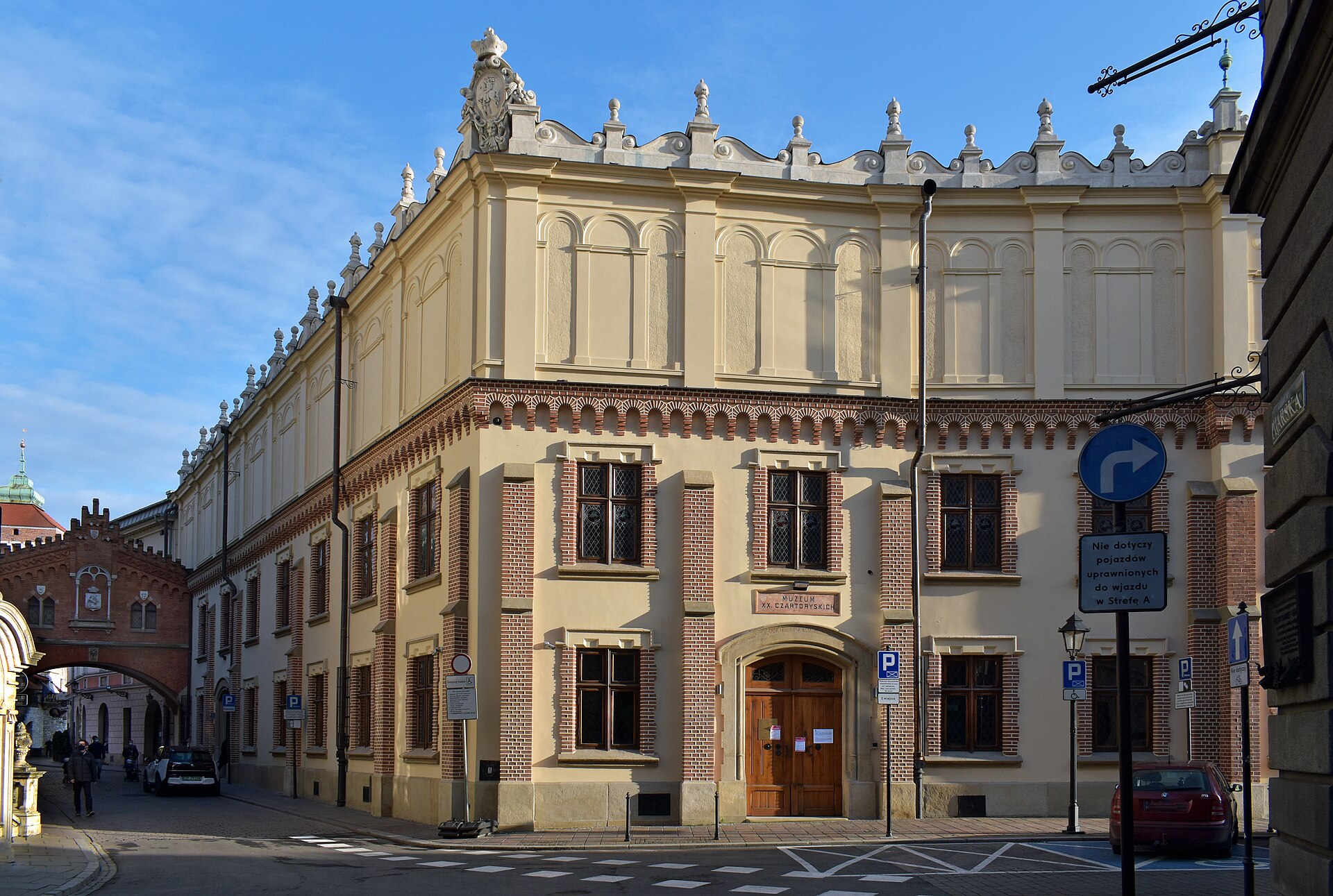
The Czartoryski Museum in Kraków is one of Poland's oldest and most significant cultural institutions. Established in 1796 by Princess Izabela Czartoryska in Puławy, the museum was founded with the explicit mission of preserving Polish national heritage during the era of the Partitions of Poland, when the country was erased from the map of Europe.
The collection was relocated to Kraków in the late 19th century and is housed in a complex of historical buildings near the city's main square. It holds a world-renowned collection of European art, including Leonardo da Vinci's 'Lady with an Ermine' and Rembrandt van Rijn's 'Landscape with the Good Samaritan', alongside extensive archives and historical memorabilia related to Polish history.
Key Facts
- Materials
- Brick, Stone, Plaster
- Civilization
- Polish
- Accessibility
- Wheelchair accessible
- Date(s)
- 1796 (Foundation)
- Condition
- Fully restored and active
- Original Function
- Private collection and national archive
- Key Figures
- Princess Izabela Czartoryska, Prince Adam Jerzy Czartoryski
Founding and Mission
1796Princess Izabela Czartoryska established the museum at the Puławy estate to safeguard Polish historical artifacts, art, and documents during the political instability of the Partitions.
Relocation to Kraków
1870sFollowing the November Uprising and subsequent political pressures, the collection was moved to Kraków, then part of the Austrian partition, where it was housed in the Arsenal and the Czartoryski Palace.
World War II and Recovery
1939-1945During the Nazi occupation of Poland, the collection was looted. While many items were recovered after the war, some significant pieces remained missing for decades, leading to a long-term international recovery effort.
Modernization
21st CenturyThe museum underwent a major multi-year renovation, culminating in its reopening in 2019, which modernized the exhibition spaces while preserving the historic character of the palace complex.
Cultural Significance
The museum serves as a symbol of Polish resilience and the preservation of national identity in the absence of a sovereign state. It is considered the most important private collection in Poland, bridging the gap between European high art and the specific historical narrative of the Polish-Lithuanian Commonwealth.
Interpretive Notes
Scholarly debates and areas of uncertainty
Debates often center on the provenance of specific artworks looted during World War II and the ethical complexities of managing private collections that have been nationalized or transferred to state foundations.
Visiting Information
Entry Rules
Open Tuesday through Sunday. Tickets are required and can be purchased online or at the box office. Large bags must be left in lockers. Photography is permitted for personal use without flash.
Best Times to Visit
Weekday mornings are recommended to avoid crowds, particularly during the peak tourist season in Kraków.
Photography
No flash photography or tripods allowed. Commercial photography requires prior written permission from the museum administration.
Preservation Notes
Maintain a respectful distance from all artworks. Do not touch the display cases or frames. The museum maintains strict climate control to protect the delicate paintings.
Nearby POIs
11 shown- Saint Florian's Gate0.1 km
- Barbakan0.1 km
- Church of the Assumption of the Blessed Virgin Mary0.4 km
- Rynek Underground0.4 km
- Sukiennice0.4 km
- Town Hall Tower0.5 km
- Basilica of St. Francis of Assisi0.7 km
- Katedra Wawelska1.2 km
- Zamek Krolewski na Wawelu1.2 km
- Krakow Pinball Museum1.3 km
- Krakow Old Synagogue1.6 km
Sources & Further Reading
- [1]The Czartoryski Museum: A History — Zdzisław Żygulski Jr.. Muzeum Narodowe w Krakowie (2001)
- [2]The Lady with an Ermine: A History of the Painting — Janusz Wałek. Biały Kruk (2012)
Key Facts
- Materials
- Brick, Stone, Plaster
- Civilization
- Polish
- Accessibility
- Wheelchair accessible
- Date(s)
- 1796 (Foundation)
- Condition
- Fully restored and active
- Original Function
- Private collection and national archive
- Key Figures
- Princess Izabela Czartoryska, Prince Adam Jerzy Czartoryski
Nearby POIs
11 shown- Saint Florian's Gate0.1 km
- Barbakan0.1 km
- Church of the Assumption of the Blessed Virgin Mary0.4 km
- Rynek Underground0.4 km
- Sukiennice0.4 km
- Town Hall Tower0.5 km
- Basilica of St. Francis of Assisi0.7 km
- Katedra Wawelska1.2 km
- Zamek Krolewski na Wawelu1.2 km
- Krakow Pinball Museum1.3 km
- Krakow Old Synagogue1.6 km