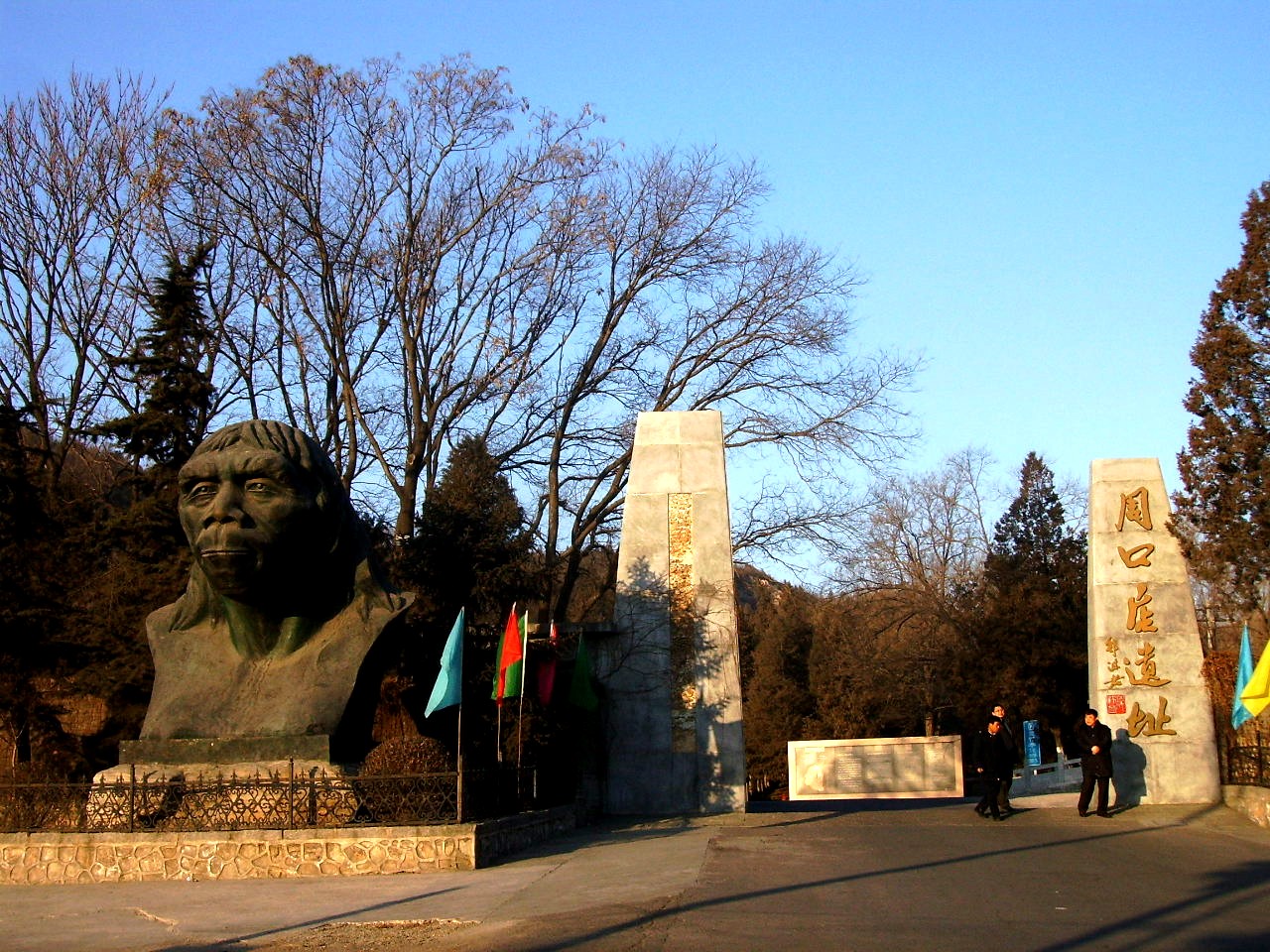
The Zhoukoudian site is a complex of cave systems located in the southwestern suburbs of Beijing, China. It is internationally recognized as one of the most significant sites for the study of human evolution, having yielded a vast collection of fossils, including the remains of 'Peking Man' (Homo erectus pekinensis), which date back approximately 750,000 to 200,000 years.
Beyond human remains, the site has provided critical evidence of early hominid behavior, including the controlled use of fire and sophisticated stone tool manufacturing. The site also contains a rich faunal assemblage, such as the extinct giant short-faced hyena Pachycrocuta brevirostris, offering a comprehensive look at the Pleistocene ecosystem of East Asia.
Key Facts
- Materials
- Limestone, Bone, Stone tools
- Civilization
- Paleolithic Hominids
- Accessibility
- Accessible via paved paths and stairs
- Date(s)
- 750,000 - 200,000 years ago
- Condition
- Protected archaeological site and museum
- Original Function
- Habitation and shelter
- Key Figures
- Davidson Black, Pei Wenzhong, Franz Weidenreich
Initial Discovery
1921-1927Swedish geologist Johan Gunnar Andersson first identified the site's potential in 1921. Systematic excavations began in 1927, led by Davidson Black, which soon resulted in the discovery of a molar that confirmed the presence of early hominids.
The Peking Man Finds
1929-1937Pei Wenzhong discovered the first complete skullcap of Peking Man in 1929. Throughout the 1930s, excavations uncovered multiple skulls and thousands of stone artifacts, establishing the site as a cornerstone of paleoanthropology.
Wartime Loss and Recovery
1941-1945During the Japanese occupation of China, the original Peking Man fossils were packed for transport to the United States for safekeeping but disappeared under mysterious circumstances during the chaos of the Pacific War and have never been recovered.
Modern Research
1949-PresentFollowing the founding of the People's Republic of China, excavations resumed with government support. The site was designated a UNESCO World Heritage site in 1987, and ongoing research continues to refine the dating and understanding of the hominid occupation layers.
Cultural Significance
Zhoukoudian is central to the Chinese national narrative regarding human origins in East Asia. It serves as a primary educational site for understanding the deep history of the region and the development of early human culture, particularly the mastery of fire, which is viewed as a pivotal moment in human cognitive evolution.
Interpretive Notes
Scholarly debates and areas of uncertainty
There is ongoing debate regarding the extent to which Peking Man utilized fire. While early researchers claimed clear evidence of hearths, some modern taphonomic studies suggest that the 'ash' layers may be the result of natural geological processes rather than anthropogenic activity.
Visiting Information
Entry Rules
Open daily. Tickets are required for entry to the museum and the archaeological park. Visitors are expected to follow marked trails and refrain from touching exposed cave walls.
Best Times to Visit
Spring and autumn offer the most comfortable temperatures for walking the outdoor site. Avoid major Chinese public holidays to minimize crowds.
Photography
Personal photography is permitted in outdoor areas. Flash photography is strictly prohibited inside the museum exhibition halls to protect delicate fossils.
Preservation Notes
The site is highly sensitive to environmental degradation. Visitors must stay on designated paths to prevent erosion of the cave deposits and surrounding limestone terrain.
Nearby POIs
11 shown- Military Museum of the Chinese People's Revolution41.6 km
- Capital Museum42.7 km
- Summer Palace45.4 km
- Temple of Heaven46.2 km
- Zhengyangmen46.4 km
- Chairman Mao Memorial Hall46.5 km
- National Museum of China46.9 km
- Forbidden City47.4 km
- Prince Gong's Mansion47.7 km
- National Art Museum of China48.6 km
- Drum Tower and Bell Tower of Beijing48.7 km
Sources & Further Reading
- [1]
- [2]The Zhoukoudian Excavations: A History — Pei Wenzhong. Science Press (1956)
Key Facts
- Materials
- Limestone, Bone, Stone tools
- Civilization
- Paleolithic Hominids
- Accessibility
- Accessible via paved paths and stairs
- Date(s)
- 750,000 - 200,000 years ago
- Condition
- Protected archaeological site and museum
- Original Function
- Habitation and shelter
- Key Figures
- Davidson Black, Pei Wenzhong, Franz Weidenreich
Nearby POIs
11 shown- Military Museum of the Chinese People's Revolution41.6 km
- Capital Museum42.7 km
- Summer Palace45.4 km
- Temple of Heaven46.2 km
- Zhengyangmen46.4 km
- Chairman Mao Memorial Hall46.5 km
- National Museum of China46.9 km
- Forbidden City47.4 km
- Prince Gong's Mansion47.7 km
- National Art Museum of China48.6 km
- Drum Tower and Bell Tower of Beijing48.7 km