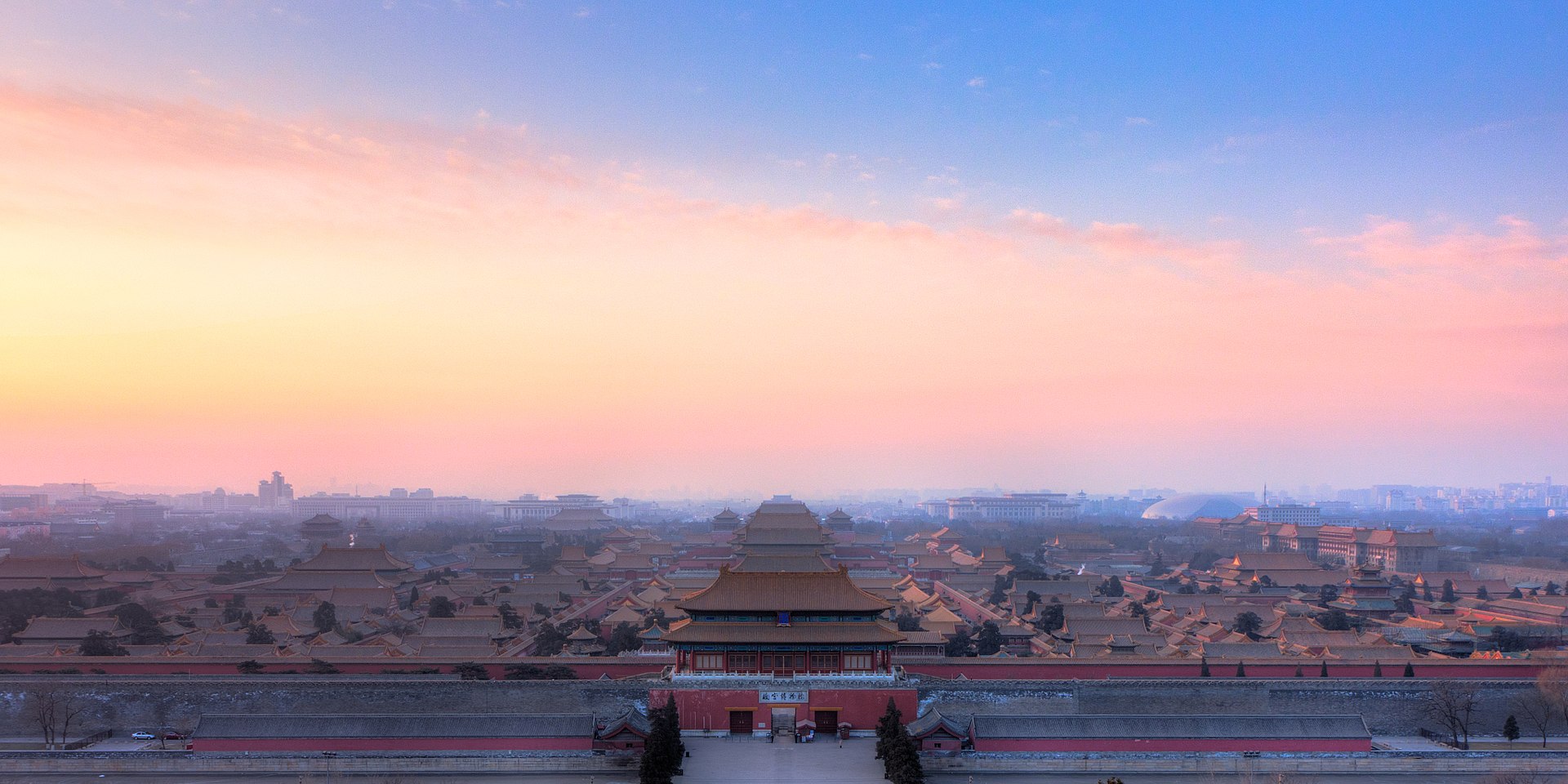
The Forbidden City is a vast palace complex located in the center of Beijing, China. Constructed between 1406 and 1420, it served as the imperial palace and winter residence for the Emperors of China from the Ming Dynasty to the end of the Qing Dynasty in 1912. The complex consists of 980 buildings spanning 72 hectares, enclosed by high walls and a wide moat, representing the pinnacle of traditional Chinese palatial architecture.
As the ceremonial and political center of the Chinese government for over 500 years, the site was strictly off-limits to commoners, earning it the name 'Forbidden City.' Today, it functions as the Palace Museum, housing an extensive collection of imperial artifacts and artworks while serving as a primary site for historical research and tourism.
Key Facts
- Materials
- Wood, Marble, Glazed ceramic tiles, Brick
- Civilization
- Chinese (Ming and Qing Dynasties)
- Accessibility
- Partially accessible; some areas have stairs and uneven surfaces
- Date(s)
- 1406-1420
- Condition
- Well-preserved, functioning as a museum
- Original Function
- Imperial residence and administrative center
- Key Figures
- Yongle Emperor, Emperor Kangxi, Puyi
Construction and Early Ming
1406-1420The complex was commissioned by the Yongle Emperor of the Ming Dynasty after he moved the capital from Nanjing to Beijing. Thousands of artisans and laborers were employed to construct the massive wooden structures, which were designed to reflect the cosmic order and the absolute authority of the Emperor.
Qing Dynasty Expansion
1644-1911Following the fall of the Ming Dynasty, the Qing rulers maintained the Forbidden City as their primary seat of power. While the basic layout remained unchanged, several halls were renovated and expanded to accommodate the needs of the Qing court, blending Manchu and Han cultural influences.
Transition to Museum
1912-PresentFollowing the abdication of the last emperor, Puyi, the palace was transformed into the Palace Museum in 1925. Despite the turmoil of the early 20th century, including the Japanese occupation and the Chinese Civil War, the core structures were largely preserved and have since undergone extensive restoration.
Cultural Significance
The Forbidden City is the ultimate symbol of traditional Chinese imperial power and architectural philosophy. Its layout follows the strict principles of feng shui and Confucian hierarchy, with the most important buildings positioned along the central north-south axis. It remains a cornerstone of Chinese national identity and a testament to the sophisticated craftsmanship of the Ming and Qing eras.
Beyond its architectural value, the site is a repository of Chinese history, containing millions of imperial documents and artifacts. It continues to influence modern Chinese art, literature, and political discourse, serving as a bridge between the country's dynastic past and its modern global presence.
Interpretive Notes
Scholarly debates and areas of uncertainty
Scholars continue to debate the extent of the influence of Tibetan and Mongol architectural styles on the design of the palace. Additionally, there is ongoing academic discussion regarding the specific symbolic functions of the lesser-known inner courtyards and their roles in the daily life of the imperial concubines and eunuchs.
Visiting Information
Entry Rules
Open daily except Mondays. Tickets must be booked in advance online using a valid passport. Visitors must pass through security checkpoints. Modest dress is recommended.
Best Times to Visit
Early morning or late afternoon to avoid peak crowds. Autumn (September-October) offers the most temperate weather for walking the extensive grounds.
Photography
Personal photography is permitted in outdoor areas and most halls. Flash photography and tripods are strictly prohibited inside the exhibition galleries.
Preservation Notes
The site is subject to strict conservation protocols. Visitors must stay on designated paths and are prohibited from touching the wooden structures or artifacts. Restoration work is ongoing in various sections of the complex.
Nearby POIs
11 shown- National Art Museum of China1.2 km
- National Museum of China1.6 km
- Chairman Mao Memorial Hall1.8 km
- Zhengyangmen2 km
- Prince Gong's Mansion2.2 km
- Drum Tower and Bell Tower of Beijing2.6 km
- Beijing Temple of Confucius3.4 km
- Yonghe Temple3.6 km
- Temple of Heaven4.7 km
- Capital Museum4.9 km
- Military Museum of the Chinese People's Revolution6.3 km
Sources & Further Reading
- [1]The Forbidden City: The Palace at the Heart of China — Geremie R. Barmé. Harvard University Press (2008)
- [2]Palaces of the Forbidden City — Yu Zhuoyun. Viking Press (1984)
Key Facts
- Materials
- Wood, Marble, Glazed ceramic tiles, Brick
- Civilization
- Chinese (Ming and Qing Dynasties)
- Accessibility
- Partially accessible; some areas have stairs and uneven surfaces
- Date(s)
- 1406-1420
- Condition
- Well-preserved, functioning as a museum
- Original Function
- Imperial residence and administrative center
- Key Figures
- Yongle Emperor, Emperor Kangxi, Puyi
Nearby POIs
11 shown- National Art Museum of China1.2 km
- National Museum of China1.6 km
- Chairman Mao Memorial Hall1.8 km
- Zhengyangmen2 km
- Prince Gong's Mansion2.2 km
- Drum Tower and Bell Tower of Beijing2.6 km
- Beijing Temple of Confucius3.4 km
- Yonghe Temple3.6 km
- Temple of Heaven4.7 km
- Capital Museum4.9 km
- Military Museum of the Chinese People's Revolution6.3 km