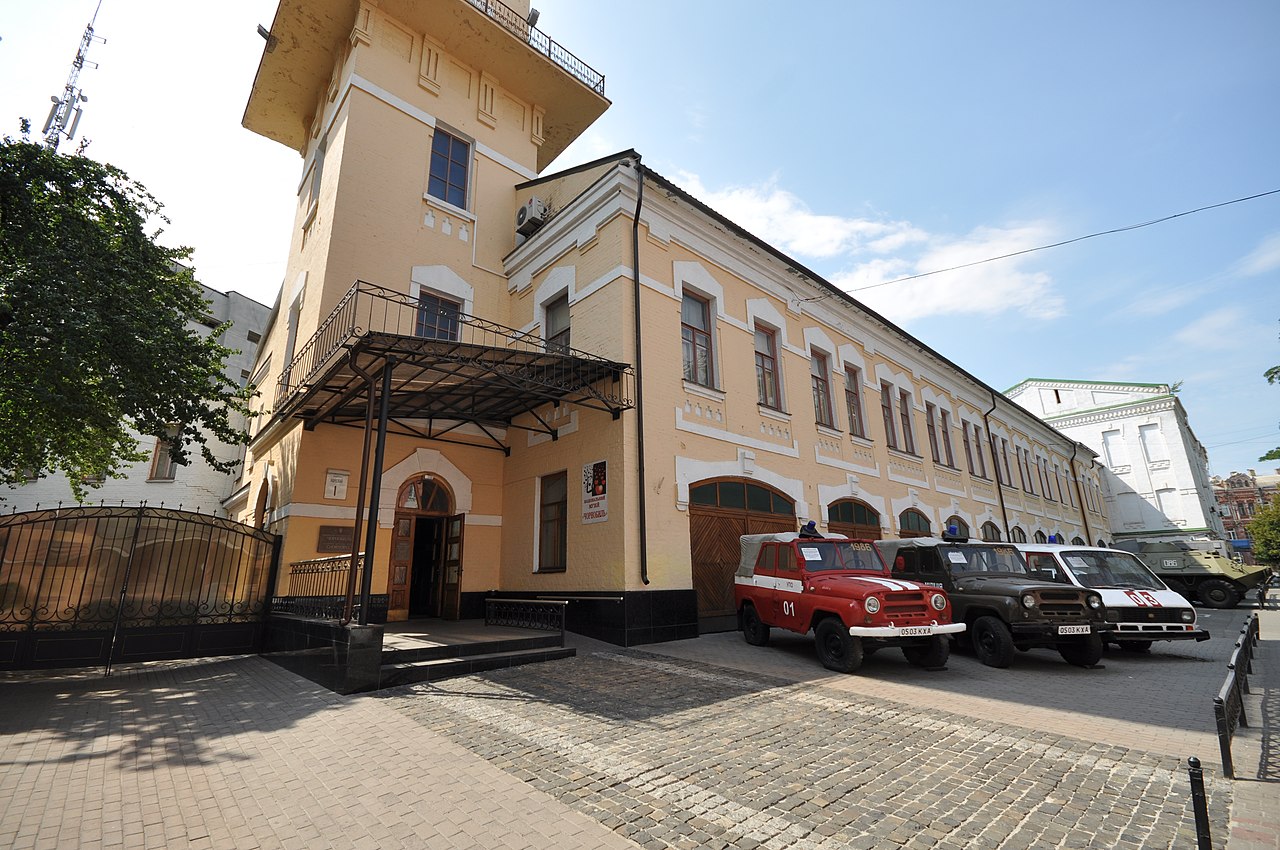
The Ukrainian National Chernobyl Museum, located in Kiev, serves as a memorial and research center dedicated to the 1986 Chernobyl nuclear disaster. Established in 1992, the museum houses an extensive collection of artifacts, documents, and multimedia exhibits that detail the technical causes of the accident, the immediate emergency response, and the long-term ecological and social consequences for the region.
The museum is housed in a building that formerly served as a fire station, which was one of the first units to respond to the disaster at the power plant. Through its exhibits, the institution documents the heroism of the liquidators, the evacuation of Pripyat, and the ongoing efforts to contain the radioactive fallout, providing a comprehensive historical record of one of the 20th century's most significant industrial catastrophes.
Key Facts
- Materials
- Brick, Concrete, Glass
- Civilization
- Ukrainian
- Accessibility
- Ground floor accessible
- Date(s)
- 1992
- Condition
- Active museum
- Original Function
- Fire station
- Key Figures
- Liquidators, Valery Legasov
Establishment
1992The museum was founded in 1992, six years after the disaster, to preserve the memory of the event and the individuals involved in the containment efforts.
Collection Development
1990s-2000sThroughout the following decades, the museum expanded its collection by acquiring personal items from liquidators, official government documents, and scientific data regarding the exclusion zone.
Modern Status
PresentThe museum continues to function as a primary educational site, hosting international delegations and researchers focused on nuclear safety and environmental history.
Cultural Significance
The museum is central to the Ukrainian national narrative regarding the Chernobyl disaster, transforming a site of trauma into a space for collective memory and scientific education. It plays a critical role in honoring the 'liquidators' (the emergency workers who risked their lives to mitigate the disaster). It serves as a warning regarding the dangers of nuclear energy and government secrecy.
Interpretive Notes
Scholarly debates and areas of uncertainty
Debates often center on the museum's role in balancing the technical narrative of the nuclear accident with the human-centric stories of the victims and survivors. Some scholars discuss the tension between the museum's function as a memorial and its role as a repository for state-sanctioned historical records.
Visiting Information
Entry Rules
Open daily except Sundays. Tickets are required for entry. Visitors are expected to maintain a respectful demeanor given the memorial nature of the exhibits.
Best Times to Visit
Weekday mornings are generally less crowded, allowing for a more focused experience of the exhibits.
Photography
Personal photography is permitted, though flash may be restricted in certain sensitive areas. Commercial photography requires prior authorization.
Preservation Notes
Do not touch artifacts or display cases. The museum is a site of remembrance; please maintain silence in memorial areas.
Nearby POIs
11 shown- St Andrew's Church0.8 km
- National Museum of the History of Ukraine0.9 km
- St. Michael's Golden-Domed Monastery1.3 km
- Monument to Volodymyr The Great1.3 km
- Saint Sophia Cathedral1.5 km
- Golden Gate2 km
- National Art Museum of Ukraine2.1 km
- St Volodymyr's Cathedral2.5 km
- Gorodetsky House2.5 km
- PinchukArtCentre2.8 km
- Khanenko Museum2.8 km
Key Facts
- Materials
- Brick, Concrete, Glass
- Civilization
- Ukrainian
- Accessibility
- Ground floor accessible
- Date(s)
- 1992
- Condition
- Active museum
- Original Function
- Fire station
- Key Figures
- Liquidators, Valery Legasov
Nearby POIs
11 shown- St Andrew's Church0.8 km
- National Museum of the History of Ukraine0.9 km
- St. Michael's Golden-Domed Monastery1.3 km
- Monument to Volodymyr The Great1.3 km
- Saint Sophia Cathedral1.5 km
- Golden Gate2 km
- National Art Museum of Ukraine2.1 km
- St Volodymyr's Cathedral2.5 km
- Gorodetsky House2.5 km
- PinchukArtCentre2.8 km
- Khanenko Museum2.8 km