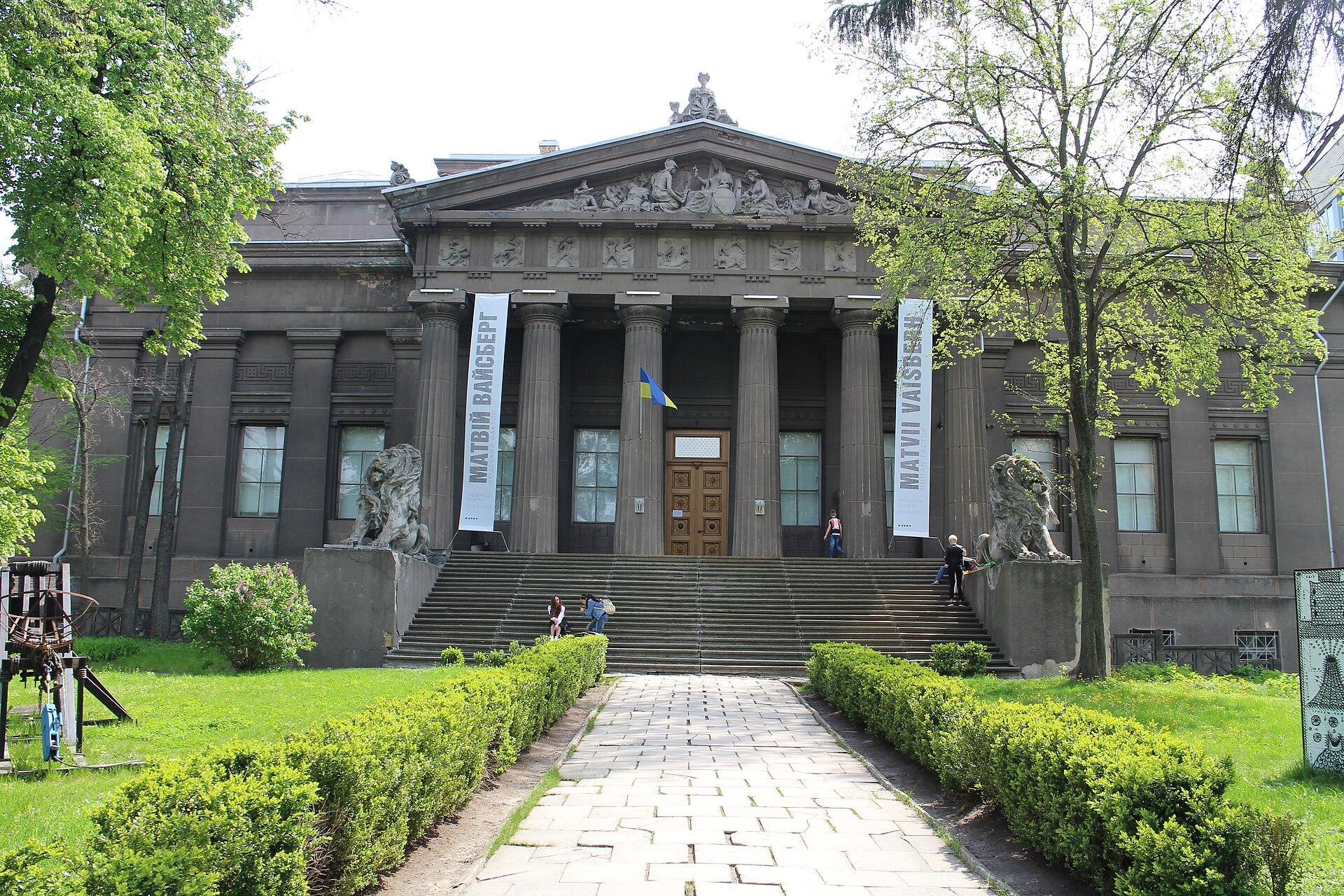
The National Art Museum of Ukraine, located in the heart of Kiev, is the oldest state museum in the country dedicated to the preservation and exhibition of Ukrainian fine art. Housed in a neoclassical building designed by architect Władysław Horodecki, the museum was founded in 1899 as the City Museum of Antiquities and Art.
The collection spans from the medieval period to the present day, featuring a significant array of icon painting, Ukrainian baroque art, and works by prominent 19th and 20th-century artists. It serves as a primary institution for the study and promotion of Ukrainian national identity through visual culture.
Key Facts
- Materials
- Brick, Stone, Stucco
- Civilization
- Ukrainian
- Accessibility
- Limited accessibility for mobility-impaired visitors due to historic architecture
- Date(s)
- 1897-1899
- Condition
- Active museum
- Original Function
- City Museum of Antiquities and Art
- Key Figures
- Władysław Horodecki, Bogdan and Varvara Khanenko
Foundation and Early Years
1899The museum was established through the efforts of the Kiev Society of Antiquities and Arts, with significant financial support from the Tereshchenko family and other local patrons. The building was designed by the renowned architect Władysław Horodecki.
Soviet Era Transformations
1920s-1980sFollowing the Russian Revolution, the museum underwent several reorganizations and name changes, eventually becoming the State Museum of Ukrainian Art. During this period, the collection was expanded through the nationalization of private art holdings.
Independence and Modernization
1991-PresentWith the independence of Ukraine in 1991, the institution was renamed the National Art Museum of Ukraine. It has since focused on decolonizing its narrative, researching repressed artists of the 'Executed Renaissance,' and integrating contemporary Ukrainian art into its permanent displays.
Cultural Significance
The museum is a cornerstone of Ukrainian cultural heritage, acting as the primary repository for the nation's artistic memory. It plays a vital role in defining the Ukrainian aesthetic canon, distinguishing it from the broader imperial narratives that dominated the region for centuries.
Beyond its role as an exhibition space, the museum is a site of active scholarly research and public discourse regarding the preservation of national identity during times of geopolitical instability and conflict.
Interpretive Notes
Scholarly debates and areas of uncertainty
There is ongoing academic discussion regarding the attribution and provenance of certain works acquired during the Soviet period, particularly those seized from private collections. Additionally, scholars frequently debate the best methods for presenting 'repressed' art from the 1930s within the context of modern Ukrainian historiography.
Visiting Information
Entry Rules
Open to the public. Tickets can be purchased at the entrance. Visitors are expected to follow standard museum conduct; large bags must be left in the cloakroom.
Best Times to Visit
Weekday mornings are generally quieter. The museum often hosts temporary exhibitions that are best visited during the first few weeks of their run.
Photography
Non-commercial photography without flash is permitted in permanent collection galleries. Special permits may be required for professional equipment or temporary exhibitions.
Preservation Notes
Do not touch the exhibits. Maintain a respectful distance from paintings and artifacts. The building is a protected architectural monument; please follow all posted safety signage.
Nearby POIs
11 shown- Gorodetsky House0.5 km
- Monument to Volodymyr The Great0.8 km
- St. Michael's Golden-Domed Monastery0.9 km
- PinchukArtCentre1.1 km
- Saint Sophia Cathedral1.2 km
- Golden Gate1.2 km
- St Andrew's Church1.4 km
- National Museum of the History of Ukraine1.4 km
- Khanenko Museum1.5 km
- St Volodymyr's Cathedral1.6 km
- National Museum of the Holodomor2.1 km
Sources & Further Reading
- [1]The National Art Museum of Ukraine: A History — Olena Zhivkova. Kyiv Art Press (2015)
- [2]Ukrainian Art in the 20th Century — Dmytro Horbachov. Rodovid (2010)
Key Facts
- Materials
- Brick, Stone, Stucco
- Civilization
- Ukrainian
- Accessibility
- Limited accessibility for mobility-impaired visitors due to historic architecture
- Date(s)
- 1897-1899
- Condition
- Active museum
- Original Function
- City Museum of Antiquities and Art
- Key Figures
- Władysław Horodecki, Bogdan and Varvara Khanenko
Nearby POIs
11 shown- Gorodetsky House0.5 km
- Monument to Volodymyr The Great0.8 km
- St. Michael's Golden-Domed Monastery0.9 km
- PinchukArtCentre1.1 km
- Saint Sophia Cathedral1.2 km
- Golden Gate1.2 km
- St Andrew's Church1.4 km
- National Museum of the History of Ukraine1.4 km
- Khanenko Museum1.5 km
- St Volodymyr's Cathedral1.6 km
- National Museum of the Holodomor2.1 km