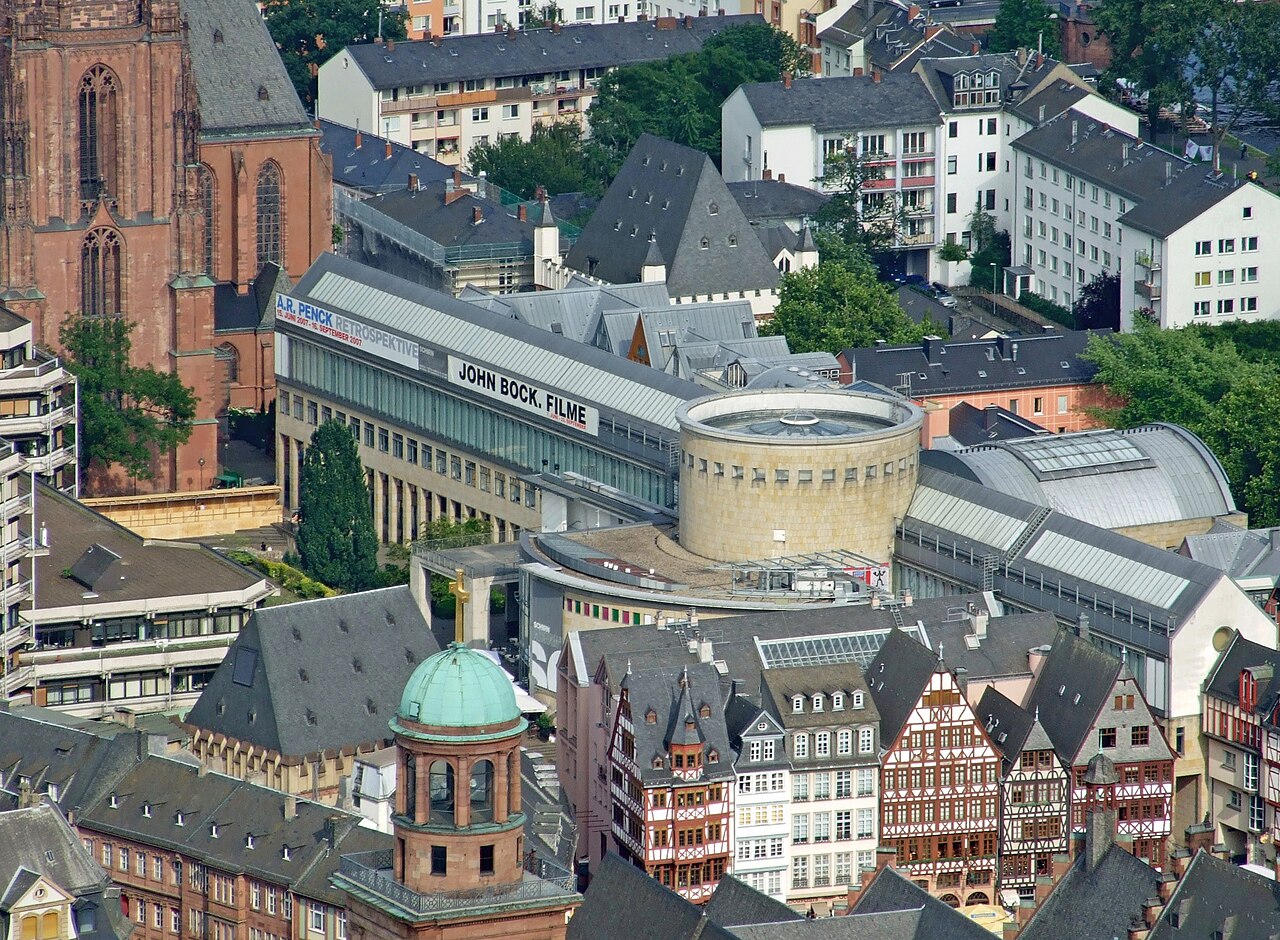
The Schirn Kunsthalle Frankfurt is a prominent exhibition venue for contemporary and modern art located in the heart of Frankfurt's historic center, adjacent to the Römerberg and the Frankfurt Cathedral. Unlike traditional museums, the Schirn does not maintain a permanent collection, instead focusing on rotating, high-profile themed exhibitions and retrospectives that explore significant cultural and artistic movements.
The building itself is a notable example of postmodern architecture, designed by the Berlin-based architectural firm Bangert, Jansen, Scholz, and Schultes. Opened in 1986, its design integrates modern exhibition spaces with the surrounding historic urban fabric, serving as a cultural bridge between the city's medieval past and its contemporary identity as a global financial hub.
Key Facts
- Materials
- Sandstone, Glass, Steel
- Civilization
- Modern German
- Accessibility
- Fully wheelchair accessible
- Date(s)
- 1983-1986
- Condition
- Active, well-maintained
- Original Function
- Art exhibition hall
- Key Figures
- Dietrich Bangert, Bernd Jansen, Stefan Scholz, Axel Schultes
Conception and Construction
1980sThe Schirn was established as part of a major urban redevelopment project in Frankfurt's Altstadt. The goal was to create a world-class exhibition space that could host large-scale international art shows, filling a gap in the city's cultural infrastructure.
Inauguration
1986The institution opened its doors in 1986 with an exhibition dedicated to the art of the Vienna Secession. Since its inception, it has established itself as one of the most important exhibition venues in Europe.
Modern Evolution
21st CenturyIn recent decades, the Schirn has expanded its digital presence and educational outreach, focusing on interdisciplinary projects that connect visual arts with social and political themes.
Cultural Significance
The Schirn Kunsthalle plays a vital role in Frankfurt's cultural life by bringing international art discourse to the city. It serves as a platform for critical engagement with contemporary issues, often hosting exhibitions that challenge traditional art historical narratives. Its location in the historic center highlights the city's commitment to balancing heritage preservation with progressive cultural development.
Interpretive Notes
Scholarly debates and areas of uncertainty
There is ongoing discussion regarding the impact of the Schirn's 'blockbuster' exhibition model on the broader art market and the potential for commercialization of public cultural spaces. Additionally, the architectural integration of the building into the historic Römerberg area remains a subject of debate among urban planners and architectural historians.
Visiting Information
Entry Rules
Open Tuesday through Sunday. Tickets can be purchased online or at the entrance. Visitors are encouraged to check the website for specific exhibition hours and potential closures between exhibition changeovers.
Best Times to Visit
Weekday mornings are generally quieter. The museum is often busier during weekends and the final weeks of major temporary exhibitions.
Photography
Photography is generally permitted for private use without flash, though specific exhibitions may have restrictions due to copyright agreements with lenders.
Preservation Notes
Visitors are requested to leave large bags in the provided lockers. Food and drink are not permitted within the exhibition galleries.
Nearby POIs
10 shownSources & Further Reading
- [1]Schirn Kunsthalle Frankfurt: Architecture and History — Dietrich Bangert. Frankfurt Cultural Press (1990)
- [2]Museums of Frankfurt: A Guide — Hanna Schmidt. German Art Historical Society (2015)
Key Facts
- Materials
- Sandstone, Glass, Steel
- Civilization
- Modern German
- Accessibility
- Fully wheelchair accessible
- Date(s)
- 1983-1986
- Condition
- Active, well-maintained
- Original Function
- Art exhibition hall
- Key Figures
- Dietrich Bangert, Bernd Jansen, Stefan Scholz, Axel Schultes