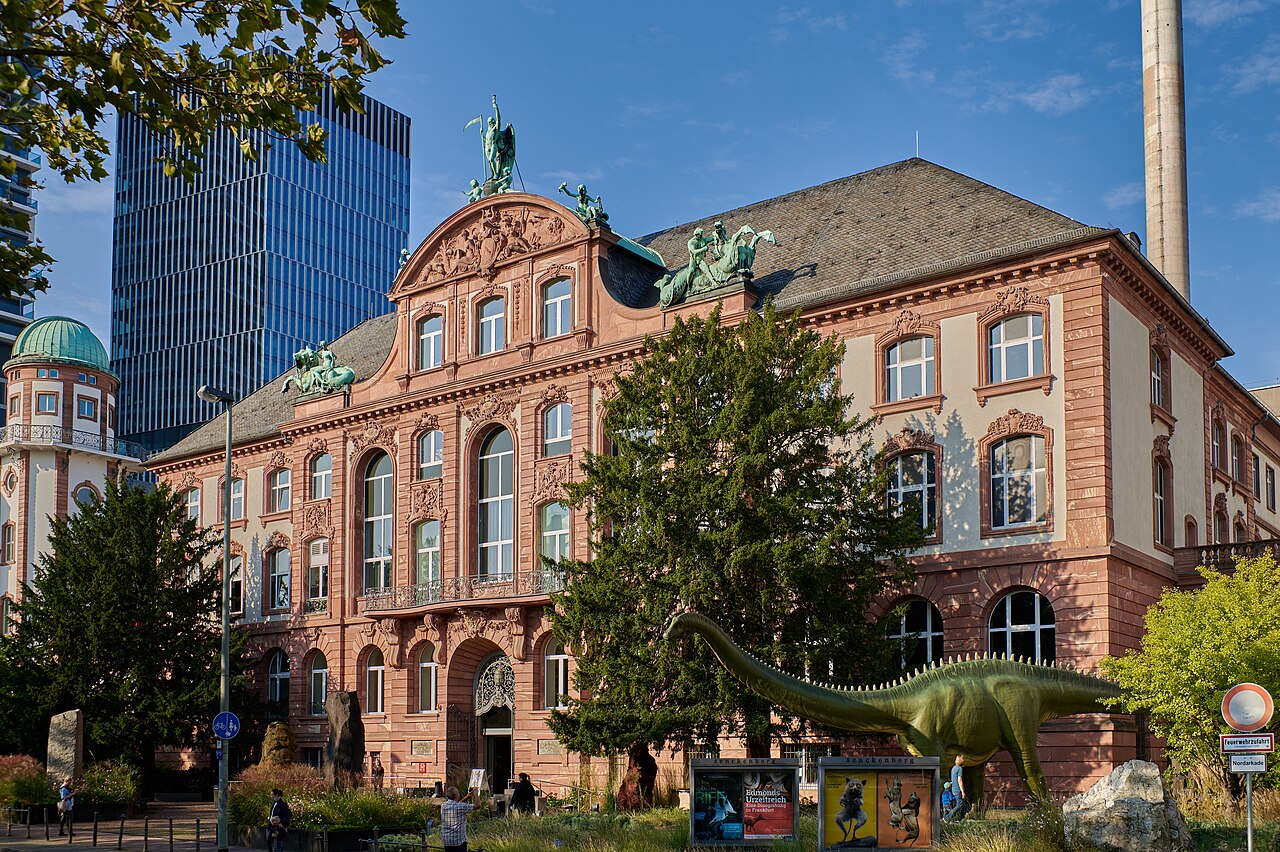
The Senckenberg Natural History Museum in Frankfurt is one of the largest museums of natural history in Germany. Founded in 1821 by the Senckenberg Nature Research Society, the institution houses an extensive collection spanning geology, paleontology, and zoology. It is particularly renowned for its significant collection of dinosaur fossils, which includes some of the most complete specimens found in Europe.
The current building, designed in the neoclassical style by Ludwig Neher, opened in 1907 to accommodate the growing collections. Today, the museum serves as a major research center and public educational facility, showcasing the evolution of life on Earth through diverse exhibits ranging from prehistoric reptiles to modern biodiversity.
Key Facts
- Materials
- Sandstone, Brick, Steel
- Civilization
- German
- Accessibility
- Fully wheelchair accessible
- Date(s)
- 1904-1907
- Condition
- Well-preserved and active
- Original Function
- Natural history museum and research facility
- Key Figures
- Johann Christian Senckenberg, Ludwig Neher
Founding and Early Years
1817-1821The Senckenberg Nature Research Society was established in 1817, inspired by the legacy of physician and naturalist Johann Christian Senckenberg. The museum was officially opened in 1821 to house the society's growing natural history collections.
Expansion and New Building
1904-1907Due to the rapid expansion of the collections, the society commissioned architect Ludwig Neher to design a new, larger facility. The current building was completed in 1907, providing dedicated space for the extensive paleontological and zoological exhibits.
Modernization and Research
20th Century - PresentThroughout the 20th century, the museum integrated advanced research laboratories and expanded its focus on biodiversity and climate change. Recent renovations have modernized the exhibition halls while preserving the historical architecture of the main building.
Cultural Significance
The Senckenberg Museum is a cornerstone of scientific education in the Rhine-Main region. It plays a vital role in public understanding of evolutionary biology and geological history, serving as a bridge between academic research and the general public.
Interpretive Notes
Scholarly debates and areas of uncertainty
Ongoing discussions within the museum community focus on the ethical sourcing of historical colonial-era collections and the best practices for the digital preservation and public display of fragile fossil specimens.
Visiting Information
Entry Rules
Open daily. Tickets can be purchased online or at the entrance. No food or drink allowed in the exhibition halls.
Best Times to Visit
Weekday mornings are generally quieter. Avoid school holiday periods for a more relaxed viewing experience.
Photography
Personal photography is permitted without flash or tripods. Commercial photography requires prior authorization.
Preservation Notes
Do not touch the exhibits. Maintain a respectful distance from open displays to protect the integrity of the specimens.
Nearby POIs
10 shownSources & Further Reading
- [1]Senckenberg: 200 Years of Natural History — Volker Mosbrugger. Senckenberg Gesellschaft für Naturforschung (2017)View
- [2]The History of the Senckenberg Museum — Ute Seidel. Frankfurt Historical Society (2009)
Key Facts
- Materials
- Sandstone, Brick, Steel
- Civilization
- German
- Accessibility
- Fully wheelchair accessible
- Date(s)
- 1904-1907
- Condition
- Well-preserved and active
- Original Function
- Natural history museum and research facility
- Key Figures
- Johann Christian Senckenberg, Ludwig Neher