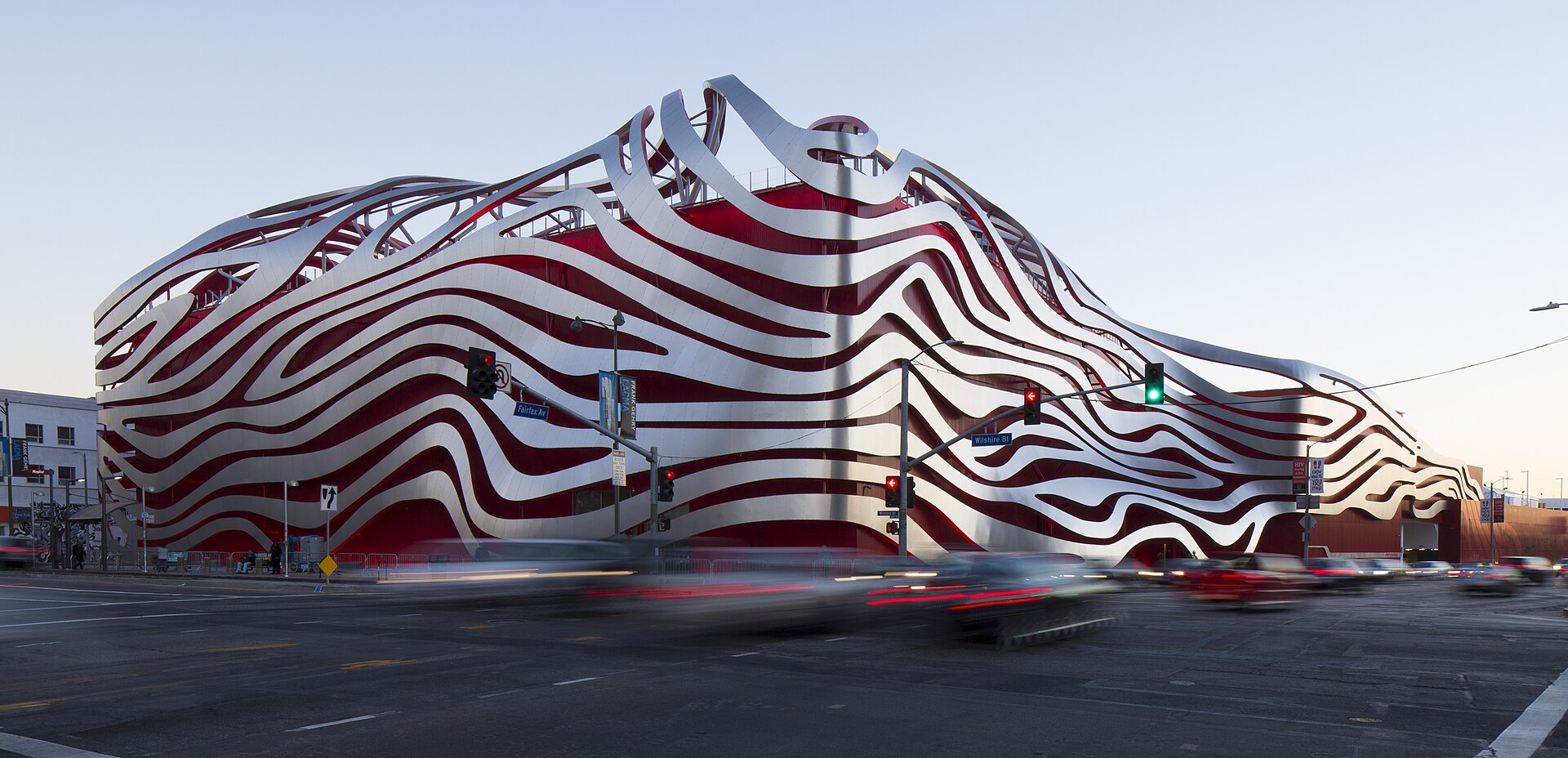
The Petersen Automotive Museum is a prominent cultural institution located on the Miracle Mile in Los Angeles. Founded in 1994 by magazine publisher Robert E. Petersen and his wife Margie, the museum serves as a repository for automotive history, showcasing the evolution of the automobile and its profound impact on Southern California culture and global design.
The museum building itself is a landmark of modern architecture, characterized by its distinctive stainless-steel ribbon facade designed by the firm Kohn Pedersen Fox. Inside, the facility spans over 100,000 square feet of exhibit space, housing a rotating collection of vehicles that range from vintage classics and Hollywood film cars to experimental concept vehicles and high-performance racing machines.
Key Facts
- Materials
- Stainless steel, Glass, Concrete
- Civilization
- Modern American
- Accessibility
- Fully ADA compliant with elevator access to all floors
- Date(s)
- 1994
- Condition
- Active, fully operational
- Original Function
- Automotive Museum
- Key Figures
- Robert E. Petersen, Margie Petersen
Founding and Early Years
1994The museum was established in 1994 in the former Seibu Department Store building. It was created to preserve the history of the automobile and provide educational resources regarding automotive technology and design.
Architectural Transformation
2015The museum underwent a massive $90 million renovation led by Kohn Pedersen Fox. The exterior was completely redesigned with a flowing, ribbon-like stainless steel structure, turning the building into a recognizable icon of Los Angeles architecture.
Modern Expansion
2015-PresentFollowing the renovation, the museum expanded its educational programming and digital archives. It continues to host rotating exhibitions that explore the intersection of automotive engineering, art, and popular culture.
Cultural Significance
The Petersen Automotive Museum is central to the identity of Los Angeles, a city defined by its car culture and expansive freeway system. By framing the automobile as an object of art and historical significance, the museum elevates the study of automotive design to the level of fine art and industrial history.
Beyond its local impact, the museum serves as a global hub for automotive enthusiasts and researchers. It plays a key role in documenting the transition from internal combustion engines to electric mobility, reflecting broader societal shifts in transportation and environmental policy.
Interpretive Notes
Scholarly debates and areas of uncertainty
Discussions often center on the museum's role in balancing the celebration of car culture with the contemporary need to address the environmental impact of the automobile. Scholars debate how the museum should frame the history of the car in an era of rapid transition toward sustainable urban mobility.
Visiting Information
Entry Rules
Open daily. Tickets are required for entry and can be purchased online or at the box office. Visitors are encouraged to check the official website for current exhibition schedules and special event closures.
Best Times to Visit
Weekday mornings are generally less crowded than weekends. The museum is a popular destination for tourists and local school groups, so planning visits outside of peak holiday seasons is recommended.
Photography
Personal photography is permitted in most galleries. Tripods, monopods, and flash photography are prohibited without prior written authorization from the museum's communications department.
Preservation Notes
Visitors are requested to refrain from touching the vehicles or display cases. Food and beverages are not permitted within the exhibit galleries.
Nearby POIs
11 shown- Academy Museum of Motion Pictures0.2 km
- Los Angeles County Museum of Art0.2 km
- La Brea Tar Pits0.5 km
- George C. Page Museum0.6 km
- Hollywood Walk of Fame4.8 km
- Hollywood Museum4.8 km
- Hollywood Wax Museum4.9 km
- Hammer Museum7.6 km
- Natural History Museum of Los Angeles County8.4 km
- Griffith Observatory8.4 km
- California Science Center8.6 km
Key Facts
- Materials
- Stainless steel, Glass, Concrete
- Civilization
- Modern American
- Accessibility
- Fully ADA compliant with elevator access to all floors
- Date(s)
- 1994
- Condition
- Active, fully operational
- Original Function
- Automotive Museum
- Key Figures
- Robert E. Petersen, Margie Petersen
Nearby POIs
11 shown- Academy Museum of Motion Pictures0.2 km
- Los Angeles County Museum of Art0.2 km
- La Brea Tar Pits0.5 km
- George C. Page Museum0.6 km
- Hollywood Walk of Fame4.8 km
- Hollywood Museum4.8 km
- Hollywood Wax Museum4.9 km
- Hammer Museum7.6 km
- Natural History Museum of Los Angeles County8.4 km
- Griffith Observatory8.4 km
- California Science Center8.6 km