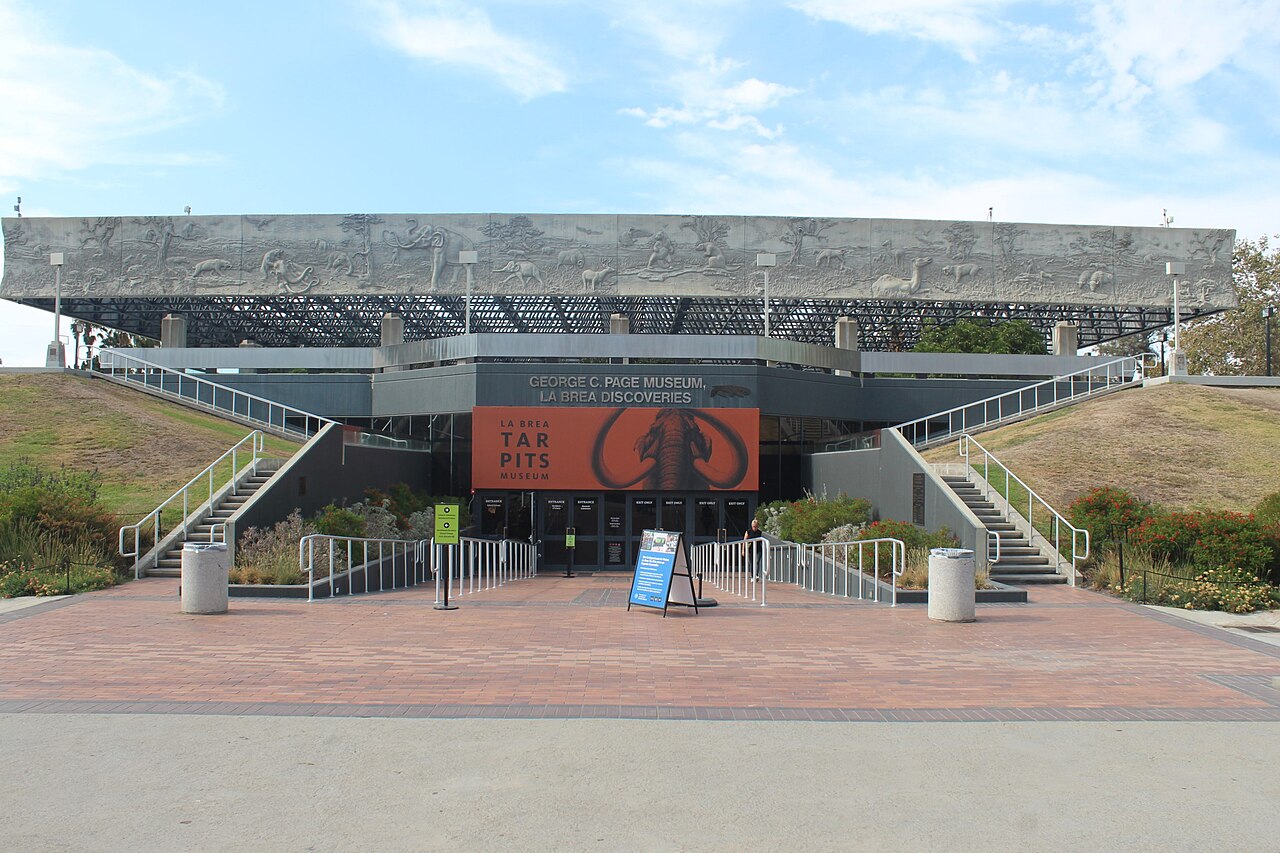
The George C. Page Museum, located within Hancock Park in Los Angeles, is a paleontological research facility and museum dedicated to the study and display of fossils recovered from the adjacent La Brea Tar Pits. The museum houses an extensive collection of Pleistocene-era specimens, including the remains of mammoths, saber-toothed cats, and dire wolves that became trapped in the natural asphalt seeps over the last 50,000 years.
Designed by architects Willis Fagan and Frank Thornton, the museum building is partially subterranean, reflecting its focus on the geological layers of the site. It serves as a primary repository for the millions of fossils excavated from the pits, providing a unique window into the prehistoric ecosystem of the Los Angeles Basin.
Key Facts
- Materials
- Concrete, Glass, Steel
- Civilization
- Modern United States
- Accessibility
- Fully wheelchair accessible
- Date(s)
- 1977
- Condition
- Active, well-maintained
- Original Function
- Paleontological museum and research center
- Key Figures
- George C. Page, John C. Merriam
Discovery of the Tar Pits
18th-19th centuryThe asphalt seeps of Rancho La Brea were known to indigenous peoples and later Spanish settlers, who used the material for waterproofing. Scientific interest began in the late 19th century when researchers realized the bones embedded in the tar were not cattle, but extinct megafauna.
Systematic Excavation
1913-1915The Natural History Museum of Los Angeles County conducted the first major excavations, recovering hundreds of thousands of specimens. These findings established the site as one of the world's most significant sources of Ice Age fossils.
Museum Establishment
1977The George C. Page Museum was opened to the public to provide a dedicated space for the curation and exhibition of the La Brea collection. It was named after George C. Page, whose philanthropic efforts were instrumental in the museum's creation.
Modern Research
21st centuryOngoing excavations, such as Project 23, continue to yield new fossils as construction projects in the surrounding area uncover additional asphalt deposits. The museum remains a hub for active paleontological research and public education.
Cultural Significance
The museum is a cornerstone of Los Angeles's scientific and cultural identity, bridging the gap between the city's urban landscape and its prehistoric past. It serves as a vital educational resource, illustrating the dramatic climate shifts and biological diversity of the Pleistocene epoch.
Interpretive Notes
Scholarly debates and areas of uncertainty
Debates persist regarding the precise environmental conditions of the Los Angeles Basin during the late Pleistocene and the specific factors that led to the high concentration of predator remains compared to prey species within the asphalt traps.
Visiting Information
Entry Rules
Open daily. Tickets are required for entry. Visitors are encouraged to book online in advance to secure preferred time slots.
Best Times to Visit
Weekdays during the school year offer the quietest experience. Early morning visits allow for comfortable exploration of the outdoor tar pits before peak heat.
Photography
Personal photography is permitted without flash or tripods. Professional photography requires prior authorization from the museum administration.
Preservation Notes
Do not touch the asphalt seeps in the park, as they remain active and sticky. Follow all posted safety signage near excavation pits.
Nearby POIs
11 shown- La Brea Tar Pits0.1 km
- Los Angeles County Museum of Art0.4 km
- Academy Museum of Motion Pictures0.5 km
- Petersen Automotive Museum0.6 km
- Hollywood Walk of Fame4.4 km
- Hollywood Museum4.5 km
- Hollywood Wax Museum4.5 km
- Griffith Observatory7.9 km
- Natural History Museum of Los Angeles County8 km
- Hammer Museum8.2 km
- California Science Center8.3 km
Sources & Further Reading
- [1]La Brea and Beyond: The Paleontology of Southern California — John M. Harris. Natural History Museum of Los Angeles County (2001)
- [2]Rancho La Brea: A Record of Pleistocene Life in California — Chester Stock. Los Angeles County Museum of Natural History (1956)
Key Facts
- Materials
- Concrete, Glass, Steel
- Civilization
- Modern United States
- Accessibility
- Fully wheelchair accessible
- Date(s)
- 1977
- Condition
- Active, well-maintained
- Original Function
- Paleontological museum and research center
- Key Figures
- George C. Page, John C. Merriam
Nearby POIs
11 shown- La Brea Tar Pits0.1 km
- Los Angeles County Museum of Art0.4 km
- Academy Museum of Motion Pictures0.5 km
- Petersen Automotive Museum0.6 km
- Hollywood Walk of Fame4.4 km
- Hollywood Museum4.5 km
- Hollywood Wax Museum4.5 km
- Griffith Observatory7.9 km
- Natural History Museum of Los Angeles County8 km
- Hammer Museum8.2 km
- California Science Center8.3 km