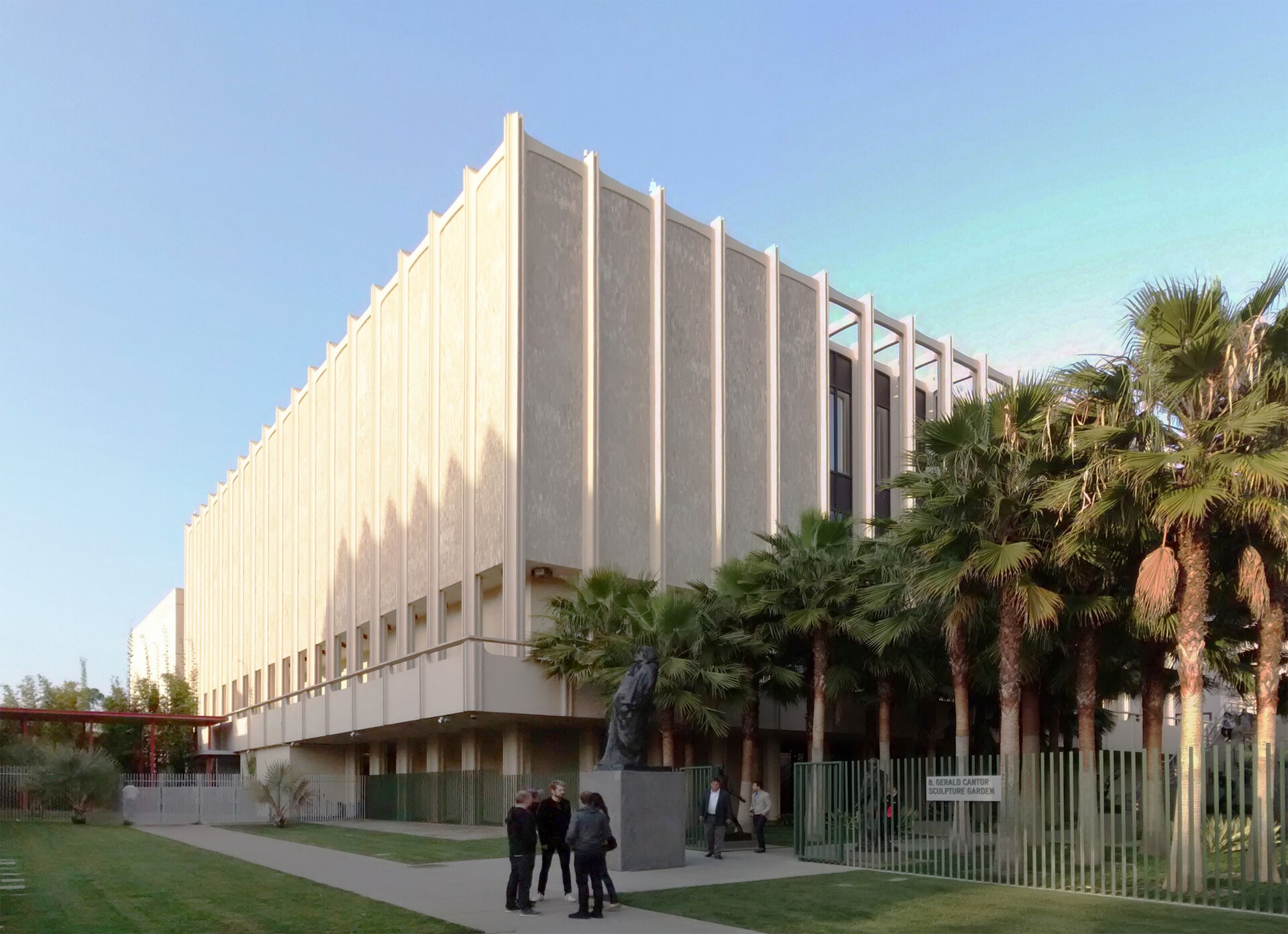
The Los Angeles County Museum of Art (LACMA) is the largest art museum in the western United States, housing a collection of more than 150,000 works that span the history of art from ancient times to the present. Located on Wilshire Boulevard in the Miracle Mile district, the museum serves as a major cultural hub for Southern California, featuring diverse holdings that include significant collections of Asian, Latin American, European, and American art.
The museum campus is currently undergoing a major architectural transformation led by architect Peter Zumthor. The design aims to replace several aging mid-century buildings with a single, elevated, transparent structure that spans Wilshire Boulevard, reflecting the institution's commitment to integrating art into the urban landscape of Los Angeles.
Key Facts
- Materials
- Steel, Glass, Concrete
- Civilization
- Modern American
- Accessibility
- Fully wheelchair accessible
- Date(s)
- 1965
- Condition
- Active, undergoing major expansion
- Original Function
- Art Museum
- Key Figures
- Peter Zumthor, Michael Govan
Founding and Early Years
1910-1965Originally part of the Los Angeles Museum of History, Science and Art in Exposition Park, the art collection became an independent institution in 1961. The museum moved to its current location on Wilshire Boulevard in 1965, occupying a complex designed by William Pereira.
Expansion and Development
1980s-2000sThe museum expanded significantly with the addition of the Robert O. Anderson Building in 1986 and the Pavilion for Japanese Art in 1988. In 2008, the Broad Contemporary Art Museum (BCAM) opened, designed by Renzo Piano, marking a new era of growth for the institution.
The Zumthor Transformation
2010s-PresentIn 2013, the museum announced plans for a new permanent collection building designed by Peter Zumthor. Construction began in 2020, involving the demolition of the original Pereira buildings to make way for a unified, horizontal structure intended to redefine the museum's relationship with the city.
Cultural Significance
LACMA plays a critical role in the cultural life of Los Angeles, acting as a bridge between diverse global art traditions and the local community. Its public art installations, such as Chris Burden's 'Urban Light', have become iconic symbols of the city, frequently featured in media and tourism.
The institution is also a focal point for discussions regarding the future of museum architecture and the role of encyclopedic museums in the 21st century. Its ongoing expansion project is one of the most significant architectural undertakings in the global museum sector.
Interpretive Notes
Scholarly debates and areas of uncertainty
The demolition of the original William Pereira-designed buildings sparked significant debate among architectural historians and preservationists, who argued for the historical value of the mid-century structures. Critics of the new Zumthor design have questioned the reduction in total gallery square footage compared to the previous campus layout.
Visiting Information
Entry Rules
Open daily except Wednesdays. Tickets are required for entry and can be purchased online. Los Angeles County residents receive free general admission on certain weekdays with valid ID.
Best Times to Visit
Weekday mornings are generally less crowded. The museum is busiest on weekends and during major temporary exhibition openings.
Photography
Personal photography is permitted in most galleries for non-commercial use. Flash, tripods, and selfie sticks are prohibited. Specific temporary exhibitions may have restricted photography policies.
Preservation Notes
Maintain distance from all artworks. Food and drink are prohibited in the galleries. Large bags and backpacks must be checked at the coat check.
Nearby POIs
11 shown- Academy Museum of Motion Pictures0.1 km
- Petersen Automotive Museum0.2 km
- La Brea Tar Pits0.3 km
- George C. Page Museum0.4 km
- Hollywood Walk of Fame4.6 km
- Hollywood Museum4.6 km
- Hollywood Wax Museum4.6 km
- Hammer Museum7.8 km
- Griffith Observatory8.1 km
- Natural History Museum of Los Angeles County8.4 km
- California Science Center8.6 km
Sources & Further Reading
- [1]LACMA: The Architecture of the Museum — Michael Govan. Prestel (2015)
- [2]Los Angeles County Museum of Art: A History — Victoria D. Alexander. Journal of Museum Management and Curatorship (2005)
Key Facts
- Materials
- Steel, Glass, Concrete
- Civilization
- Modern American
- Accessibility
- Fully wheelchair accessible
- Date(s)
- 1965
- Condition
- Active, undergoing major expansion
- Original Function
- Art Museum
- Key Figures
- Peter Zumthor, Michael Govan
Nearby POIs
11 shown- Academy Museum of Motion Pictures0.1 km
- Petersen Automotive Museum0.2 km
- La Brea Tar Pits0.3 km
- George C. Page Museum0.4 km
- Hollywood Walk of Fame4.6 km
- Hollywood Museum4.6 km
- Hollywood Wax Museum4.6 km
- Hammer Museum7.8 km
- Griffith Observatory8.1 km
- Natural History Museum of Los Angeles County8.4 km
- California Science Center8.6 km